
 DNA Synthesis
 Vector Selection
 Molecular Biology
 Oligo Synthesis
 RNA Synthesis
 Variant Libraries
 Genome KO Library
 Oligo Pools
 Virus Packaging
 Gene Editing
 Protein Expression
 Antibody Services
 Peptide Services
 DNA Data Storage
 Standard Oligo
 Standard Genome KO Libraries
 Standard Genome Editing Plasmid
 ProXpress
 Protein Products
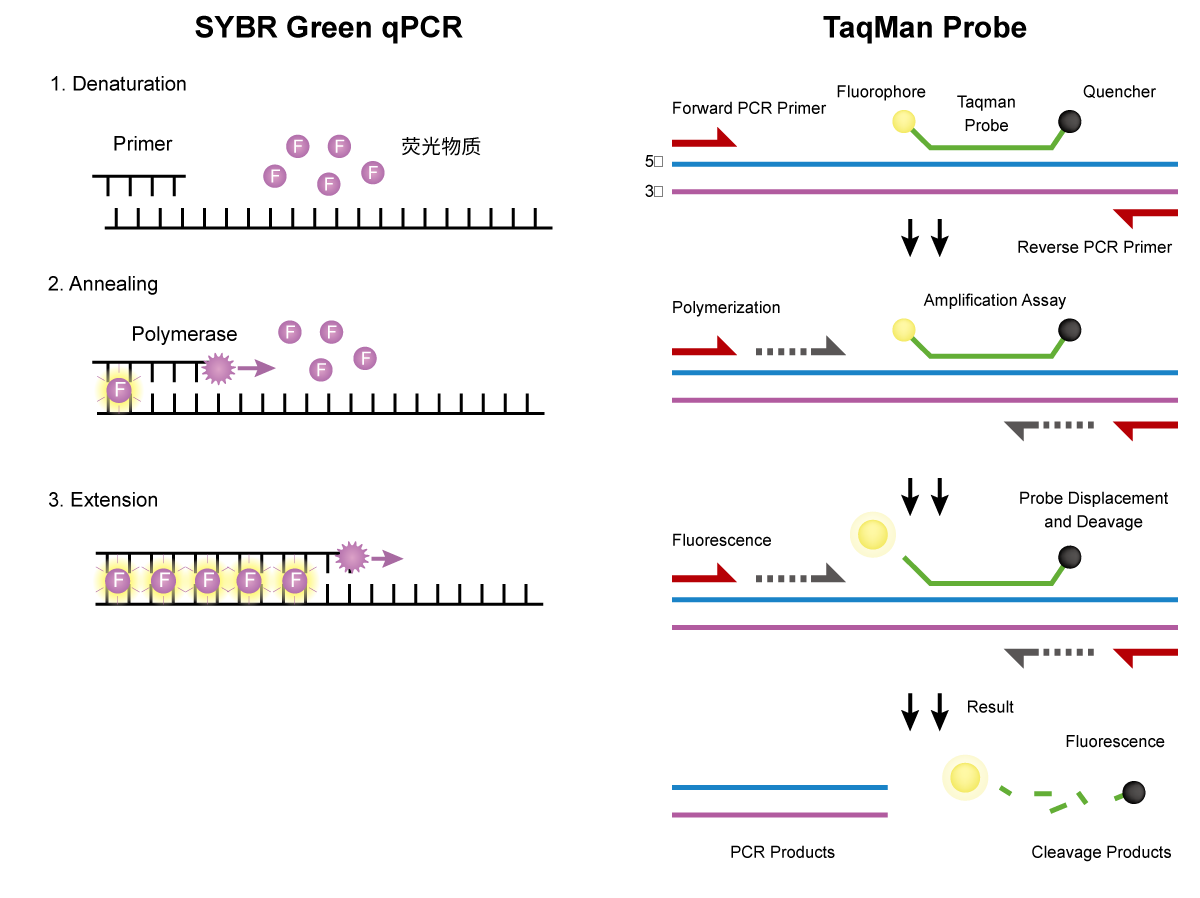
As we at Synbio Technologies work closely with researchers in gene therapy and IVD development, we understand how essential thoughtful probe design is for accurate qPCR analysis. Choosing the right probe helps stabilize the qPCR Probe Fluorescence Signal, ensures compatibility with experimental conditions, and directly affects how can I improve qPCR precision? considerations in sensitive assays. When selecting specific probe chemistries or evaluating options such as Fluorophore and Quencher pairings, our goal is to provide clear scientific guidance so that researchers can make informed decisions without unnecessary complexity.
Evaluating Signal Requirements in Gene Therapy and IVD Workflows
Selecting a suitable probe begins with understanding how your application interprets fluorescent output. In many gene therapy assays, the stability of the qPCR Probe Fluorescence Signal determines whether low-copy targets or vector components can be measured reliably. For IVD settings, where reproducibility is essential, the question of how can I improve qPCR precision? is linked to choosing a probe type with consistent behavior across sample matrices. By assessing fluorophore brightness, quencher efficiency, and environmental sensitivity, we ensure that each Fluorophore and Quencher combination aligns with your experimental needs. When researchers require additional help comparing probe categories, we offer technical support and a clear overview of probe options through our product resources, including our qPCR probe selection guide.
Considering Probe Compatibility and Experimental Conditions
Another important factor is the compatibility between probe chemistry and assay design. In gene therapy research, where targets may include viral vectors or edited genomic sequences, the qPCR Probe Fluorescence Signal must remain stable even when working with complex backgrounds. For many scientists asking how can I improve qPCR precision?, the answer often involves choosing probes with balanced thermal stability, optimized melting temperatures, and minimized nonspecific interactions. These parameters are influenced by the structural design of the Fluorophore and Quencher pair, as well as how well the probe matches the template region. Within our workflow at Synbio Technologies, we evaluate these characteristics to help researchers maintain uniform signal performance throughout their studies. When users require additional customization, our probe selection resources explain how to refine probe choices without disrupting existing protocols.
Conclusion: Making Confident Probe Choices
In conclusion, selecting the right qPCR probe for gene therapy and IVD applications relies on evaluating the qPCR Probe Fluorescence Signal, understanding how can I improve qPCR precision? in your workflow, and choosing the appropriate Fluorophore and Quencher combination. By assessing signal behavior, assay conditions, and application demands, researchers can make informed choices that strengthen experimental reliability. At Synbio Technologies, we support these decisions by offering guidance and resources that help align probe characteristics with your specific scientific goals.