
 DNA Synthesis
 Vector Selection
 Molecular Biology
 Oligo Synthesis
 RNA Synthesis
 Variant Libraries
 Genome KO Library
 Oligo Pools
 Virus Packaging
 Gene Editing
 Protein Expression
 Antibody Services
 Peptide Services
 DNA Data Storage
 Standard Oligo
 Standard Genome KO Libraries
 Standard Genome Editing Plasmid
 ProXpress
 Protein Products
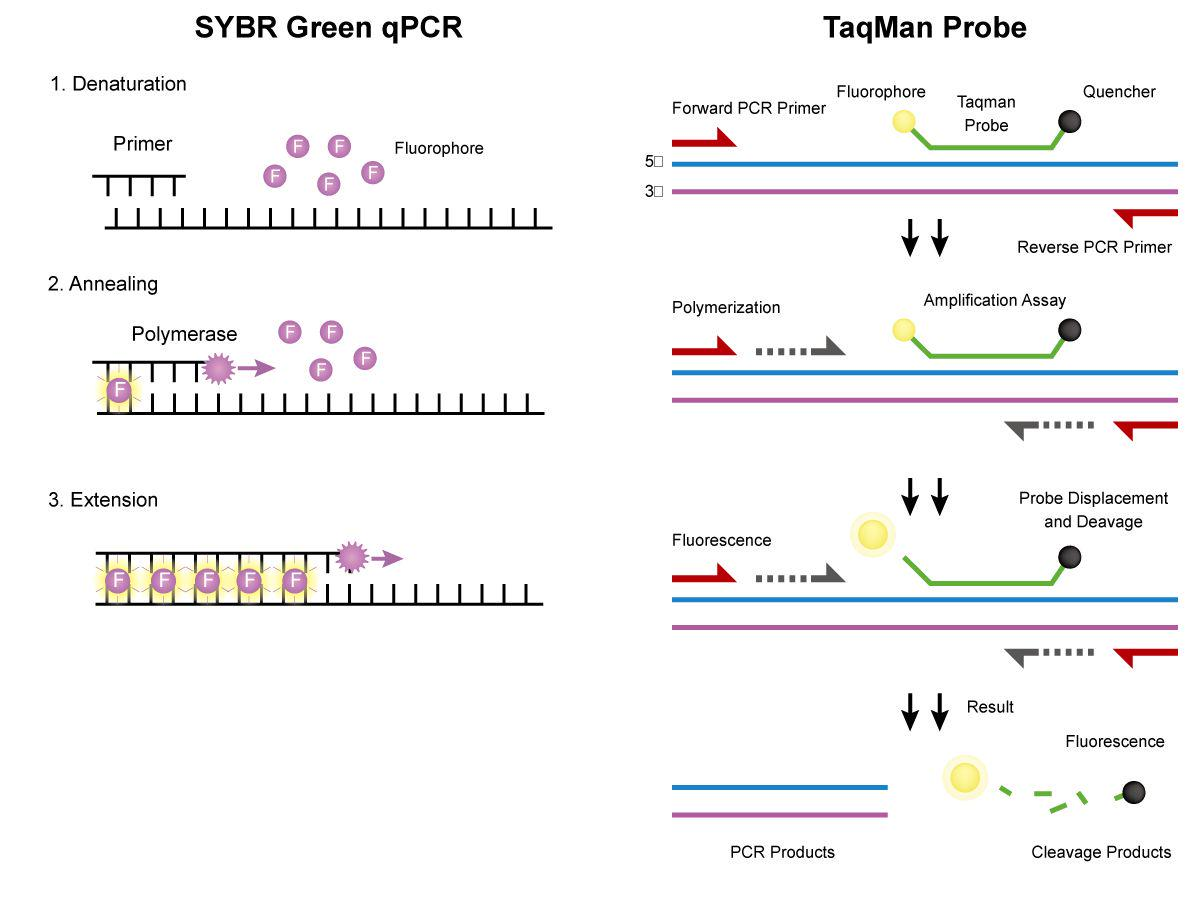
As Synbio Technologies, we work closely with researchers who aim to build reliable qPCR assays, and many of them begin their planning by evaluating how probe selection influences overall performance. When users explore the relationship between probe chemistry and the qPCR Probe Fluorescence Signal, they often ask how can i improve qpcr precision?, especially when assays must support sensitive detection. Because proper probe selection depends on clear fluorescence separation and dependable quenching, our goal is to help users understand the fundamental interaction between a Fluorophore and Quencher pair and how these elements support accurate monitoring.
Understanding How Probe Chemistry Controls Fluorescence
Probe design starts with the basic structure that links a Fluorophore and Quencher in a configuration that remains inactive until amplification begins. In a typical workflow, the generation of a measurable qPCR Probe Fluorescence Signal depends on the physical distance change between the two ends of the probe, which allows the fluorophore to emit detectable light. During these early planning steps, many users again revisit the question how can i improve qpcr precision?, because variations in sequence length, melting temperature, and probe stability all influence data quality. Our work includes helping researchers evaluate these factors so they can make informed choices for their specific target and experimental environment. When these considerations are addressed carefully, the essential relationship between a Fluorophore and Quencher becomes easier to optimize.
Selecting Probe Parameters That Support Consistent Assay Performance
As we design and test probes, we frequently guide users through the parameters that affect the qPCR Probe Fluorescence Signal, including sequence structure and the surrounding reaction conditions. This scientific evaluation supports a practical understanding of how can i improve qpcr precision?, especially for assays that require dependable quantification across varying template concentrations. Because probe behavior depends on how effectively a Fluorophore and Quencher interact within a reaction, we provide resources that explain the roles of hybridization, probe length, and thermodynamic balance. Our article on factors influencing probe fluorescence helps users identify potential sources of inconsistency while offering a structured way to refine design decisions without introducing unnecessary modifications.
Conclusion: Why Thoughtful Probe Selection Improves qPCR Outcomes
Probe selection shapes how efficiently fluorescence is generated, how precisely signals are captured, and how confidently users interpret their results. By understanding the principles that govern each qPCR Probe Fluorescence Signal, researchers can answer how can i improve qpcr precision? with a clearer strategy that accounts for reaction behavior and probe structure. When the interaction between a Fluorophore and Quencher is evaluated systematically, qPCR assays become more reliable and adaptable to different research needs. Through these scientific insights, we continue supporting users who rely on accurate probe selection to advance their projects as Synbio Technologies.