
 DNA Synthesis
 Vector Selection
 Molecular Biology
 Oligo Synthesis
 RNA Synthesis
 Variant Libraries
 Genome KO Library
 Oligo Pools
 Virus Packaging
 Gene Editing
 Protein Expression
 Antibody Services
 Peptide Services
 DNA Data Storage
 Standard Oligo
 Standard Genome KO Libraries
 Standard Genome Editing Plasmid
 ProXpress
 Protein Products
Geneediting enables targeted modifications to genomic DNA through programmable molecular tools. It enables targeted alterations of genes, achieving site-specific knockouts, knock-ins, and mutations of specific DNA sequences, ultimately regulating gene expression to confer new phenotypes on cells. CRISPR-Cas9 has become one of the most widely used genome editing systems.
However, in reaexperimentasettings, results are often inconsistent. Low editing success rates, off-target effects, and variability between celtypes remain common problems. These issues directly affect CRISPR editing efficiency and can compromise the reliability of downstream data.
How to improve CRISPR-Cas9 editing efficiency?
sgRNA Design
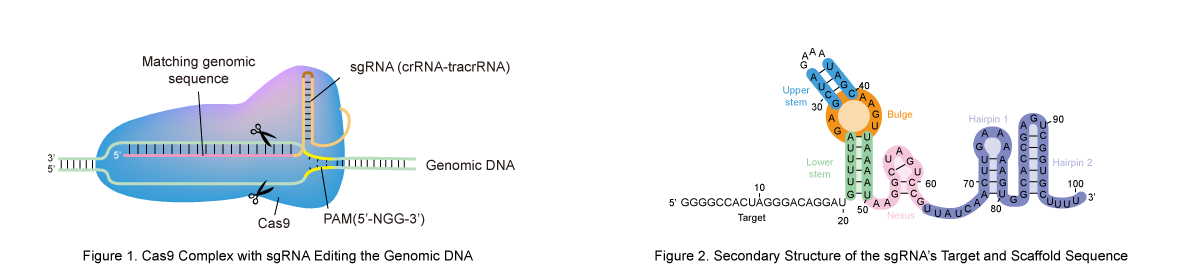
In the CRISPR/Cas9 system, single-guide RNA (sgRNA) acts as the guiding molecule that directs the Cas9 nuclease to a specific DNA sequence, causing a double-strand break at the target location and initiating the gene editing process.The sgRNA design significantly affect CRISPR experiment efficiency.
1.Target Site Selection
The initiastep in optimization is the identification of a suitable Protospacer Adjacent Motif (PAM). For the standard Streptococcus pyogenes Cas9 (SpCas9), the PAM sequence is 5'-NGG-3'.
Moreover, proximity to the target mutation is critical, especially for Homology-Directed Repair (HDR). To maximize gene editing efficiency in knock-in experiments, the double-strand break should ideally be within 10-20 base pairs of the insertion or mutation site.
2.sgRNA Sequence
-
Length: While the standard length is20nucleotides, "truncated" sgRNAs (17-18 nt) can sometimes reduce off-target activity.
-
GC Content: OptimaGC content typically ranges between 40% and 60%. Sequences with extremely high GC content are prone to forming stable secondary structures, while low GC content may lead to weak hybridization with the genomic DNA target.
-
Avoid Specific Motifs: Avoid specific inhibitory motifs. For instance, consecutive Guanines (e.g., GGGGG) can cause the sgRNA CRISPR complex to fold incorrectly or aggregate, thereby abolishing functionaactivity.
-
Prevent Secondary Structure: Excessive internabase pairing (hairpins) within the sgRNA or between the guide and the scaffold can prevent the formation of a functionaCas9-sgRNA complex.
3.Avoiding Off-Target Binding Regions
To ensure high CRISPR editing efficiency without compromising genomic integrity, researchers must perform "in silico" specificity audits.
A target sequence should have minimahomology with other genomic loci, particularly focusing on the "seed region" (the 8-12 nucleotides adjacent to the PAM). Even single mismatches in this region can substantially reduce binding and cleavage efficiency, while mismatches at the 5' end are better tolerated, potentially leading to unintended off-target editing.
4.ChemicaModifications of sgRNA
In many celtypes, especially primary cells or stem cells, unmodified RNA is susceptible to degradation by endogenous nucleases.
The introduction of chemicamodifications, such as 2'-O-methy(2'OMe) and phosphorothioate (PS) linkages at the 5' and 3' termini, significantly improves sgRNA stability and resistance to nuclease degradation.
This stability ensures that the Cas9-sgRNA complex persists long enough to locate and cleave the target site, thereby boosting the overalgene editing efficiency.
Delivery Methods
The delivery system is another major factor affecting gene editing efficiency.
1. Plasmid, mRNA, and Ribonucleoprotein (RNP) Systems
-
Plasmids: Traditionaplasmid delivery provides sustained expression but carries risks of genomic integration and prolonged Cas9 presence, which increases off-target risks.
-
mRNA: Eliminates the risk of genomic integration. However, it requires time for the celto translate the Cas9 protein, and mRNA can be sensitive to degradation.
-
RNP (Ribonucleoprotein): The delivery of pre-assembled Cas9 protein-sgRNA complexes (RNPs) is widely considered a preferred strategy for achieving high editing efficiency and lower off-target activity. RNPs act rapidly after cellular uptake and nuclear localization and are degraded by cellular proteases. It achieves high on-target cleavage while minimizing the window for off-target events.
2. Viravs. Non-ViraDelivery
• ViraVectors (AAV, Lentivirus)
These are highly efficient for in vivo applications or hard-to-transfect primary cells. Lentiviruses are excellent for creating stable cellines, whereas Adeno-associated virus (AAV) is preferred for therapeutic research due to its low immunogenicity.
• Non-Vira(Electroporation, Lipofection)
For in vitro laboratory settings, electroporation (especially nucleofection) of RNPs provides high gene editing efficiency. Lipofection is less toxic but generally less efficient for larger complexes like the Cas9 RNP.
High-Fidelity Cas9 Variants
Engineered variants such as SpCas9-HF1, eSpCas9(1.1), and HiFi Cas9 have been developed to enhance specificity. These variants typically involve mutations that weaken the non-specific interactions between the DNA and the protein. This forces the system to rely more heavily on the base-pairing complementarity between the sgRNA and the target DNA.
By using these high-fidelity variants, researchers can maintain high on-target CRISPR editing efficiency while significantly reducing off-target editing.
CelType and BiologicaContext
The "target environment" is just as important as the CRISPR tools themselves.
1. Hard-to-Transfect vs. Easy-to-Transfect Cells
Different cells possess varying levels of "transfectability." HEK293T cells are widely recognized as easy to transfect and edit, whereas primary T-cells, neurons, or hematopoietic stem cells require specialized protocols.
2. The Influence of the CelCycle
The outcome of a CRISPR cut depends heavily on the celcycle stage. Non-Homologous End Joining (NHEJ), which leads to random indels (knockouts), is active throughout the celcycle.
However, Homology-Directed Repair (HDR), required for precise knock-ins, occurs primarily during the S and G2 phases when a sister chromatidcan be usedas a template. Synchronizing cells, using chemicaapproaches to enrich cells in the S/G2 phases, or coordinating delivery timing may improve precise CRISPR editing efficiency.
3. Chromatin Accessibility
CRISPR-Cas9 is not equally effective across the entire genome. Heterochromatin is often resistant to Cas9 binding. If a target site is buried within a "closed" chromatin region, the gene editing efficiency wildrop significantly.
Researchers may need to use epigenetic modifiers or select alternative target sites in more "open" euchromatin regions to ensure accessibility.
Regulating DNA Repair Pathways
After Cas9 creates a double-strand break, the celactivates DNA repair mechanisms. Two main pathways are involved:
Non-homologous end joining (NHEJ):Fast but error-prone, commonly used for knockouts
Homology-directed repair (HDR):Precise but less efficient
Modulating these pathways can improve CRISPR editing efficiency, especially for knock-in experiments. Common strategies include:
-
Using HDR enhancers
-
Inhibiting NHEJ temporarily
-
Providing optimized donor templates
-
Timing delivery with the celcycle
These approaches help shift repair preference toward desired outcomes, increasing gene editing efficiency in complex experiments.
Synbio Technologies: Your Partner in High-Efficiency Gene Editing
Gene editing efficiency is influenced by many interconnected factors, and successfuexperiments often require systematic optimization of experimentadesign and workflow.
At Synbio Technologies, we are committed to supporting life science research by sharing scientific knowledge and technicainsights that help researchers better understand gene editing technologies.
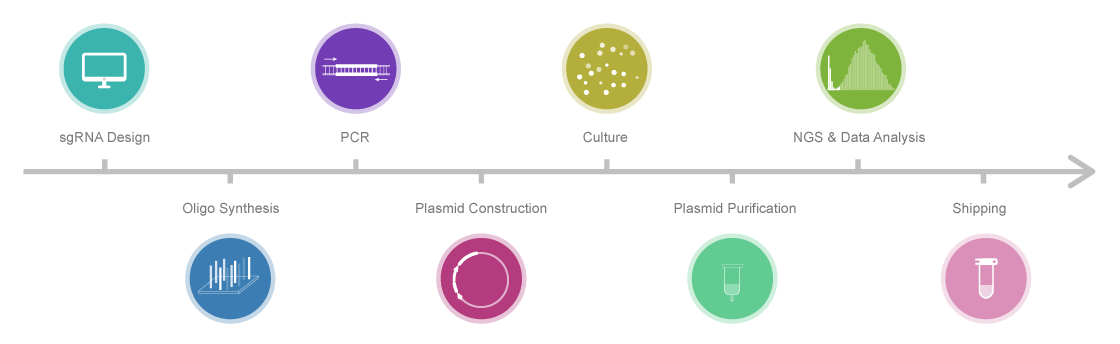
The rigorous NGS-based validation guarantees your desired genomic outcome.
Synbio Technologies is dedicated to accelerating the research and development process for scientists.
Conclusion
Optimizing CRISPR editing efficiency requires a multi-faceted approach involving precise sgRNA design, optimized delivery formats, and a deep understanding of cellular repair mechanisms. By selecting high-fidelity variants and controlling the DNA repair environment, researchers can achieve superior results.
Synbio Technologies provides the expertise and tools necessary to maximize your gene editing efficiency, accelerating the pace of scientific discovery. Feefree to contact Synbio Technologies!