
 DNA Synthesis
 Vector Selection
 Molecular Biology
 Oligo Synthesis
 RNA Synthesis
 Variant Libraries
 Genome KO Library
 Oligo Pools
 Virus Packaging
 Gene Editing
 Protein Expression
 Antibody Services
 Peptide Services
 DNA Data Storage
 Standard Oligo
 Standard Genome KO Libraries
 Standard Genome Editing Plasmid
 ProXpress
 Protein Products
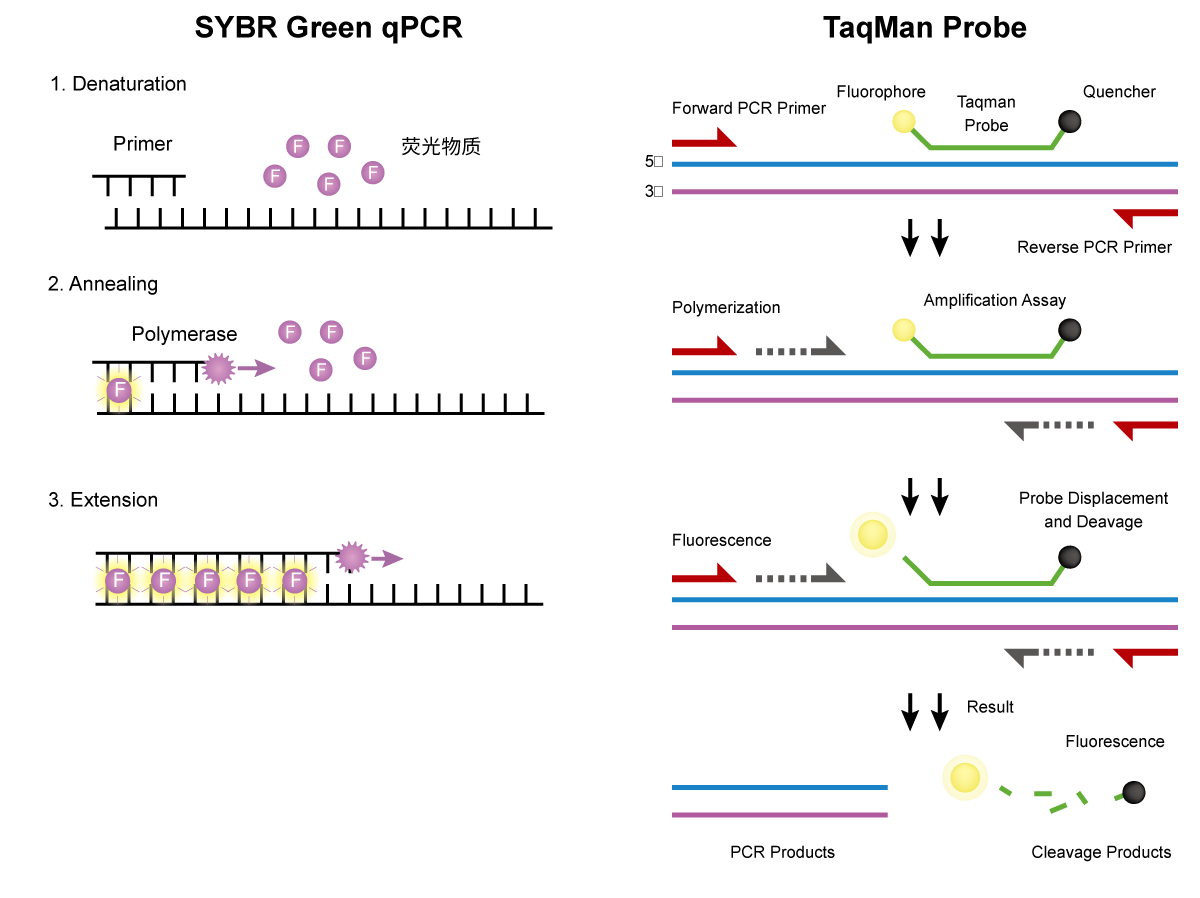
In the world of quantitative PCR (qPCR), achieving accurate and reliable results is of utmost importance. One of the key elements in ensuring the precision of qPCR experiments is the fluorescence signal detection system. Understandinghow to improve fluorescence signal quality directly impacts data reliability and the accuracy of DNA quantification. How can I improve qPCR precision? By optimizing factors like probe design, fluorophore and quencher properties, and reaction conditions, you can significantly enhance the overall performance of qPCR assays. At Synbio Technologies, we specialize in providing high-quality nucleic acid probes that help to elevate qPCR accuracy.
Optimizing Probe Design for Enhanced Fluorescence Signal
The first step towards improving fluorescence signal strength is ensuring the proper design of qPCR probes. Probes should be selected based on their ability to bind efficiently to the target sequence, which directly affects fluorescence intensity. The fluorophore and quencher choice plays a significant role here—by selecting probes with optimal GC content and strategic placement relative to the primers, you can boost signal detection. At Synbio Technologies, we offer probes with exceptional batch-to-batch consistency and the flexibility to adjust their design based on specific project needs, which ensures optimal fluorescence signal detection.
Selecting the Right Fluorophore and Quencher
The fluorophore and quencher combination is crucial for enhancing fluorescence signal accuracy in qPCR. The fluorophore emits light when excited, while the quencher prevents the emission of light until the probe is cleaved during the amplification process. By selecting the right combination, you can improve both the sensitivity and specificity of your experiment. At Synbio Technologies, we provide probes that can be tailored with fluorophores and quenchers that match the detection capabilities of different qPCR systems, ensuring the best possible results for your quantitative analysis.
Controlling PCR Reaction Conditions for Optimal Signal Detection
While probe design and fluorophore and quencher properties are crucial, controlling the PCR reaction conditions is equally important. Suboptimal temperatures, incorrect cycling protocols, or inefficient primer binding can all negatively affect the fluorescence signal. Ensuring that your reaction conditions are optimized for the probe and DNA template is essential. At Synbio Technologies, our team can help you select the best reagents and protocols for your experiments, ensuring your fluorescence signals are accurate and consistent throughout the entire qPCR run.
Conclusion
Improving the precision of qPCR requires a holistic approach, focusing on probe design, fluorophore and quencher selection, and careful optimization of PCR conditions. By considering all these factors, researchers can achieve more accurate and reliable results, which are essential for applications like gene expression analysis and diagnostics. At Synbio Technologies, we are committed to providing high-quality, custom-tailored probes that help improve qPCR performance, ensuring that your experiments deliver the most precise and reproducible results possible.