
 DNA Synthesis
 Vector Selection
 Molecular Biology
 Oligo Synthesis
 RNA Synthesis
 Variant Libraries
 Genome KO Library
 Oligo Pools
 Virus Packaging
 Gene Editing
 Protein Expression
 Antibody Services
 Peptide Services
 DNA Data Storage
 Standard Oligo
 Standard Genome KO Libraries
 Standard Genome Editing Plasmid
 ProXpress
 Protein Products
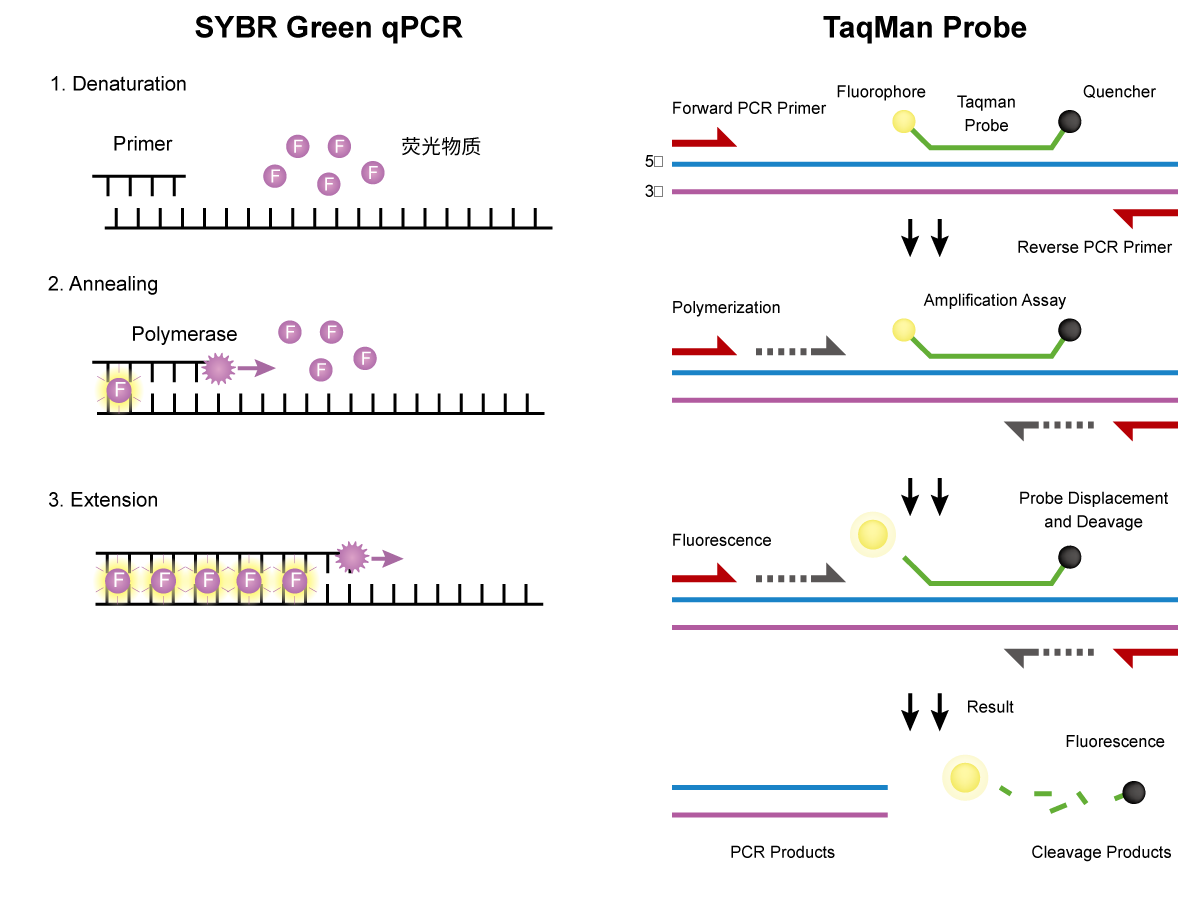
At Synbio Technologies, we understand that qPCR probes are critical tools for achieving accurate and reliable results in gene expression analysis, pathogen detection, and genetic mutation identification. Whether you are involved in basic research or clinical diagnostics, understanding how to design and effectively use real-time quantitative PCR probes is crucial for success. This article explores best practices in probe design and offers insights into optimizing their performance for your specific needs.
Key Considerations in Designing Effective qPCR Probes
Designing an effective qPCR probe involves multiple considerations to achieve high specificity and accuracy in real-time quantitative PCR assays. The length of the probe should be carefully chosen—typically, a 20-30 base pair range is optimal for binding to the target sequence. The melting temperature (Tm) must also be compatible with the PCR reaction conditions to ensure efficient binding during amplification. In addition to these factors, the sequence composition should be balanced to prevent secondary structures or self-dimerization, which can affect probe performance. At Synbio Technologies, we offer probes that can be customized to suit your experiment’s specific requirements, ensuring the highest level of specificity.
Optimizing Probe Performance for Accurate Gene Expression Analysis
Once a qPCR probe is designed, optimizing its performance is the next crucial step. Factors such as the primer concentration, cycling conditions, and reaction buffer can significantly impact the probe’s efficiency. In real-time quantitative PCR, it's essential to adjust these parameters to achieve consistent and reliable data. Our team at SynbioTechnologies works closely with customers to fine-tune these variables. This ensures that every probe we provide performs optimally in gene expression studies, pathogen quantification, and other applications. By offering tailored solutions, we ensure that the probe's performance aligns with your experimental needs.
Advanced Applications of qPCR Probes in Research and Diagnostics
The versatility of qPCR probes extends to various cutting-edge applications, particularly in research and diagnostics. For example, in pathogen detection, real-time quantitative PCR enables the quantification of viral loads, bacteria, or fungi, making it indispensable for clinical diagnostics and environmental monitoring. Additionally, qPCR probes can detect genetic mutations or SNPs, providing valuable insights into personalized medicine and genetic screening. At Synbio Technologies, we specialize in providing customized qPCR probes that meet the diverse needs of researchers and clinicians alike, offering solutions for everything from microbial contamination detection to gene mutation analysis.
Conclusion
Incorporating well-designed and optimized qPCR probes into your experiments is essential for obtaining reliable results in various research and diagnostic applications. Whether you're investigating gene expression, pathogen loads, or genetic mutations, the quality and design of the probe can significantly impact the outcome. At Synbio Technologies, we offer high-quality, customizable qPCR probes that ensure optimal performance, accuracy, and reliability for all your real-time quantitative PCR assays. By choosing the right probes and fine-tuning experimental conditions, researchers can achieve more precise and meaningful results.