
 DNA Synthesis
 Vector Selection
 Molecular Biology
 Oligo Synthesis
 RNA Synthesis
 Variant Libraries
 Genome KO Library
 Oligo Pools
 Virus Packaging
 Gene Editing
 Protein Expression
 Antibody Services
 Peptide Services
 DNA Data Storage
 Standard Oligo
 Standard Genome KO Libraries
 Standard Genome Editing Plasmid
 ProXpress
 Protein Products
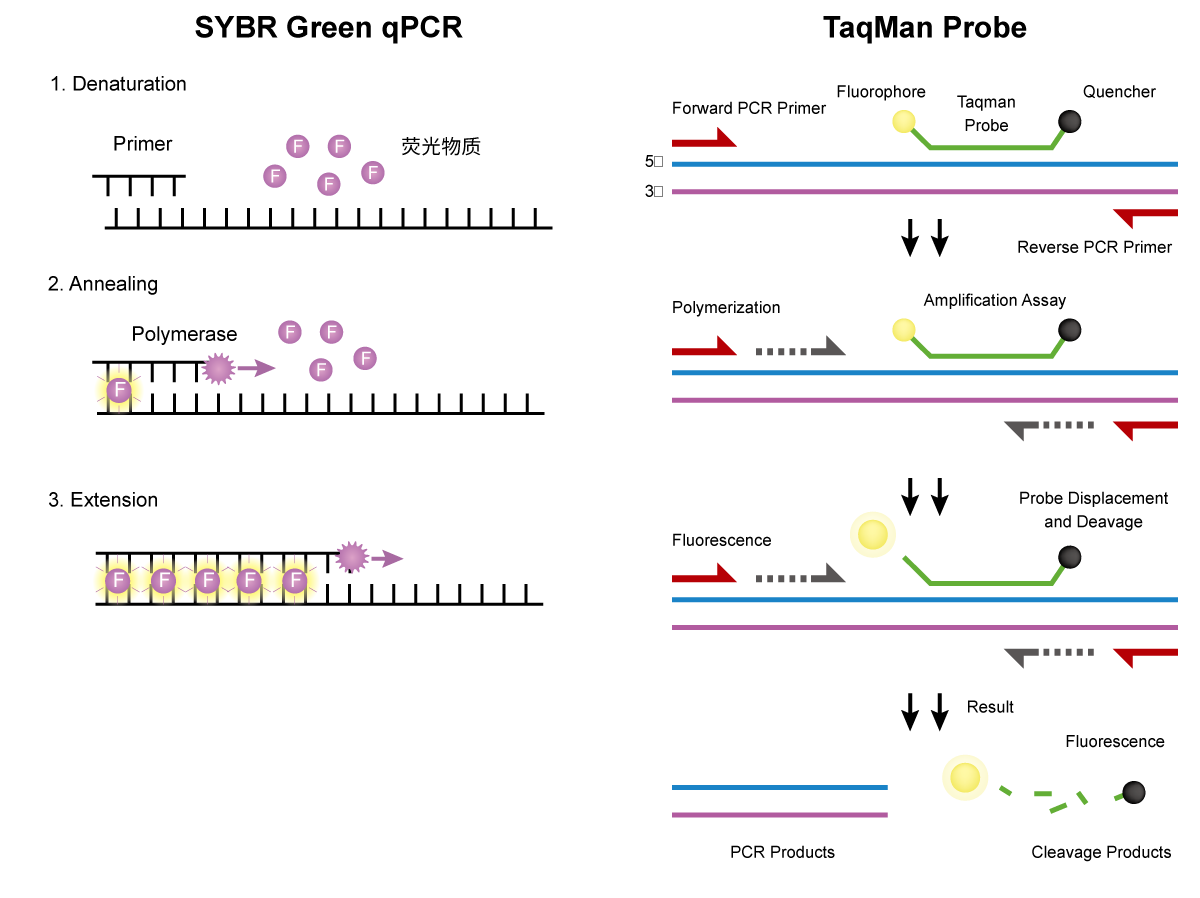
Synbio Technologies has long focused on developing reliable molecular tools, and our experience has shown us how essential proper probe design is for generating a stable qPCR Probe Fluorescence Signal. When we select or evaluate a qpcr probe, we consider not only target specificity but also how chemical structure, sequence orientation, and quenching efficiency contribute to the resulting qPCR Probe Fluorescence Signal. Understanding this connection helps us ensure that each probe performs consistently in quantitative analysis.
Key Structural Features That Influence Fluorescence
Probe structure directly determines how efficiently a signal forms during amplification. When we design a qpcr probe, we evaluate fluorophore placement, quencher compatibility, and probe length. Each of these factors shapes the intensity and clarity of the qPCR Probe Fluorescence Signal. For example, a probe that is too long may reduce hybridization efficiency, while a probe that positions the quencher too far from the fluorophore may not regulate the baseline signal effectively. By balancing these elements, we maintain stable performance across different reaction conditions. This careful approach ensures that a qPCR Probe Fluorescence Signal remains clear enough for interpretation without unnecessary fluctuation.
Hybridization Behavior and Reaction Efficiency
The interaction between the probe and its target sequence also plays a major role in signal development. We always analyze melting temperature, secondary structure, and target accessibility when designing a qpcr probe, because each of these influences when and how a qPCR Probe Fluorescence Signal appears during cycling. If hybridization occurs too weakly, signal generation may become inconsistent; if binding is too strong, reaction kinetics may be affected. Our experience shows that a balanced hybridization profile supports a smooth increase in fluorescence intensity, allowing researchers to interpret cycle thresholds with confidence. These design considerations reflect why the behavior of a qpcr probe is closely tied to the overall signal curve.
Conclusion: How Design Choices Shape Reliable qPCR Signals
In conclusion, the design of a qpcr probe has a direct and measurable impact on the resulting qPCR Probe Fluorescence Signal. Structural configuration, hybridization characteristics, and probe chemistry all determine how efficiently fluorescence develops throughout amplification. By paying attention to these elements, we help ensure that each qPCR Probe Fluorescence Signal reflects accurate quantitative information. For those seeking guidance on selecting probes suitable for different experimental formats, we provide resources that explain how sequence composition and labeling strategies influence performance. Through these efforts, Synbio Technologies supports reliable qPCR analysis with solutions that integrate both scientific understanding and practical application.