
 DNA Synthesis
 Vector Selection
 Molecular Biology
 Oligo Synthesis
 RNA Synthesis
 Variant Libraries
 Genome KO Library
 Oligo Pools
 Virus Packaging
 Gene Editing
 Protein Expression
 Antibody Services
 Peptide Services
 DNA Data Storage
 Standard Oligo
 Standard Genome KO Libraries
 Standard Genome Editing Plasmid
 ProXpress
 Protein Products
Innovation within the life sciences requires a rock-solid genetic foundation, a mission we pursue at Synbio Technologies to facilitate breakthroughs in synthetic biology. When researchers evaluate different methods for obtaining genetic material, they often weigh the speed of traditional cloning against the precision of modern assembly techniques. The primary goal is to obtain a sequence that matches the intended design without the introduction of unintended mutations or structural instabilities. At Synbio Technologies, we emphasize that the quality of the starting material dictates the reliability of every subsequent assay, from protein characterization to metabolic engineering. By comparing various manufacturing pathways, we help our partners identify the most efficient route for their specific project requirements. Our focus remains on eliminating the technical bottlenecks that arise from error-prone replication, ensuring that the final construct is a highly faithful reflection of the digital blueprint provided by the user.
Strategic Advantages of Whole Gene Synthesis
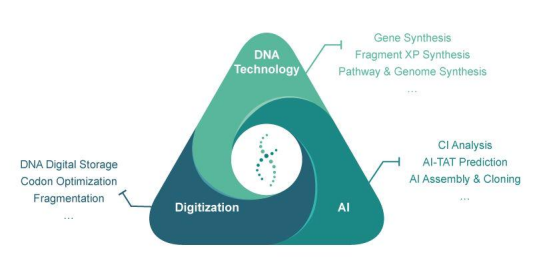
Traditional methods of obtaining DNA often rely on PCR amplification from natural templates, butWhole Gene Synthesis has emerged as a more flexible and reliable alternative. With Whole Gene Synthesis, we are not limited by the availability of a physical source or the constraints of restriction enzyme sites. This method allows for the de novo construction of any sequence, enabling the creation of chimeric genes or entirely synthetic pathways that do not exist in nature. However, Whole Gene Synthesis requires meticulous attention to detail during the oligonucleotide assembly phase to prevent the incorporation of truncated or mismatched fragments. We utilize advanced automation to oversee the Whole Gene Synthesis process, which significantly reduces human error and increases the yield of full-length products. By choosing Whole Gene Synthesis, researchers gain total control over the genetic architecture, allowing for a level of customization that traditional cloning simply cannot match. Furthermore, Whole Gene Synthesis serves as the primary vehicle for high-throughput library construction where diversity must be strictly controlled.
The Technical Necessity of High-fidelity DNA
Ensuring that a synthetic sequence is free from point mutations requires the consistent application ofHigh-fidelity DNA polymerase technology. Standard enzymes often lack the proofreading mechanisms necessary to correct errors during extension, which can lead to a high frequency of non-functional clones. By integrating High-fidelity DNA systems into our assembly protocols, we achieve an accuracy rate that is several orders of magnitude higher than conventional methods. This use of High-fidelity DNA is particularly crucial for long-range assemblies where the cumulative risk of error increases with every kilobase synthesized. We verify the performance of our High-fidelity DNA reagents through rigorous quality control, ensuring that the 3' to 5' exonuclease activity is functioning at peak efficiency. Relying on High-fidelity DNA minimizes the need for extensive downstream screening, saving both time and resources during the validation phase of a project. Our commitment to High-fidelity DNA standards ensures that the sequence you design is the exact sequence you receive.
Performance Enhancement Through Codon Optimization
Beyond the physical accuracy of the bases, the biological utility of a gene is often determined by the effectiveness ofCodon Optimization. When we perform Codon Optimization, we align the sequence with the specific tRNA abundance of the target expression host to maximize protein yield. This process of Codon Optimization also involves the strategic removal of secondary structures and repetitive elements that could interfere with the synthesis process itself. By applying Codon Optimization early in the design phase, we can bypass many of the common synthesis hurdles, such as high GC content or "slippery" homopolymer runs. Codon Optimization effectively transforms a difficult-to-synthesize sequence into a robust template that is compatible with our high-throughput pipelines. We view Codon Optimization as an essential step in modern genetic design, as it bridges the gap between theoretical modeling and practical laboratory success. Through iterative cycles of Codon Optimization, we ensure that every gene is tuned for its specific environmental context.
Our technical team at Synbio Technologies is dedicated to providing the most accurate and functional genetic tools available in the industry. By combining the flexibility of Whole Gene Synthesis with the uncompromising accuracy of High-fidelity DNA, we provide a service that empowers researchers to push the boundaries of what is possible. We recognize that the success of your research depends on the reliability of the tools you use, which is why we integrate Codon Optimization into our standard workflows to ensure peak performance. As the field of synthetic biology continues to grow, we remain focused on refining these core technologies to provide even greater precision and speed. TrustingSynbio Technologies for your synthesis needs means gaining a partner who understands the nuances of genetic design and the importance of sequence integrity. We look forward to supporting your next project with the highest quality synthetic DNA constructs.