
 DNA Synthesis
 Vector Selection
 Molecular Biology
 Oligo Synthesis
 RNA Synthesis
 Variant Libraries
 Genome KO Library
 Oligo Pools
 Virus Packaging
 Gene Editing
 Protein Expression
 Antibody Services
 Peptide Services
 DNA Data Storage
 Standard Oligo
 Standard Genome KO Libraries
 Standard Genome Editing Plasmid
 ProXpress
 Protein Products
Frequently, researchers encounter challenges when designing assays, which is why our team at Synbio Technologies prioritizes clarity in assay development. The accuracy of any Real-time Quantitative PCR workflow depends heavily on the initial design phase. When we assist clients in planning their experiments, we frequently address common oversights that can compromise sensitivity or specificity. By focusing on the fundamentals of molecular interactions, we help ensure that the data generated is both reliable and consistent across various laboratory environments.
Refining the Approach to qPCR Probe Selection
Effective qPCR probe selection requires a careful balance between the thermodynamic properties of the oligonucleotide and the specific requirements of the target sequence. We have observed that many errors arise from neglecting the melting temperature requirements, which should be significantly higher than those of the primers to ensure the probe binds before the polymerase extends the strand. AtSynbio Technologies, we advocate for checking the GC content of the probe to maintain an optimal range, typically between forty and sixty percent, to prevent non-specific binding. By strictly calculating these thermal parameters, the likelihood of stable hybridization increases, providing a much more robust signal during the amplification process. Focusing on these metrics early on saves significant time and resources during the actual laboratory bench work.
Improving Accuracy in Real-time Quantitative PCR
Achieving high levels of accuracy in Real-time Quantitative PCR necessitates a rigorous inspection of the secondary structure of the target region. It is common to find that potential hairpins or self-dimers in the probe sequence interfere with efficient binding to the template. We suggest that researchers screen their sequences against the entire target genome to ensure that no homologous regions exist that could cause unwanted cross-reactivity. When we evaluate designs, we emphasize the importance of identifying these potential conflicts before production. By minimizing the probability of secondary structures, we allow the probe to function exactly as intended, resulting in a cleaner baseline and improved quantification cycle values. Paying attention to these structural constraints is a practical step that directly improves the quality of the experimental output.
Essential Considerations for the Optimal qpcr Probe
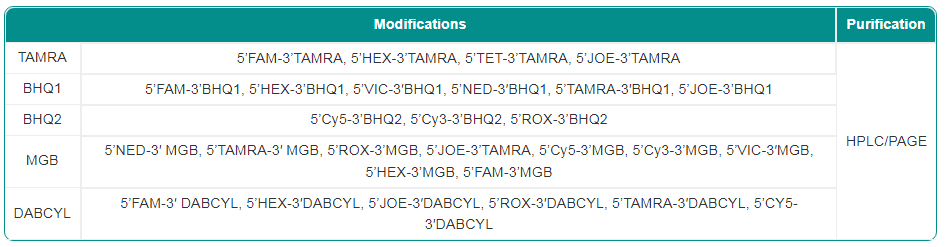
The choice of reporter and quencher dyes for a qpcr probe must also align with the detection capabilities of the available instrumentation. A frequent mistake is failing to account for spectral overlap, which can lead to increased background noise and decreased dynamic range. Our professional experience suggests that selecting a dye with an excitation and emission profile distinct from other reagents in a multiplex reaction is essential for high-fidelity detection. Furthermore, we emphasize the necessity of verifying the purity and concentration of the synthesized product. Using high-purity materials ensures that the stoichiometric relationship between the probe and the target remains constant, which is a requirement for precise quantification. Consistent attention to these technical details helps maintain the integrity of the data throughout the entire experimental workflow.
In summary, the transition from experimental design to successful data generation relies on careful attention to detail regarding probe characteristics and thermodynamic stability. By addressing common pitfalls like secondary structure formation and spectral interference early, researchers can improve the success rate of their molecular assays.Synbio Technologies remains dedicated to supporting your projects with the technical insights and high-quality materials required to achieve precise results in every qPCR application.