
 DNA Synthesis
 Vector Selection
 Molecular Biology
 Oligo Synthesis
 RNA Synthesis
 Variant Libraries
 Genome KO Library
 Oligo Pools
 Virus Packaging
 Gene Editing
 Protein Expression
 Antibody Services
 Peptide Services
 DNA Data Storage
 Standard Oligo
 Standard Genome KO Libraries
 Standard Genome Editing Plasmid
 ProXpress
 Protein Products
As a team at Synbio Technologies, we consistently address the question many researchers ask: how can i improve qpcr precision? A clear understanding of synthetic DNA standards, the behavior of the qPCR Probe Fluorescence Signal, and the role of the Fluorophore and Quencher pair is essential for achieving accurate absolute quantification. By refining these fundamental elements, we aim to help laboratories establish consistent workflows that support reliable data interpretation.
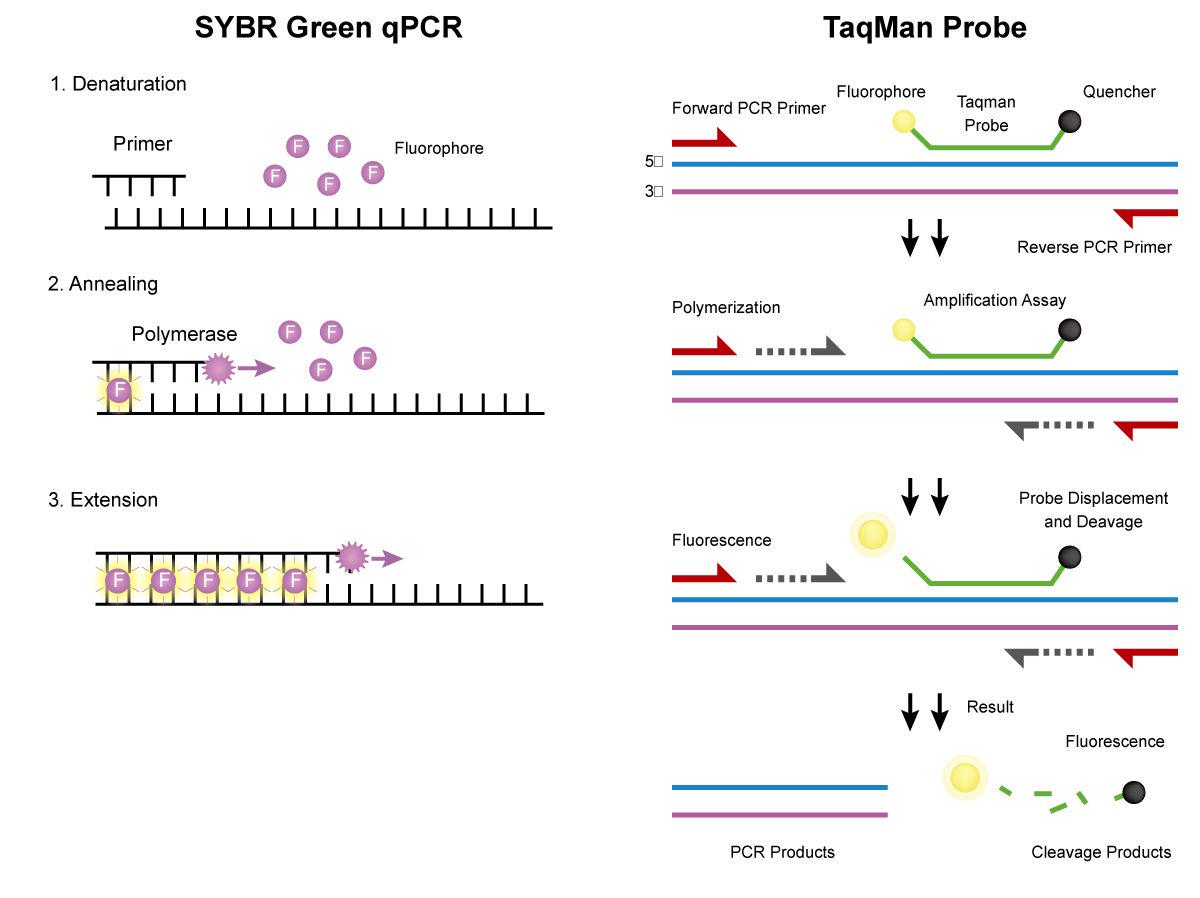
Building Reliable Standard Curves with Purpose-Designed DNA Standards
The first step in improving absolute quantification is selecting synthetic DNA standards that match experimental goals. When researchers evaluate how can i improve qpcr precision?, we often emphasize the value of sequence accuracy, controlled concentration, and stability during storage. Properly designed standards contribute to consistent curve slopes and minimize variability in the qPCR Probe Fluorescence Signal during amplification. In our work, we frequently observe that mismatched or degraded templates disrupt fluorescence progression because the Fluorophore and Quencher interaction becomes less predictable. To prevent these inconsistencies, we support users by offering precisely manufactured DNA constructs that maintain uniformity across experiments.
Understanding Probe Chemistry to Achieve Stable Fluorescence
A major portion of qPCR performance depends on the chemistry behind probes. When researchers examine how can i improve qpcr precision?, probe behavior is often a core factor. The balance between the Fluorophore and Quencher determines how efficiently the qPCR Probe Fluorescence Signal transitions from a suppressed state to a detectable one during polymerase activity. Variations in probe sequence, GC content, or secondary structure may influence quenching efficiency or fluorescence release. On our website, we discuss additional technical considerations such as signal decay, background noise, and probe stability, helping users understand how these elements affect quantification outcomes. This knowledge allows teams to select or adjust probe designs that match the characteristics of their synthetic DNA standards.
Managing Reaction Conditions to Support Accurate Quantification
Even with optimized DNA standards and well-designed probes, reaction conditions must be controlled. Temperature settings, enzyme activity, and buffer composition can influence the Fluorophore and Quencher performance and overall qPCR Probe Fluorescence Signal stability. Many users revisit the question how can i improve qpcr precision? when they encounter amplification shifts caused by inconsistent annealing or suboptimal master mix composition. By methodically adjusting these parameters, teams can enhance amplification efficiency while maintaining compatibility with synthetic DNA standards. These practices create an environment in which absolute quantification becomes both repeatable and interpretable.
Conclusion: Supporting Accurate qPCR Through Informed Standard Selection
Consistent absolute quantification relies on well-designed synthetic DNA standards, stable probe chemistry, and controlled reaction conditions. Addressing the fundamental question of how can i improve qpcr precision? requires attention to the qPCR Probe Fluorescence Signal and the interaction between the Fluorophore and Quencher pair. Through our experience at Synbio Technologies, we continue supporting researchers who require dependable components and guidance for improving qPCR workflows, helping them achieve more reliable quantification results.