
 DNA Synthesis
 Vector Selection
 Molecular Biology
 Oligo Synthesis
 RNA Synthesis
 Variant Libraries
 Genome KO Library
 Oligo Pools
 Virus Packaging
 Gene Editing
 Protein Expression
 Antibody Services
 Peptide Services
 DNA Data Storage
 Standard Oligo
 Standard Genome KO Libraries
 Standard Genome Editing Plasmid
 ProXpress
 Protein Products
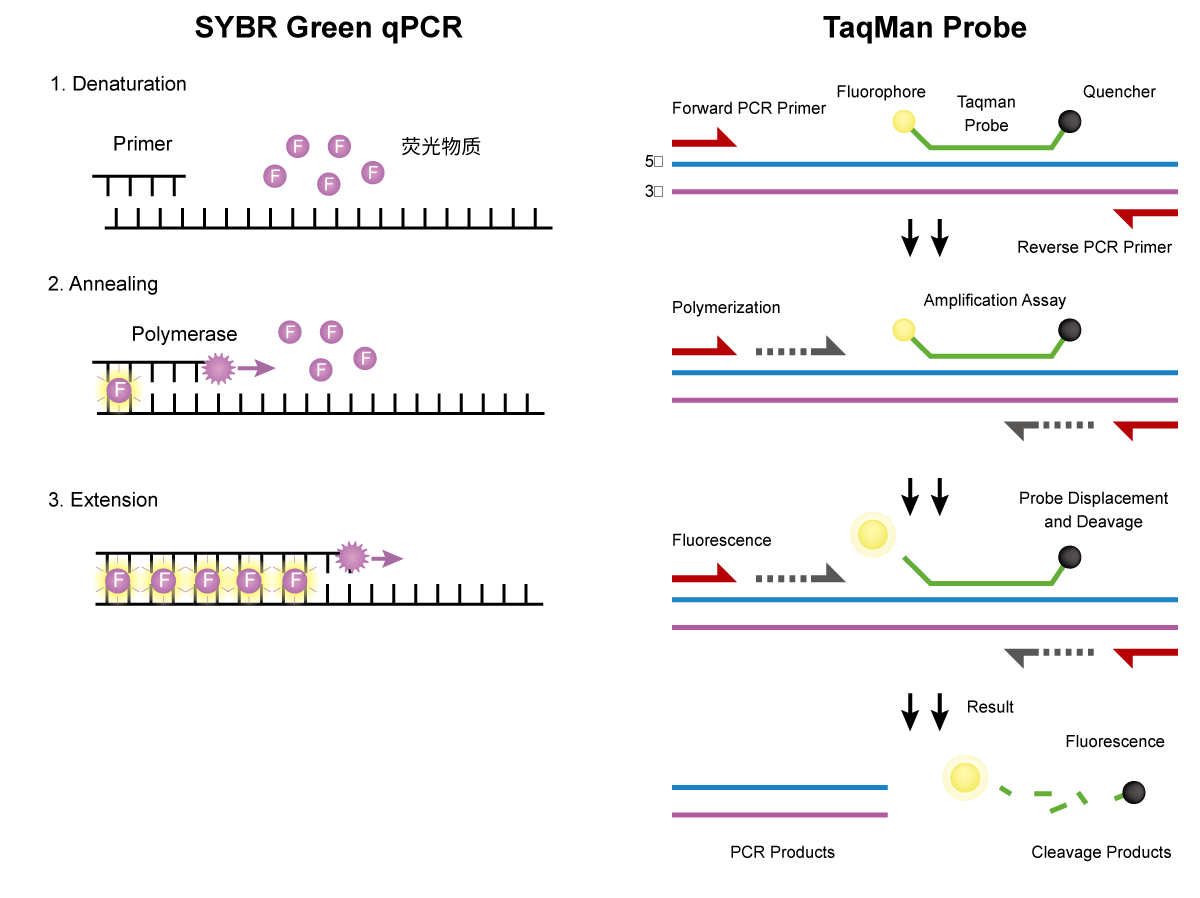
How can I improve qPCR precision? When it comes to achieving high precision in qPCR (quantitative Polymerase Chain Reaction) assays, the selection of the right probe can make all the difference. Fluorescence-basedqPCR assays rely on specific probes. These probes generate a fluorescence signal that accurately detects DNA amplification. Understanding the factors that contribute to probe performance and fluorescence signal accuracy is key. In this article, we will explore how Synbio Technologies improves qPCR precision through advanced probe manufacturing methods, focusing on the critical roles of Fluorophore and Quencher combinations.
Probe Design for Precision in qPCR
The heart of any qPCR assay lies in the probe design, which directly influences fluorescence signal accuracy. At Synbio Technologies, we ensure that our probes are designed with optimal length, GC content, and sequence specificity to guarantee precise hybridization with the target DNA. The balance of Fluorophore and Quencher within the probe is essential for minimizing background noise while maximizing the fluorescence signal. By carefully selecting the Fluorophore and Quencher pair, we enhance signal strength and minimize the risk of non-specific binding that could compromise assay accuracy.
Impact of Fluorophore and Quencher on Signal Sensitivity
The effectiveness of a qPCR probe is highly dependent on the Fluorophore and Quencher pair chosen for the assay. The fluorophore emits fluorescence when it absorbs light, while the quencher prevents fluorescence emission unless the probe is bound to its target sequence. At Synbio Technologies, we leverage a wide range of Fluorophore and Quencher combinations to optimize sensitivity and specificity in our probes. By selecting the right pair based on emission wavelengths and the capabilities of the qPCR machine, we ensure that our probes provide the most reliable signals with the highest precision. This careful selection process helps in improving overall assay performance.
Optimizing Probe Manufacturing for Enhanced qPCR Results
While traditional probe manufacturing methods may offer acceptable results, Synbio Technologies uses cutting-edge techniques to produce probes with higher consistency and improved performance. Our advanced probe manufacturing process ensures that every batch of probes meets stringent quality control standards, maintaining batch-to-batch consistency. The careful consideration of factors such as Fluorophore and Quencher efficiency, probe concentration, and hybridization conditions allows us to optimize the accuracy of qPCR assays. Additionally, we adjust the probe design to cater to specific project needs, further enhancing the precision and reliability of the results.
Conclusion
In conclusion, achieving high precision in qPCR assays requires more than just choosing a probe. It involves optimizing every aspect of the probe design and manufacturing process, especially the interaction between the Fluorophore and Quencher. At Synbio Technologies, we are committed to providing the highest-quality probes that improve qPCR precision by utilizing advanced manufacturing techniques, ensuring accuracy, and maximizing the efficiency of your assays. By focusing on these key factors, we help you achieve better, more reliable results in your molecular diagnostics and research applications.