
 DNA Synthesis
 Vector Selection
 Molecular Biology
 Oligo Synthesis
 RNA Synthesis
 Variant Libraries
 Genome KO Library
 Oligo Pools
 Virus Packaging
 Gene Editing
 Protein Expression
 Antibody Services
 Peptide Services
 DNA Data Storage
 Standard Oligo
 Standard Genome KO Libraries
 Standard Genome Editing Plasmid
 ProXpress
 Protein Products
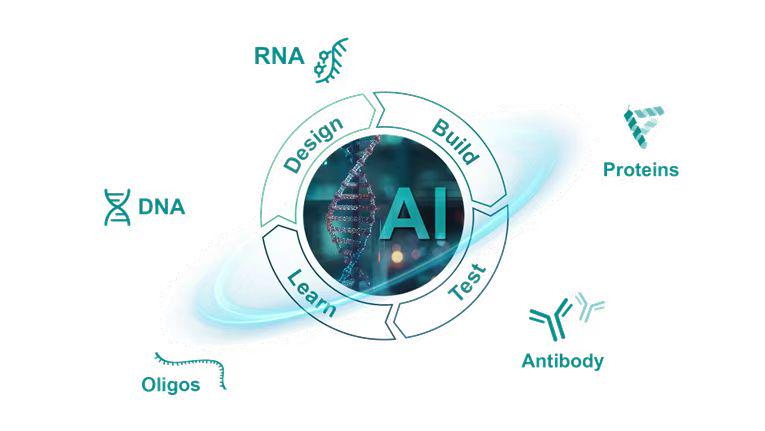
Synbio Technologies continues to develop gene synthesis solutions that support biopharmaceutical innovation, and as a synthetic biology company, we have seen how this technology influences nearly every stage of modern research. In early discovery, gene synthesis enables target validation, variant library design, and pathway exploration. These foundations help us build study systems that rely on accurate sequences while integrating each synthetic biology product into established workflows. As teams advance their programs, these early applications also strengthen future synthetic biology therapeutic development by ensuring consistency from the start.
Applications Supporting Discovery and Mechanistic Studies
In target evaluation, researchers frequently require precise constructs to assess gene function, and gene synthesis allows us to deliver these sequences without lengthy manual cloning. This is followed by variant library construction, which gives scientists the ability to examine many design options within a single project. Another common application involves engineered protein studies, where synthesized genes help explore structure–function relationships. Gene synthesis also supports viral vector prototyping and early mRNA template creation, both of which guide downstream design decisions. As asynthetic biology company, we observe how these applications shape the selection of each synthetic biology product and set the stage for future synthetic biology therapeutic exploration.
Applications Advancing Biologic and Vaccine Development
As research moves into development phases, gene synthesis enables antigen optimization for vaccine studies and antibody engineering for therapeutic programs. These applications help refine specificity, stability, or expression behavior in a predictable manner. Another important use is recombinant protein production, where reliable coding sequences are required to evaluate multiple functional variants. Gene synthesis also supports the creation of analytical control materials, which are essential for assay development and quality assessments. Because eachsynthetic biology product must function reliably during these evaluations, we work closely with teams looking to transition toward synthetic biology therapeutic programs that require reproducible data and consistent sequence design, reflecting our role as a practical synthetic biology company in biopharmaceutical pipelines.
Conclusion: Gene Synthesis as a Core Tool for R&D Progress
In summary, gene synthesis contributes to ten major applications across research, development, and production: target validation, library design, pathway modeling, protein engineering, vector prototyping, mRNA template creation, antigen optimization, antibody engineering, recombinant protein production, and analytical control preparation. These uses provide structured support for programs that rely on each synthetic biology product to maintain accuracy and reproducibility. As teams advance towardsynthetic biology therapeutic goals, gene synthesis enables consistent decision-making throughout their projects. We remain committed to providing solutions that align with scientific needs and strengthen the broader biopharmaceutical landscape through the continued work of Synbio Technologies.