
 DNA Synthesis
 Vector Selection
 Molecular Biology
 Oligo Synthesis
 RNA Synthesis
 Variant Libraries
 Genome KO Library
 Oligo Pools
 Virus Packaging
 Gene Editing
 Protein Expression
 Antibody Services
 Peptide Services
 DNA Data Storage
 Standard Oligo
 Standard Genome KO Libraries
 Standard Genome Editing Plasmid
 ProXpress
 Protein Products
The relentless pace of discovery in life sciences, from developing novel therapeutics to engineering advanced biofuels, is fundamentally dependent on a powerful tool: the ability to precisely obtain and manipulate genes.
While traditional molecular cloning relies on isolating genes from existing organisms, a revolutionary technique allows scientists to design and build any genetic sequence from scratch. This process is known as custom gene synthesis.
Gene synthesis has transformed the research, offering a convenient, fast, and highly reliable alternative to traditional cloning. For researchers and companies in the healthcare, biotechnology, and pharmaceutical sectors, a key question is: How to customize gene synthesis?
This guide breaks down the science behind custom gene synthesis and provides essential criteria for selecting the best provider. Read on to learn more.
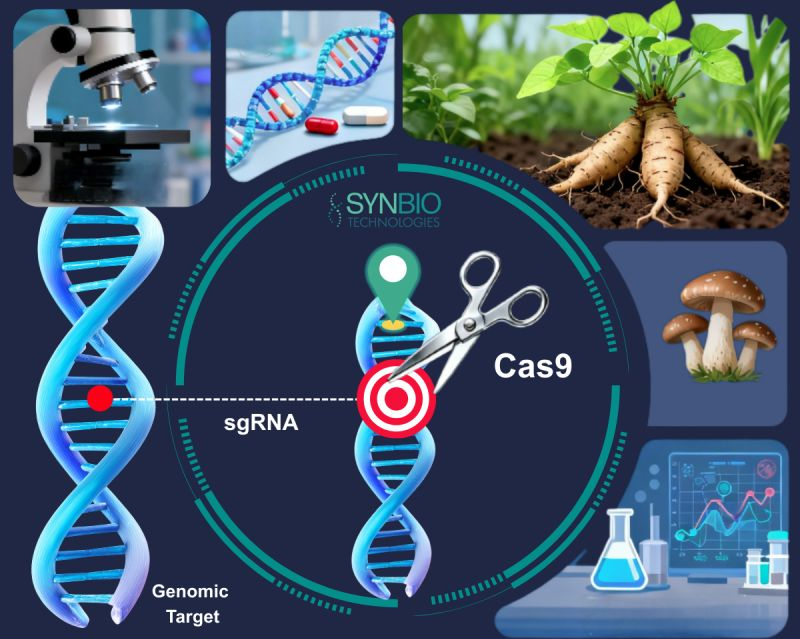
How Custom Gene Synthesis Works?
Custom gene synthesis is the process of chemically manufacturing a specific DNA sequence that does not require a template, enabling the de novo creation of genetic material. It moves through several critical stages, ensuring the final product is 100% accurate and ready for immediate use.
1. Sequence Design
Before any chemical reaction begins, the sequence must be engineered for optimal expression in the target host. This step is crucial for high-efficiency protein production and includes several optimization techniques:
-
Codon Optimization: Adjusting the gene sequence to utilize codons favored by the host organism without changing the resulting amino acid sequence. This promotes faster and more accurate translation.
-
Removal of Restriction Sites: Eliminating unwanted restriction enzyme recognition sites that could interfere with cloning.
-
GC Content Adjustment: Modifying the percentage of Guanine and Cytosine bases to stabilize the sequence and improve synthesis fidelity.
-
Addition of Tags and Functional Domains: Incorporating sequences for purification or detection, such as His-tag, Flag-tag, signal peptides, or other functional domains.
-
mRNA Structure Optimization: Adjusting the sequence to enhance the mRNA stability and translational efficiency.
2. Oligo Synthesis
The actual construction of the gene begins with chemical synthesis, typically using the phosphoramidite method. Since chemical synthesis is prone to error accumulation, it can only reliably produce short DNA fragments, or oligonucleotides (oligos), generally less than 200 base pairs (bp) in length.
3. Fragment Assembly
Once the short oligos are synthesized, they must be assembled into the full-length gene sequence:
-
Oligonucleotide Assembly: Overlapping PCR technology is utilized to assemble single-stranded oligos into double-stranded gene fragments.
-
Advanced Assembly Methods: For longer or more complex sequences, proprietary ligation techniques are employed. These methods allow providers to reliably assemble segments of several thousand base pairs.
4. Vector Cloning
The assembled, full-length synthetic gene is then inserted into a stable vector that researchers require for expression or study.
-
Standard Vectors: Providers often offer free vector storage and vector design.
-
Custom Vectors: Clients can specify cloning into any desired vector, often a critical requirement for specific expression systems or proprietary assays.
5. Sequence Verification
This is the most critical quality control step. After cloning, the plasmid is subjected to high-accuracy sequencing to guarantee the construct's integrity.
Sanger or Next-Generation Sequencing (NGS): Used to verify the final sequence, ensuring a guaranteed 100% sequence accuracy.
6. Delivery
The final product is often shipped as lyophilized plasmid DNA, ready for expression or other applications. Standard deliverables include the lyophilized plasmid DNA, sequencing data, and a Certificate of Analysis (COA).
Advantages of Custom Gene Synthesis
Custom DNA synthesis offers major efficiency and flexibility advantages over traditional methods.
-
Speed: It drastically reduces the turnaround time for obtaining a functional gene construct, accelerating research pipelines.
-
Accuracy: Guaranteed 100% sequence accuracy eliminates time-consuming and expensive in-house sequencing and correction efforts.
-
Flexibility: Researchers can create sequences that do not exist in nature or are too complex to isolate easily.
-
Optimization: The inclusion of professional codon optimization maximizes the probability of high-yield protein expression.
Applications of Custom Gene Synthesis
The precision and flexibility of synthetic gene construction have made it indispensable across nearly every sector of modern biotechnology:
-
Protein Expression: Generating optimized sequences for therapeutic proteins, industrial enzymes, and research reagents.
-
Vaccine Development: Rapidly producing synthetic DNA or mRNA sequences for novel vaccine candidates (e.g., COVID-19 vaccines).
-
Synthetic Biology: Building complex genetic circuits and metabolic pathways for engineering microbes and cells.
-
Gene and Cell Therapy: Providing hope for cancer treatment, such as CAR-T cell therapy.
For more information about gene synthesis applications, please read What are the Gene Synthesis Applications?
How to Choose a Gene Synthesis Provider
Selecting the right partner for your project is vital, especially when working with sensitive intellectual property or critical therapeutic programs. Here are the key factors to evaluate:
1. Accuracy & Quality Assurance
The foundation of any reputable gene synthesis service is quality. Demand providers who guarantee 100% sequence accuracy, validated through comprehensive sequencing (Sanger or NGS).
2. Price & Additional Services
While price per base pair is a factor, total value must be considered. Inquire whether the quoted price includes essential add-ons:
-
Free Codon Optimization: A standard service that should not incur extra costs.
-
Vector storage and design: Check if it is free.
3. Turnaround Time
Project timelines are often dictated by the turnaround time for receiving the synthetic gene. Providers offer tiered speed:
-
Short gene length: Common, non-complex sequences. It often needs 5-15 days.
-
Long gene: Gene synthesis of complex sequences often needs 3-4 weeks or months.
4. Data Security
When selecting a gene synthesis service provider, it is also essential to consider the security and confidentiality of your data. This includes a robust protocol that prohibits the provider from retaining, using, or disclosing your gene sequence data and related research information in any form.
Synbio Technologies' Whole Gene Synthesis
For research institutions and companies requiring uncompromising quality and reliability in their genetic material, Synbio Technologies offers a premier whole gene synthesis service.
Synbio Technologies provides guaranteed 100% sequence accuracy, supported by comprehensive data packages. Our service is designed to meet the strict demands of the healthcare and biotech sectors.
The core service includes:
-
Free codon optimization to maximize protein expression in your specified host.
-
Free vector storage and vector design ensure customer satisfaction.
-
Every gene is verified via sequencing, ensuring the final plasmid is exactly what you ordered.
-
Genes<3,000 bp can be delivered in 15 days. For genes >8,000 bp, please contact quote@synbio-tech.com to inquire about turnaround time and pricing.
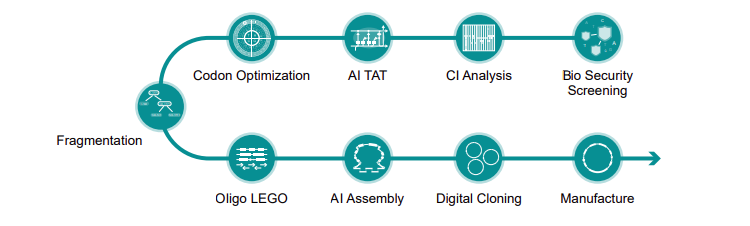
By choosing Synbio Technologies, you can accelerate your research from sequence design to plasmid delivery, making your next breakthrough closer than ever before.
Contact us now to custom gene synthesis to power your drug discovery or synthetic biology platform!