
 DNA Synthesis
 Vector Selection
 Molecular Biology
 Oligo Synthesis
 RNA Synthesis
 Variant Libraries
 Genome KO Library
 Oligo Pools
 Virus Packaging
 Gene Editing
 Protein Expression
 Antibody Services
 Peptide Services
 DNA Data Storage
 Standard Oligo
 Standard Genome KO Libraries
 Standard Genome Editing Plasmid
 ProXpress
 Protein Products
Gene synthesis refers to the process of artificially synthesizing specific double-stranded DNA molecules in vitro using chemical or biological methods.
Unlike traditional gene cloning techniques and polymerase chain reaction (PCR), which rely on existing biological templates for amplification, gene synthesis does not require natural templates. It allows for the complete freedom to design and construct artificial sequences that may not exist in nature.
In biotechnology, genetic engineering, and pharmaceutical research, the unparalleled speed, precision, design flexibility, and cost-effectiveness of gene synthesis make it an irreplaceable tool that surpasses traditional methods. So, what are the various gene synthesis applications? Read on to learn more.

Synthetic Biology Applications
Gene synthesis enables the precise design and construction of DNA sequences to explore and manipulate fundamental biological processes.
-
Gene function: By synthesizing specific genes or their variants, researchers can systematically investigate how individual genes contribute to cellular behavior, protein activity, or metabolic pathways.
-
Expression regulation: Synthetic genes can be engineered with custom promoters, enhancers, or regulatory elements to fine-tune gene expression levels in a controlled manner. This allows scientists to understand how different expression patterns affect cell physiology.
-
Cell signaling pathways: By creating synthetic versions of signaling proteins or receptors, researchers can probe cellular communication, test the effects of mutations, and reconstruct signaling circuits. This approach offers a powerful tool to dissect intricate molecular mechanisms and design synthetic biological circuits for research or biotechnological applications.
Medical and Pharmaceutical Applications
The healthcare sector, encompassing pharmaceutical and biotechnology companies, is where some of the most critical gene synthesis applications are realized, from drug discovery to next-generation therapies.
1. Antibody and Protein Production
Gene synthesis is central to biopharmaceutical production. Once a therapeutic protein or antibody sequence is identified, it is synthesized and codon-optimized for high-level expression in the chosen production host.
This optimization can significantly improve protein yield, which accelerates the development of treatments for cancer, autoimmune diseases, and infectious diseases.
2. Biopharmaceutical Drug Development
Gene synthesis facilitates the creation of novel biologics, including enzymes, growth factors, and therapeutic peptides.
Researchers can generate diverse variants for screening, optimize sequences for improved efficacy, and reduce immunogenicity, thereby streamlining drug discovery and preclinical testing.
3. Gene and Cell Therapy
Gene synthesis forms the technical backbone of advanced therapies.
-
Gene Editing Components: Synthetic DNA sequences are used to create crucial components for gene editing systems like CRISPR/Cas9, including guide RNAs (sgRNA) and modified Cas9 gene.
-
Advanced Therapies: For transformative treatments like CAR-T cell therapy, synthetic target genes or regulatory sequences are engineered and introduced into patient cells to enable them to recognize and attack cancer. Custom synthesis is essential for designing these highly specific therapeutic constructs.
4. Vaccine Development
The quick response to the COVID-19 pandemic highlighted the significant role of DNA synthesis in vaccine development.
-
mRNA and DNA Vaccines: Gene synthesis provides the DNA template required for the in vitro transcription of therapeutic mRNA, allowing for the incredibly fast design and manufacturing of next-generation mRNA vaccines. Similarly, it is used to produce and optimize DNA vaccine candidates.
-
Personalized Vaccines: It enables the creation of personalized cancer vaccines by synthesizing patient-specific tumor neoantigens for targeted immunotherapy.
5. Viral Packaging
Many gene therapy and genome editing approaches rely on viral vectors. Synthetic genes are used to construct viral genomes or packaging plasmids, enabling efficient and safe production of viral vectors for therapeutic applications.
Agricultural and Industrial Applications
Beyond medicine, gene synthesis application also extends to agriculture, environment protection, and industrial manufacturing. The broad range of gene synthesis methods and applications is critical for a more sustainable future.
1. Crop Improvement
By synthesizing and optimizing genes related to desired traits, such as pest resistance, herbicide tolerance, or enhanced nutritional content, researchers can create genetically modified crops.
Synthetic genes for traits like drought tolerance or resistance to specific diseases are introduced to enhance crop performance and ensure food security in challenging climates.
2. Bio-Pesticides and Environmental Bioremediation
-
Biological Control: Scientists can synthesize specific genes to develop advanced biological pesticides or beneficial microbial treatments for crops, reducing reliance on chemical agents.
-
Pollutant Degradation: Synthetic genes are designed to equip engineered microorganisms with new metabolic pathways that allow them to efficiently break down specific environmental contaminants, such as plastics, oil spills, or industrial pollutants.
3. Biofuel and Enzyme Engineering
-
Sustainable Energy: Metabolic engineering, powered by custom DNA synthesis, is used to design and optimize pathways in microbes (like yeast or bacteria) for the sustainable production of advanced biofuels, such as bio-ethanol and bio-butanol.
-
Industrial Enzymes: Gene synthesis allows for the rapid testing and optimization of enzymes for industrial use. By synthesizing and screening variant genes, researchers can select high-performance enzymes used in sectors like detergents, textiles, paper manufacturing, and food processing, thereby enabling more efficient and eco-friendly industrial processes.
Custom Gene Synthesis from Synbio Technologies
As evidenced by the diversity of gene synthesis applications, researchers require a highly reliable partner for their DNA synthesis needs. Synbio Technologies is a leading provider of customized gene synthesis services, committed to empowering scientific discovery across all sectors, especially the highly demanding biotech and pharmaceutical industries.
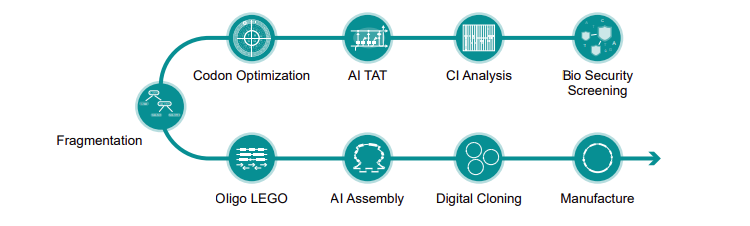
Synbio Technologies offers comprehensive whole gene synthesis services, leveraging an AI-powered platform to handle projects of any complexity, including those with high/low GC content or repetitive sequences.
We offer:
-
100% Accuracy Guarantee: All delivered DNA sequences are guaranteed to be 100% accurate.
-
AI-Powered Optimization: Utilization of the proprietary platform for NG Codon Optimization, Complexity Index (CI), and AI-TAT ensures maximum gene expression efficiency, stability, and synthesis success rate.
-
End-to-End Solutions: Synbio Technologies offers a complete suite of services, including gene synthesis, free codon optimization, free vector build, and free vector storage, ensuring a seamless transition from design to experiment.
-
Scalability: From standard gene synthesis to long-fragment gene construction, Synbio Technologies provides the capacity and expertise needed for large-scale industrial projects.
Conclusion
The numerous gene synthesis applications, from life-saving vaccines and cell therapies to sustainable fuels and pest-resistant crops, underscore its vital role in the future of life sciences.
By offering optimized and rapid solutions, Synbio Technologies stands as the premier partner for researchers seeking to leverage the full potential of gene synthesis applications in their work.
Ready to accelerate your research? Contact us for your next custom gene synthesis project!