
 DNA Synthesis
 Vector Selection
 Molecular Biology
 Oligo Synthesis
 RNA Synthesis
 Variant Libraries
 Genome KO Library
 Oligo Pools
 Virus Packaging
 Gene Editing
 Protein Expression
 Antibody Services
 Peptide Services
 DNA Data Storage
 Standard Oligo
 Standard Genome KO Libraries
 Standard Genome Editing Plasmid
 ProXpress
 Protein Products
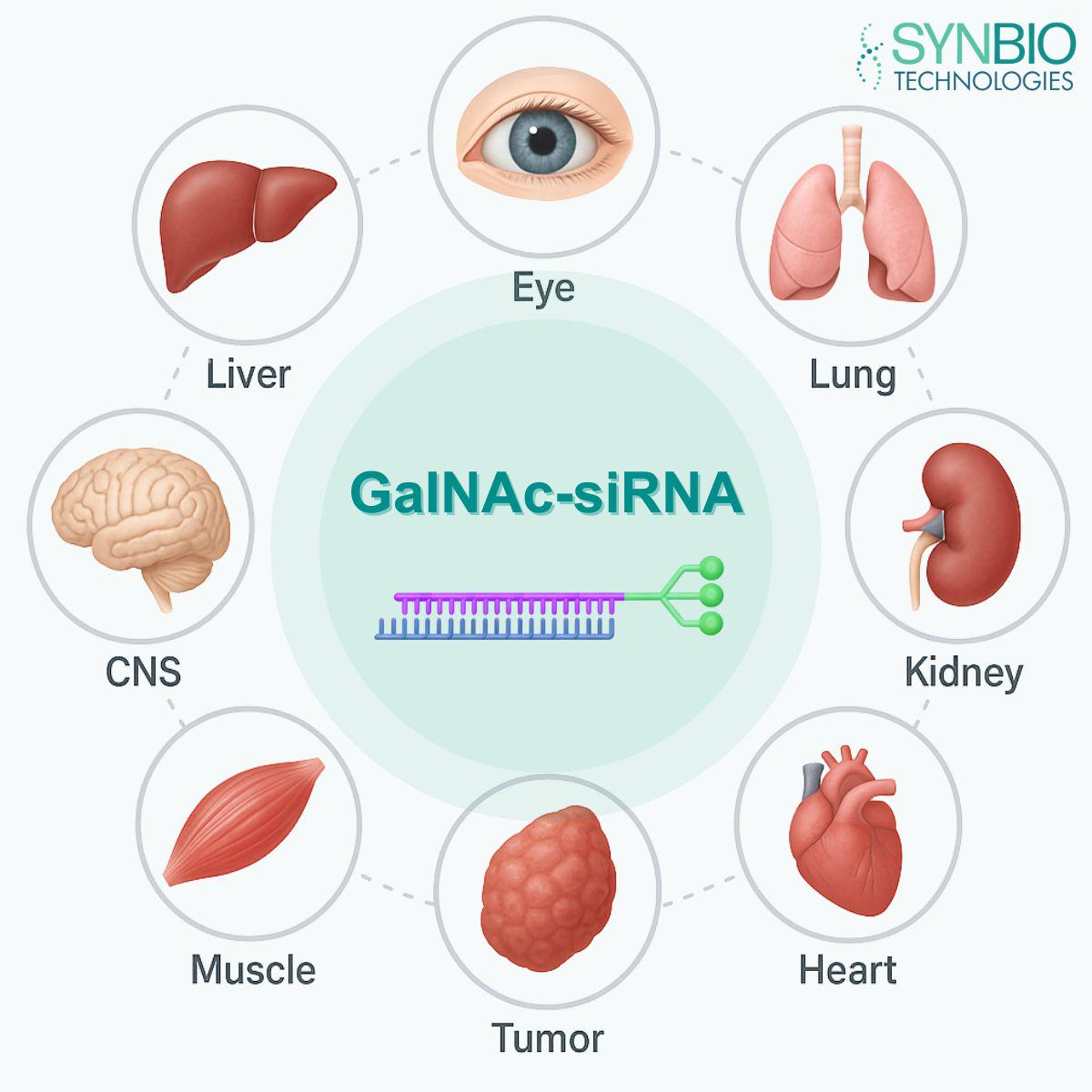
We start by analyzing the molecular structure of siRNA Drugs to understand how sequence features influence off-target interactions. Evaluating nucleotide composition, thermodynamic stability, and binding potential allows us to guide siRNA therapeutics toward efficient silencing of intended targets while reducing unintended effects. At this stage, GalNAc Technology is considered for tissue-specific delivery, helping us predict how liver-directed targeting might enhance efficacy. By combining structural insights with platform-specific considerations, we lay a solid foundation for subsequent design optimization.
Implement Data-Driven Screening
Next, we refine candidate sequences using rigorous bioinformatic screening. This ensures siRNA Drugs do not closely match unintended transcripts. Our team adjusts nucleotide placement, secondary structure, and sequence symmetry to improve selectivity. Applying this process to siRNA therapeutics minimizes off-target risks across different gene networks. We also integrate GalNAc Technology parameters to guide conjugation strategies, which can influence both stability and cellular uptake. This step provides a high-precision approach to reduce unintended interactions early in development.
Optimize Delivery Mechanisms
Even a well-designed sequence requires effective delivery. We assess chemical modifications, linker chemistry, and formulation strategies to ensure siRNA Drugs reach the intended tissue efficiently. Proper delivery enhances the performance of siRNA therapeutics and reduces the risk of off-target effects in non-target cells. GalNAc Technology supports liver-specific uptake through carbohydrate-mediated pathways, enabling precise tissue targeting. Our integrated approach ensures that molecules not only function as intended in vitro but also perform predictably in vivo.
Validate Functional Activity
After design and delivery optimization, we perform functional validation to confirm target engagement. We measure silencing efficiency and monitor unintended gene modulation to ensure siRNA Drugs act selectively. For siRNA therapeutics, this step is critical to detect subtle off-target interactions. Incorporating GalNAc Technology allows us to track tissue-specific activity and fine-tune dosage or conjugation strategies. Functional validation ensures that the molecules are ready for downstream research or clinical applications while maintaining safety.
Continuous Improvement and Monitoring
Finally, we implement ongoing evaluation to refine design principles. By analyzing experimental outcomes and incorporating feedback into future sequences, we enhance siRNA Drugs with each iteration. Continuous monitoring of siRNA therapeutics performance and GalNAc Technology effectiveness allows us to reduce off-target effects over time. This iterative approach supports the development of safer, more reliable molecules and strengthens our overall workflow at Synbio Technologies.
Conclusion:A Comprehensive Strategy
Developing siRNA Drugs with minimal off-target effects requires a structured, five-step strategy. From molecular assessment and data-driven screening to delivery optimization, functional validation, and continuous improvement, every step contributes to the reliability of siRNA therapeutics. Integrating GalNAc Technology enhances tissue-specific targeting and overall safety. By following these key steps, we ensure that our design process at Synbio Technologies is both scientifically rigorous and practically effective, supporting the development of precise and reliable RNA-based therapies.