
 DNA Synthesis
 Vector Selection
 Molecular Biology
 Oligo Synthesis
 RNA Synthesis
 Variant Libraries
 Genome KO Library
 Oligo Pools
 Virus Packaging
 Gene Editing
 Protein Expression
 Antibody Services
 Peptide Services
 DNA Data Storage
 Standard Oligo
 Standard Genome KO Libraries
 Standard Genome Editing Plasmid
 ProXpress
 Protein Products
Why Is Recombinant Collagen So Difficult to Produce?
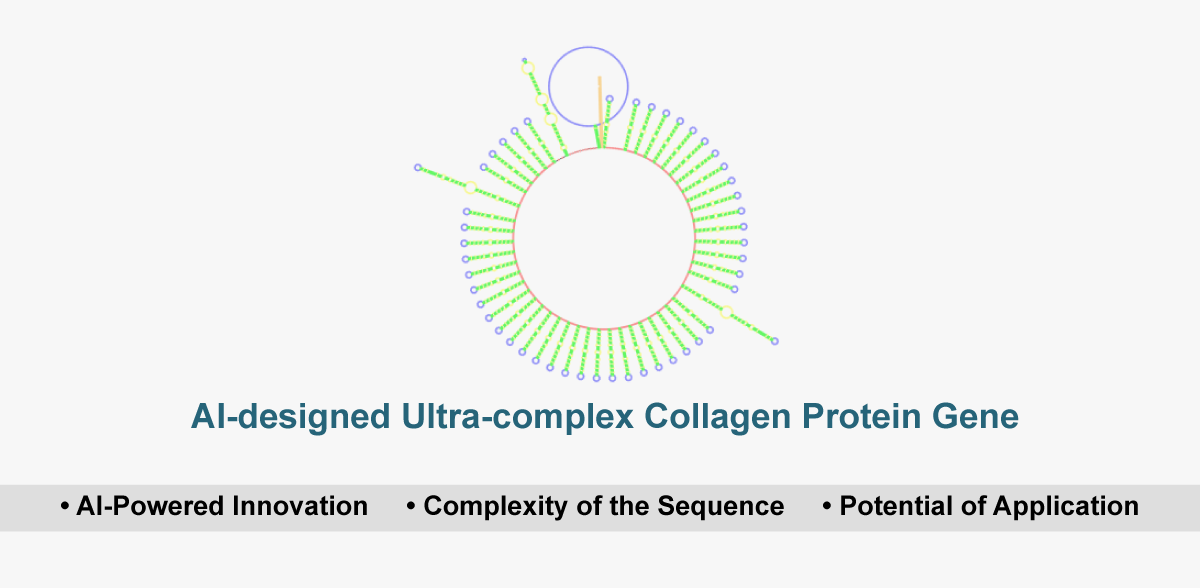
Researchers working with collagen quickly encounter a common challenge: the same repetitive sequences that make collagen biologically important also make it notoriously difficult to synthesize, clone, and express.
Collagen genes contain long stretches of repeated Gly-X-Y motifs, where glycine appears at every third position and the X and Y positions are frequently occupied by proline and hydroxyproline. These structural features are essential for forming the characteristic triple helix, but they can also complicate DNA synthesis, cloning, and protein expression.
As demand for Recombinant Collagen and Recombinant Human Collagen continues to grow across regenerative medicine, biomaterials, cosmetics, and biotechnology, researchers increasingly rely on Whole Gene Synthesis and Codon Optimization to overcome these challenges.
Synbio Technologies supports recombinant collagen development through gene synthesis, sequence engineering, codon optimization, and expression-oriented construct design.
What Is Recombinant Collagen?
Recombinant Collagen is collagen produced by genetically engineered cells instead of extraction from animal tissues. Researchers first design or select a collagen gene sequence, insert it into an expression system, and then express and purify the target protein.
This method is useful because collagen has a complex structure. Collagen molecules are usually built from three alpha chains that form a triple helix. Each chain contains repeated Gly-X-Y motifs, where glycine appears in every third position. These repeated patterns are important for structure, but they also make collagen genes difficult to synthesize and express.
That is why Whole Gene Synthesis plays a practical role. It allows researchers to build the desired collagen gene directly, instead of relying only on template cloning. With the right design, teams can test human-like collagen, collagen fragments, or engineered collagen-like proteins for specific research and industrial uses.
Why Is Recombinant Collagen Important?
Animal-derived collagen is widely used, but it can create concerns around source variation, batch consistency, pathogen risk, and animal-origin restrictions. Recombinant collagen can provide a more controlled and traceable production process compared with traditional animal-derived sources.
For researchers and biotechnology developers, recombinant collagen offers several advantages:
-
Better control over the amino acid sequence
-
More consistent starting material
-
Easier design of human collagen-like sequences
-
Potential reduction of animal-derived impurities
-
More flexibility for protein engineering
Recombinant Collagen is especially relevant for tissue engineering, wound repair research, cell culture materials, cosmetic ingredients, drug screening models, and biomaterial development. For R&D teams, the value is not only the protein itself. It is the ability to design, test, and refine collagen variants with a clear molecular starting point.
How Does Whole Gene Synthesis Support Recombinant Collagen Design?
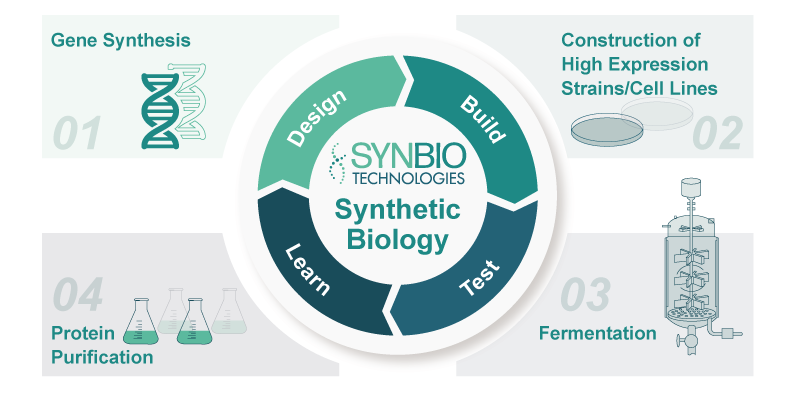
Whole Gene Synthesis helps researchers move from protein concept to DNA construct. This is important because collagen sequences are often long, repetitive, and structurally sensitive.
In a recombinant collagen project, researchers may need to select a full-length collagen chain, a collagen-like peptide, or a functional fragment. Full-length sequences may provide stronger biological relevance, but they can be harder to express. Shorter fragments may be more practical for early testing, high-throughput screening, or industrial process development.
Synbio Technologies provides recombinant collagen gene synthesis support for highly repetitive collagen sequences. The company also lists recombinant collagen solutions covering collagen family gene synthesis, multiple expression systems, and expression-related design. This is useful when researchers need a synthesis partner that can handle sequence complexity, not just standard gene fragments.
Whole Gene Synthesis can also include vector-related planning. Depending on the expression host, the construct may need cloning sites, tags, secretion signals, promoters, or other design elements. A well-designed gene can reduce problems during cloning, expression, and downstream validation.
Why Is Codon Optimization Critical for Recombinant Collagen Expression?
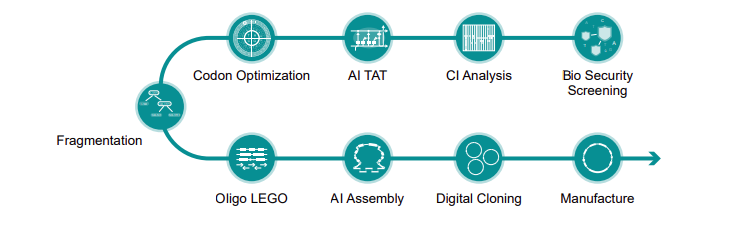
Codon Optimization means redesigning the DNA sequence while keeping the protein sequence unchanged. Different organisms prefer different codons, so a gene that works well in one host may express poorly in another.
For Recombinant Collagen, Codon Optimization is especially important because collagen genes contain many repeats. Poor design can lead to low expression, unstable plasmids, mRNA structure problems, or inefficient translation.
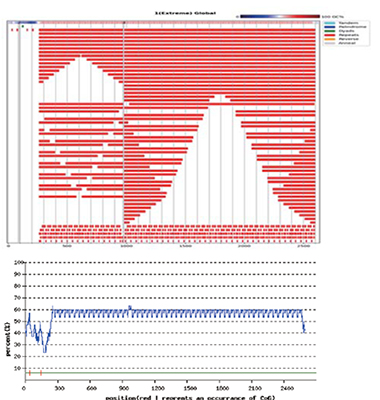
Good Codon Optimization should consider more than codon frequency. It should also review GC content, repeated DNA elements, RNA secondary structure, rare codons, internal restriction sites, and translation efficiency. This matters when the target protein is long, repetitive, or difficult to fold.
Synbio Technologies provides Codon Optimization as part of its gene synthesis support. For recombinant collagen projects, this can help researchers design genes for E. coli, yeast, or mammalian expression systems while preserving the intended collagen amino acid sequence.

Which Expression Systems Are Commonly Used for Recombinant Collagen?
Recombinant Collagen can be produced in several host systems. Each one has strengths and limits.
E. coliis fast, cost-effective, and widely used for recombinant protein expression. It can be useful for collagen-like fragments and early-stage screening. However, E. colidoes not naturally support the same collagen post-translational modifications found in human cells.
Yeast systems can support scalable fermentation and may offer advantages for secreted protein production. They are often considered when teams need a balance between cost, yield, and eukaryotic expression features. Codon Optimization is usually important when adapting collagen genes for yeast.
Mammalian systems are often selected when native-like post-translational modifications are required, although engineered yeast and microbial platforms have also been successfully developed for collagen production.
Synbio Technologies lists support for recombinant collagen expression in mammalian cells, yeast, and E. coli. Its service coverage includes collagen type I genes COL1A1 and COL1A2, type II COL2A1, type III COL3A1, and type XVII COL17A1.
What Challenges Should Researchers Expect?
Recombinant Collagen development requires more than DNA synthesis. Researchers should plan for sequence design, host selection, expression, purification, and protein characterization.
The main challenges include:
-
Repetitive gene sequences
-
Triple-helix folding
-
Hydroxylation and other post-translational modifications
-
Protein solubility
-
Purification yield
-
Batch-to-batch consistency
-
Functional validation
Hydroxyproline is especially important because it helps stabilize collagen’s triple helix. Some host systems do not naturally provide enough hydroxylation activity, so researchers may need host engineering, co-expression strategies, or careful selection of collagen fragments.
Why Researchers Choose Gene Synthesis for Recombinant Human Collagen Projects
Synbio Technologies can support the early and middle stages of Recombinant Collagen development through Whole Gene Synthesis, Codon Optimization, recombinant collagen gene synthesis, and expression-aware construct design.
For academic research groups, this can reduce time spent on difficult cloning. For biopharmaceutical and industrial biotechnology teams, it can support more consistent sequence design and faster screening of collagen variants. For R&D managers, working with Synbio Technologies can help connect gene design with practical expression planning.
By combining Whole Gene Synthesis and Codon Optimization, researchers can build recombinant collagen constructs that are better matched to the target host system and downstream application.
FAQ: Recombinant Collagen Development
What is recombinant human collagen?
Recombinant human collagen is collagen produced through recombinant DNA technology rather than extracted from animal tissues.
Why are collagen genes difficult to synthesize?
Collagen genes contain highly repetitive Gly-X-Y motifs that can complicate DNA assembly, cloning, and expression.
Why is codon optimization important for collagen genes?
Codon optimization can improve gene stability, translation efficiency, and protein yield while preserving the original amino acid sequence.
Which host system is best for recombinant collagen production?
The optimal host depends on the application. E. coli is useful for screening, while yeast and mammalian systems may provide additional expression advantages for more complex proteins.
Can full-length collagen genes be synthesized?
Yes. Modern gene synthesis technologies can support the synthesis and optimization of full-length collagen family genes, including highly repetitive sequences.
Conclusion
Recombinant Collagen depends on precise gene design, suitable host selection, and careful expression planning. Whole Gene Synthesis and Codon Optimization help researchers manage complex collagen sequences more effectively. With recombinant collagen-focused gene synthesis support, Synbio Technologies can help teams move from sequence concept to experimental validation more efficiently.