
 DNA Synthesis
 Vector Selection
 Molecular Biology
 Oligo Synthesis
 RNA Synthesis
 Variant Libraries
 Genome KO Library
 Oligo Pools
 Virus Packaging
 Gene Editing
 Protein Expression
 Antibody Services
 Peptide Services
 DNA Data Storage
 Standard Oligo
 Standard Genome KO Libraries
 Standard Genome Editing Plasmid
 ProXpress
 Protein Products
As Synbio Technologies, we work closely with researchers who rely on precise molecular tools to detect trace biomarkers in complex clinical samples. In liquid biopsy, sensitivity directly determines whether rare variants, circulating nucleic acids, or tumor-derived fragments can be identified at early stages. One essential component supporting this performance is the use of qPCR Probes, which help refine signal clarity and reduce background noise. Because liquid biopsy samples often contain low-abundance targets, we focus on designing systems that help improve this detection window. By integrating each oligonucleotide probe into a controlled workflow, we support studies that depend on reliable quantification even at minimal copy numbers.
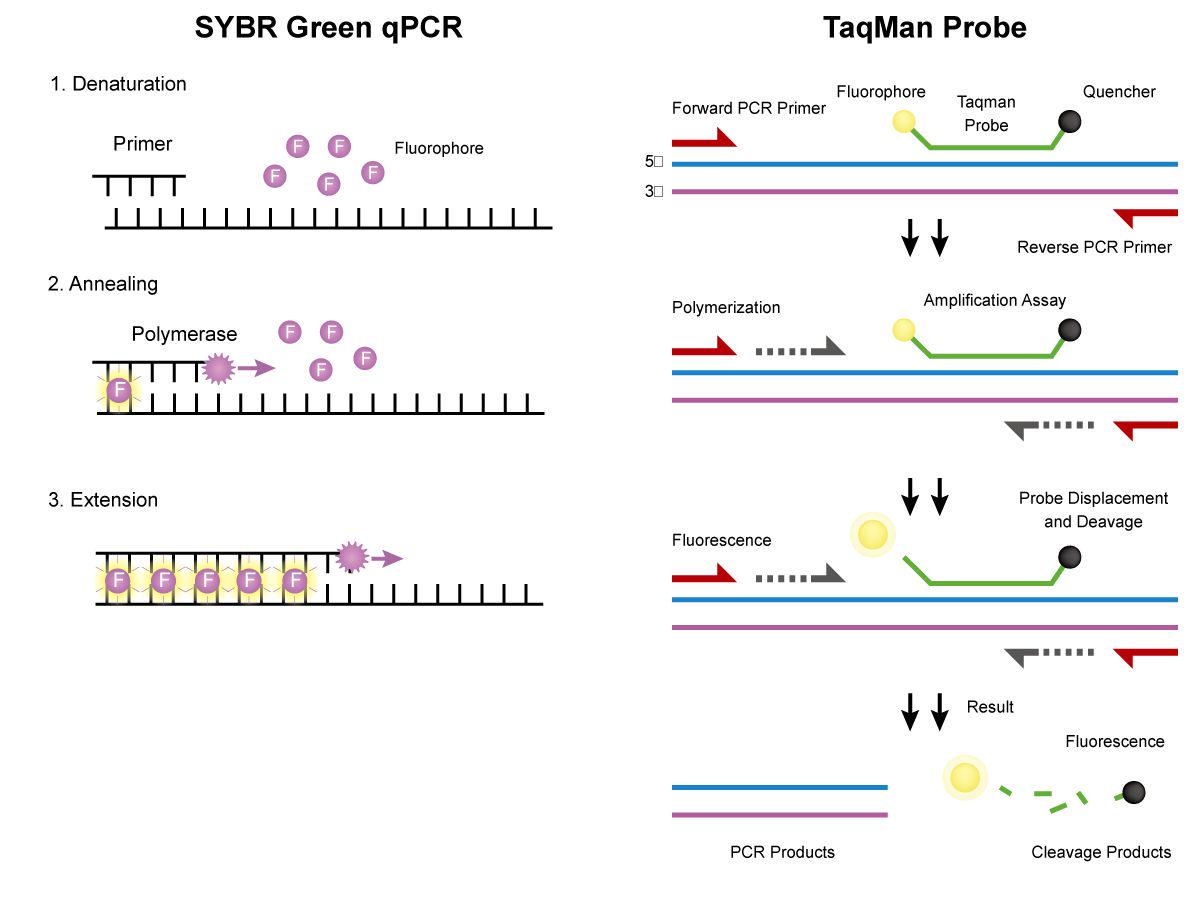
Mechanisms That Enhance Sensitivity
When we work with teams developing assays for liquid biopsy, we often discuss how qPCR Probes influence hybridization accuracy. These probes provide sequence-specific binding that reduces unintended amplification, which in turn helps distinguish true signals from noise. The design of each oligonucleotide probe affects its stability, fluorescence behavior, and tolerance to sample variability. Through careful adjustment of melting temperatures and sequence structures, researchers achieve more consistent signal generation during amplification cycles. Because liquid biopsy requires attention to extremely subtle differences, using well-designed qPCR Probes helps maintain analytical precision across repeated measurements.
How Probe Engineering Supports Low-Abundance Target Detection
The challenge with liquid biopsy is that informative biomarkers may be present at only a few copies per reaction. To support these applications, we provide probe configurations that match assay requirements while remaining compatible with routine laboratory workflows. When a highly specific oligonucleotide probe binds only to its intended sequence, it minimizes false positives that commonly arise from complex sample backgrounds. This behavior allows a clearer signal-to-noise ratio, which is essential for lowering the practical limit of detection. Our work also includes supporting researchers who need qPCR Probes with defined quenchers, fluorophores, or structural variations, giving them flexibility to adapt detection schemes for diverse platforms.
Practical Application in Diagnostic Development
As laboratories advance early-stage diagnostics, liquid biopsy assays increasingly rely on consistent performance across multiple batches of reagents. Our diagnostic probe and oligo solutions—which include customizable formats available through our catalog—are designed to integrate smoothly into established workflows without forcing changes to existing protocols. Each oligonucleotide probe is produced under controlled manufacturing processes to help maintain uniformity, enabling reproducible signals at low template concentrations. This controlled quality supports applications in rare mutation identification, circulating nucleic acid studies, and experimental verification tools where qPCR Probes must function reliably under variable sample conditions.
Conclusion: The Role of qPCR Probes in Pushing Detection Boundaries
The limit of detection in liquid biopsy depends on probe specificity, signal clarity, and stable amplification behavior. By applying qPCR Probes designed for high selectivity, researchers can capture low-abundance biomarkers with more consistent results. Our carefully produced oligonucleotide probe formats help maintain reproducibility and support the analytical depth required in modern diagnostic development. Through these solutions, Synbio Technologies continues to help laboratories refine liquid biopsy workflows and achieve clearer insight from challenging biological samples.