
 DNA Synthesis
 Vector Selection
 Molecular Biology
 Oligo Synthesis
 RNA Synthesis
 Variant Libraries
 Genome KO Library
 Oligo Pools
 Virus Packaging
 Gene Editing
 Protein Expression
 Antibody Services
 Peptide Services
 DNA Data Storage
 Standard Oligo
 Standard Genome KO Libraries
 Standard Genome Editing Plasmid
 ProXpress
 Protein Products
PD-L1 remains one of the most important immune checkpoint targets in cancer research, diagnostics, and drug discovery. But successful PD-L1 antibody discovery is not just about finding a binder. Research and industrial teams need antibodies that are specific, reproducible, expressible, and suitable for real downstream assays. That is why a well-planned workflow matters from the first antigen design step to recombinant antibody expression and validation.

Why Is PD-L1 Important in Antibody Discovery?
PD-L1 is important because it helps regulate immune responses through the PD-1/PD-L1 pathway.
In cancer biology, tumor cells may use PD-L1 expression to reduce T cell activity. When PD-L1 binds PD-1 on immune cells, the anti-tumor immune response can be weakened. Blocking the PD-1/PD-L1 interaction forms the basis of many immune checkpoint therapies and continues to drive extensive research into cancer immunotherapy.
For researchers, PD-L1 antibody discovery supports a broad range of applications, including cancer immunology, immuno-oncology, biomarker discovery, IVD assay development, drug screening, translational research, and therapeutic antibody development.
A PD-L1 antibody may be used for target detection, pathway analysis, blocking assays, biomarker research, or candidate therapeutic evaluation. However, different applications require different antibody properties. A detection antibody for IVD assay development is not always suitable for functional blocking research. An antibody that performs well against recombinant PD-L1 in ELISA may not recognize the native membrane-bound conformation expressed on cells.
What Makes PD-L1 Antibody Discovery Challenging?
PD-L1 antibody discovery is challenging because a useful antibody must perform across several checkpoints, not just one assay.
A candidate may show binding in early screening but fail later due to poor specificity, weak expression, aggregation, or limited performance in cell-based assays. For PD-L1, this risk is especially important because researchers often need antibodies that recognize the native, biologically relevant form of PD-L1 presented on the cell surface.
Before starting a project, teams should define the intended use:
Will the antibody be used for detection or blocking?
Should it recognize human PD-L1, mouse PD-L1, or both?
Will it be tested in ELISA, flow cytometry, IHC, or reporter assays?
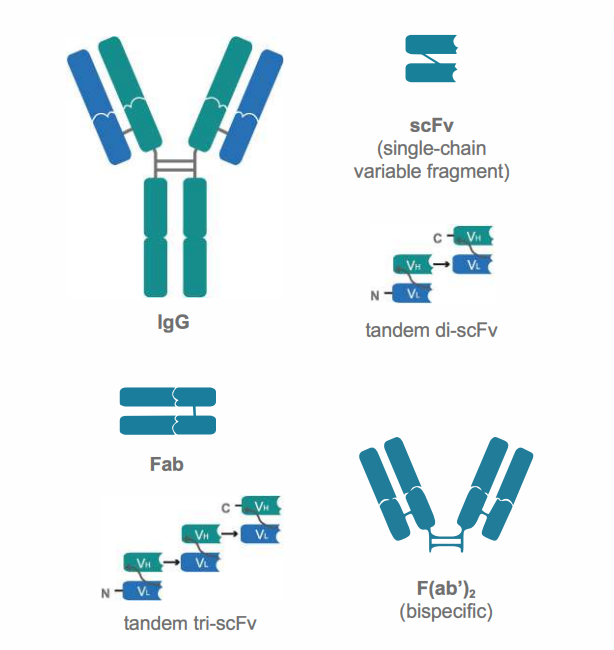
Is the final format expected to be IgG, Fab, scFv, bispecific antibody, or another engineered form?
These questions affect antigen design, screening method, expression strategy, and validation planning.
For example, a blocking antibody program may focus on the extracellular domain of PD-L1. An IVD research program may care more about staining consistency and specificity. A drug discovery team may need recombinant material for repeatable screening across many assay plates.
Why Does Recombinant Antibody Expression Matter?
Recombinant antibody expression matters because it gives researchers better control over sequence, format, and batch consistency.
Traditional antibody workflows can produce useful candidates, but recombinant workflows make the antibody sequence known and reusable. Once the sequence is confirmed, the antibody can be expressed again in a defined format. It can also be reformatted, optimized, humanized, or engineered for new research needs.
For PD-L1 antibody discovery, this control is useful at multiple stages.
First, recombinant antibody expression helps confirm whether a candidate can be produced as soluble antibody material. Some screening hits retain good binding affinity but show poor expression, low stability, or aggregation during recombinant production. Finding that problem early can save time.
Second, recombinant antibody expression allows format comparison. A candidate may exhibit different binding characteristics, stability, or functional activity when reformatted as an scFv, Fab, full-length IgG, or bispecific antibody. Testing the right format early helps teams avoid misleading data.
Third, recombinant antibody expression supports reproducibility. This is important for IVD research, drug screening, biopharmaceutical development, and academic studies that need consistent results across different batches and experiments.
In short, expression quality should not be treated as a final step. It should be part of the selection process.
How Can Synbio Technologies Support This Workflow?
Synbio Technologies can support PD-L1 antibody discovery by connecting antibody engineering, gene synthesis, recombinant antibody expression, and purification in one workflow.
According to its recombinant antibody production service, Synbio Technologies provides recombinant antibody production in several formats, including scFv, Fab, bispecific antibodies, and chimeric antibodies. This flexibility is useful because PD-L1 research projects often require different antibody structures for different applications.
For example, scFv and Fab formats may support screening and engineering. Full-length IgG antibodies may be needed for functional testing. Bispecific antibodies are increasingly explored for next-generation cancer immunotherapy. Chimeric antibodies can help bridge early discovery and later development work.
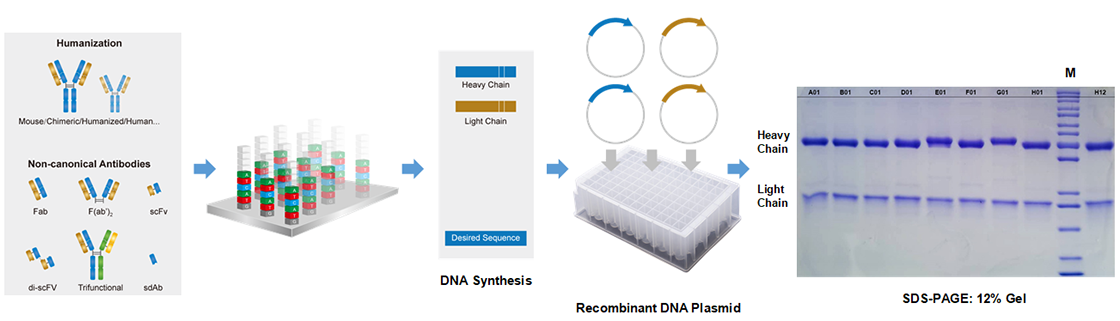
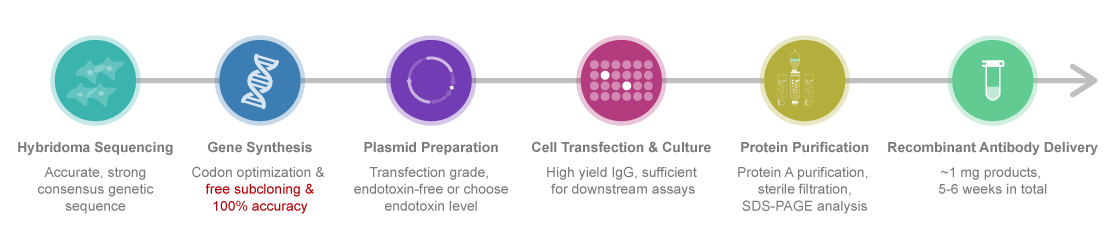
Synbio Technologies also describes a workflow that can include codon optimization, gene synthesis and cloning, transfection-grade plasmid preparation, cell transfection and cultivation, protein purification, and recombinant antibody production. This helps reduce the need to move a project across several vendors.
For time-sensitive research, this can be practical. Synbio Technologies lists delivery as fast as 2 weeks for recombinant antibody production. For hybridoma-to-recombinant antibody projects, the standard time is generally 5–6 weeks, with deliverables such as expression evaluation, μg–mg antibody or about 1 mg of antibody, and a QC report.
For R&D managers, this type of workflow can improve project coordination and reduce workflow complexity.
What Should Researchers Validate After Expression?
After recombinant antibody expression, researchers should validate identity, purity, binding, specificity, and function.
The first step is quality control. Teams should check whether the antibody was expressed, purified, and delivered at the expected level. Purity and concentration matter because poor-quality material can create false assay results.
The second step is binding confirmation. A PD-L1 candidate should be tested against the most relevant form of the target. This may include recombinant PD-L1 protein, PD-L1-positive cells, or disease-relevant model systems.
The third step is specificity testing. Researchers may compare PD-L1-positive and PD-L1-knockout cells or use negative cell lines to evaluate specificity. They may also test related targets or species homologs if cross-reactivity is important.
For blocking antibody programs, functional validation is essential. A useful candidate should be tested for its ability to interfere with the PD-1/PD-L1 interaction. This may require biochemical blocking assays, cell-based reporter systems, or immune cell co-culture models.
This step separates simple binders from candidates that may support deeper drug discovery or immune checkpoint research.
How Can Teams Reduce Project Risk?
Teams can reduce risk by building PD-L1 antibody discovery as a staged process.
Start with clear application goals. Then select the right antigen format. After screening, keep several candidates active instead of choosing only one. This is important because one candidate may bind well but fail during recombinant antibody expression or functional testing.
It is also useful to test expression feasibility early. If a candidate is difficult to express, aggregate-prone, or unstable after purification, it may slow the whole project.
Species cross-reactivity should also be considered early. Many oncology studies use animal models before human-focused validation. If human and mouse PD-L1 recognition matters, researchers should include that requirement in the screening and validation plan.
Finally, teams should avoid relying only on affinity. High affinity is helpful, but it is not enough. A good PD-L1 antibody should also show specificity, expression stability, assay compatibility, and functional relevance.
Why Choose a Connected Antibody Workflow?
A connected antibody workflow matters because many antibody discovery problems happen between steps.
1. A screening hit may not express well.
2. An expressed antibody may lose activity after reformatting.
3. A protein-binding antibody may fail on cells.
4. A cell-binding antibody may not block PD-1/PD-L1 signaling.
5. A promising research antibody may not remain consistent across batches.
By combining sequence design, gene synthesis, recombinant antibody expression, purification, and QC, Synbio Technologies helps researchers move from discovery to usable antibody material with fewer workflow gaps.
For PD-L1 antibody discovery, this is especially valuable. The target is biologically important, but the research path can be complex. A structured workflow helps teams make better decisions earlier and move stronger candidates into validation.
Conclusion
PD-L1 antibody discovery works best when target biology, screening design, recombinant antibody expression, and validation are planned together. Synbio Technologies provides integrated recombinant antibody services that support research and industrial teams develop more reliable PD-L1 antibody candidates.