
 DNA Synthesis
 Vector Selection
 Molecular Biology
 Oligo Synthesis
 RNA Synthesis
 Variant Libraries
 Genome KO Library
 Oligo Pools
 Virus Packaging
 Gene Editing
 Protein Expression
 Antibody Services
 Peptide Services
 DNA Data Storage
 Standard Oligo
 Standard Genome KO Libraries
 Standard Genome Editing Plasmid
 ProXpress
 Protein Products
At Synbio Technologies, we focus on providing high-quality solutions in RNA Synthesis that support diverse research and therapeutic needs. Understanding the distinction between mRNA synthesis and DNA synthesis is critical for researchers and developers. While DNA synthesis involves creating stable sequences that can serve as long-term templates, RNA synthesis from DNA template allows us to generate transient transcripts quickly, enabling immediate biological studies. Our system integrates precise enzymatic reactions and optimized protocols, which ensures that the RNA products are consistent and suitable for downstream applications. These capabilities are particularly relevant for labs exploring RNA Therapy Applications, where efficiency and accuracy directly influence experimental outcomes.
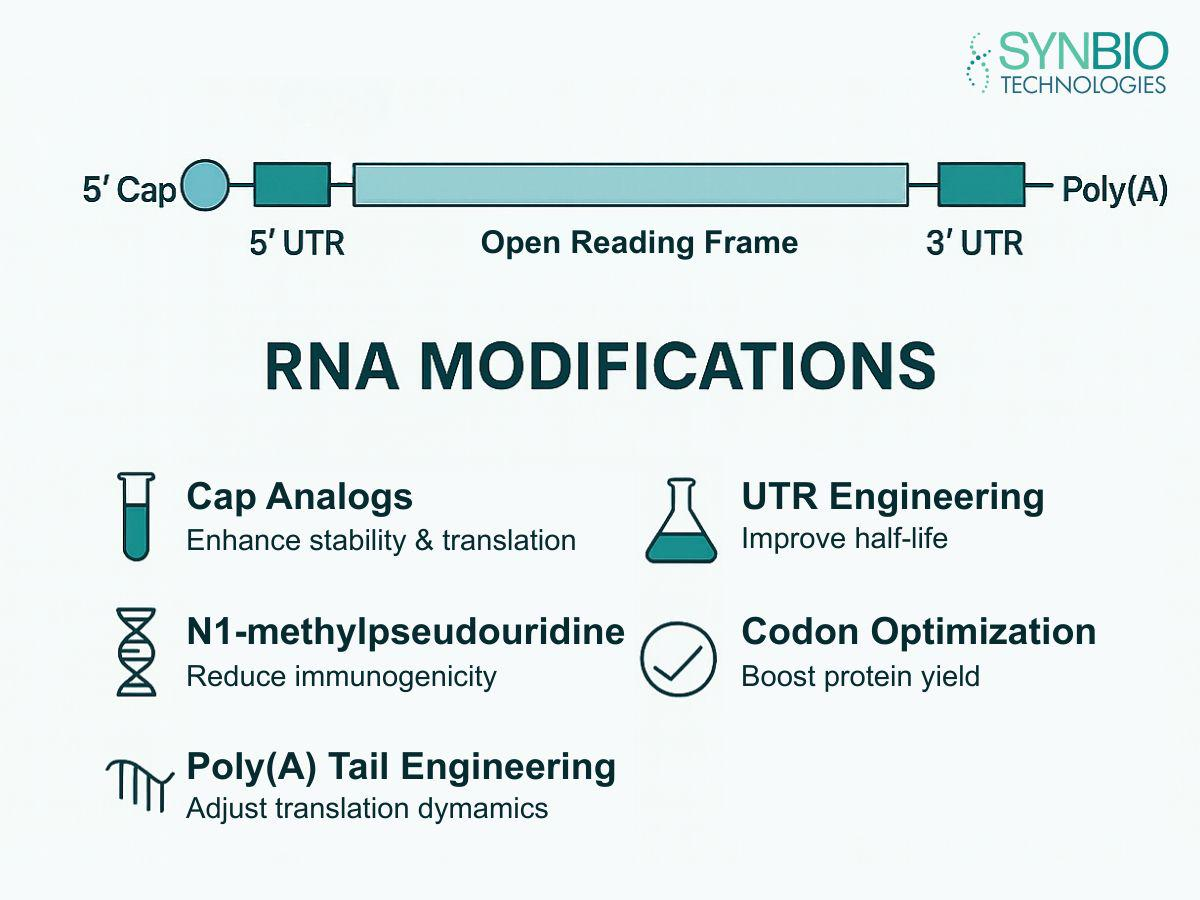
Differences in Molecular Structure and Production
DNA and mRNA differ in their chemical stability and biological roles. DNA provides a permanent record of genetic information, while mRNA acts as a transient messenger to guide protein synthesis. Our team utilizes RNA Synthesis techniques to convert DNA templates into functional RNA strands, maintaining integrity and minimizing degradation. We ensure that every batch aligns with the intended sequence, allowing researchers to explore gene expression and protein production effectively. In comparison, DNA synthesis produces constructs that are more durable but require additional steps for transcription into RNA, making our RNA synthesis from DNA template services crucial for applications that demand rapid testing cycles and flexibility in experimental design.
Application in Research and Therapeutics
In therapeutic research, RNA Therapy Applications have gained attention for their ability to transiently modify protein expression without altering the genome. Our platform supports this by generating high-purity RNA molecules ready for preclinical studies and drug development. We have optimized workflows that allow our clients to move from DNA design to RNA product generation efficiently, bridging a key gap in experimental workflow. Additionally, our approach provides reproducibility, which is essential for industrial-scale projects and translational research. By integrating RNA Synthesis into our offerings, we help researchers streamline experiments that would otherwise require multiple, time-consuming procedures.
Conclusion: Practical Insights for Choosing the Right Synthesis Method
Choosing between mRNA and DNA synthesis depends on the specific research goals and therapeutic strategies. At Synbio Technologies, we provide both capabilities, but our RNA synthesis from DNA template services are particularly valuable for projects focused on RNA Therapy Applications and rapid functional studies. By combining precise production, robust quality control, and adaptable protocols, we support researchers in achieving consistent results while exploring innovative applications. Understanding these differences allows labs to select the right approach, ultimately improving the efficiency of both basic and translational studies. Our dedication to advancing RNA Synthesis ensures that clients can confidently navigate the evolving landscape of nucleic acid research.