
 DNA Synthesis
 Vector Selection
 Molecular Biology
 Oligo Synthesis
 RNA Synthesis
 Variant Libraries
 Genome KO Library
 Oligo Pools
 Virus Packaging
 Gene Editing
 Protein Expression
 Antibody Services
 Peptide Services
 DNA Data Storage
 Standard Oligo
 Standard Genome KO Libraries
 Standard Genome Editing Plasmid
 ProXpress
 Protein Products
At Synbio Technologies, we continue exploring how improvements in RNA Synthesis allow vaccine developers to refine their designs and achieve consistent performance in research environments. As global interest in nucleic-acid-based therapeutics grows, we often receive questions about whether a more optimized mRNA synthesis process can support better vaccine outcomes. From our experience providing RNA-related solutions for research groups, we have seen how careful control of template quality, enzyme selection, and reaction conditions influences downstream biological behavior. When teams evaluate these details early, they establish a more reliable foundation that helps them advance vaccine concepts with greater clarity.
Understanding How Optimization Affects mRNA Function
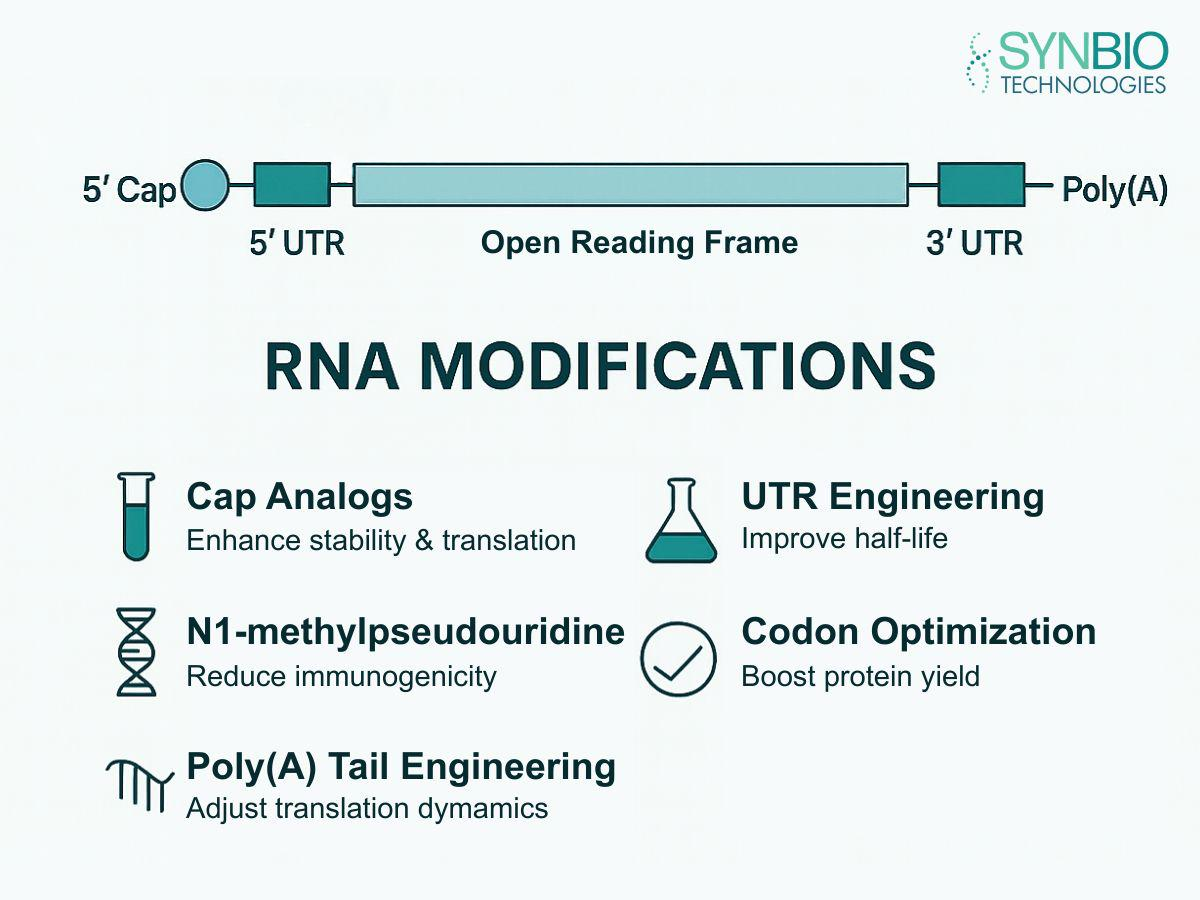
When discussing RNA-based vaccine development, optimization is not about altering the scientific purpose of the molecule but about improving consistency and reducing variability. Through refined RNA Synthesis, researchers can stabilize components that influence translation efficiency, minimize unintended structures, and improve the predictability of experimental results. As part of our work supporting clients at different stages, we frequently guide teams through considerations such as reaction balance, template verification, and purification strategies that contribute to a dependable mRNA synthesis process. These steps matter for groups investigating antigen expression, immune modulation, or delivery performance. Drawing from our experience and the principles shared in our technical resources, including enzyme control and reaction clean-up strategies, we help researchers understand how process choices directly affect experimental outcomes.
Applying mRNA Optimization to Vaccine Development
Vaccine programs often require thoughtful evaluation of how mRNA behaves within a biological system. When developers focus on the early design and preparation stages, they create clearer pathways for downstream testing. By strengthening each stage of RNA Synthesis, research teams can assess changes in stability, structure, and functional output before evaluating immune-response studies. Our company supports these efforts by offering process guidance and reliable material preparation that align with established research practices. We have seen how a consistent mRNA synthesis process allows teams to compare formulations more accurately, examine structural variants with fewer experimental interruptions, and refine candidate sequences based on measurable responses. These improvements help developers maintain momentum during vaccine exploration, especially when evaluating new platforms or delivery concepts.
Conclusion: Why Process Refinement Matters for Vaccine Research
Optimizing the mRNA synthesis process does not guarantee a specific vaccine result, but it establishes a clearer and more controlled starting point for scientific evaluation. Through careful attention to RNA Synthesis, researchers gain better insight into molecular performance, stability, and expression behavior—factors that influence the overall direction of vaccine programs. At the end of our workflow, we aim to provide practical support to teams studying mRNA-based strategies by offering dependable preparation methods and technical guidance that fit into their development plans. As we continue expanding our capabilities at Synbio Technologies, we remain committed to helping researchers strengthen their experimental foundations and explore vaccine concepts with informed, well-structured approaches.