
 DNA Synthesis
 Vector Selection
 Molecular Biology
 Oligo Synthesis
 RNA Synthesis
 Variant Libraries
 Genome KO Library
 Oligo Pools
 Virus Packaging
 Gene Editing
 Protein Expression
 Antibody Services
 Peptide Services
 DNA Data Storage
 Standard Oligo
 Standard Genome KO Libraries
 Standard Genome Editing Plasmid
 ProXpress
 Protein Products
At Synbio Technologies, we frequently receive questions about whether Modified sgRNA provides meaningful advantages over unmodified formats in gene therapy research. As laboratories continue to explore therapeutic genome editing, the quality of guide RNA plays a critical role in experiment reliability and downstream biological effects. By carefully evaluating how sgRNA Synthesis influences stability, specificity, and delivery performance, we aim to help researchers decide when enhanced chemical features are beneficial. While unmodified sgRNA remains useful in some workflows, the added refinements introduced during Chemical synthesis sgRNA often make a measurable difference in demanding therapeutic environments.
Stability and Performance Considerations
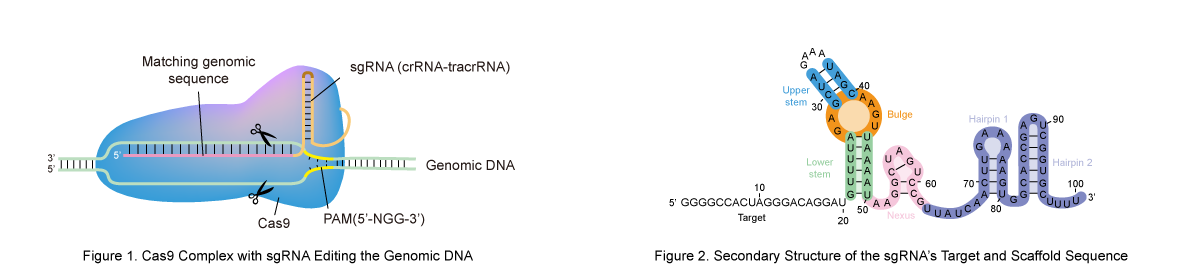
When we discuss improving sgRNA function, stability is often the first factor to consider. During sgRNA Synthesis, chemically modified nucleotides can be incorporated to strengthen resistance to nuclease degradation. These modifications help maintain functional structure during cell entry and intracellular transport. Because gene therapy applications often require extended activity, Modified sgRNA offers advantages by reducing premature breakdown and improving the consistency of editing outcomes. These characteristics are especially important when researchers are working with delivery systems that expose RNA to complex biological conditions. For users seeking optimized performance through Chemical synthesis sgRNA, our goal is to support experiments that demand durability without disrupting natural targeting behavior.
Precision and Reduced Off-Target Activity
A second important consideration is precision. While unmodified guides can achieve notable accuracy, subtle refinements introduced during sgRNA Synthesis can further reduce unintended interactions with similar genomic sequences. The controlled structural adjustments used in Chemical synthesis sgRNA help maintain correct binding while limiting undesirable pairing events. As a result, Modified sgRNA may provide clearer, more predictable outcomes in gene therapy research where off-target effects must be minimized. We continue to evaluate these improvements through internal testing and collaborative studies, ensuring that our recommendations reflect reliable experimental observations rather than assumptions. This approach helps researchers integrate modified guides into their workflows with confidence.
Practical Use in Gene Therapy Development
In practice, the decision between modified and unmodified formats depends on project goals. Researchers working in early discovery stages may find unmodified sgRNA sufficient for quick iterative testing. However, when experiments move into therapeutic modeling, the enhanced stability and specificity offered by Modified sgRNA become increasingly valuable. Our sgRNA Synthesis services are designed to support both approaches by allowing customization of length, purity, and chemical features. By offering flexible Chemical synthesis sgRNA options, we help ensure that each guide RNA aligns with the intended delivery method and cellular environment. Additional product details, including available modification types and synthesis specifications, are provided through our sgRNA solution resources.
Conclusion: Choosing the Right Guide for Gene Therapy
In summary, Modified sgRNA can offer meaningful advantages over unmodified formats in gene therapy applications, particularly in stability, precision, and overall performance. While unmodified guides remain useful in certain early-stage experiments, the refinements introduced during sgRNA Synthesis and Chemical synthesis sgRNA provide benefits when projects require durability and predictable behavior. At the center of these solutions, Synbio Technologies remains committed to supporting researchers as they select the most appropriate guide RNA for each stage of development.