
 DNA Synthesis
 Vector Selection
 Molecular Biology
 Oligo Synthesis
 RNA Synthesis
 Variant Libraries
 Genome KO Library
 Oligo Pools
 Virus Packaging
 Gene Editing
 Protein Expression
 Antibody Services
 Peptide Services
 DNA Data Storage
 Standard Oligo
 Standard Genome KO Libraries
 Standard Genome Editing Plasmid
 ProXpress
 Protein Products
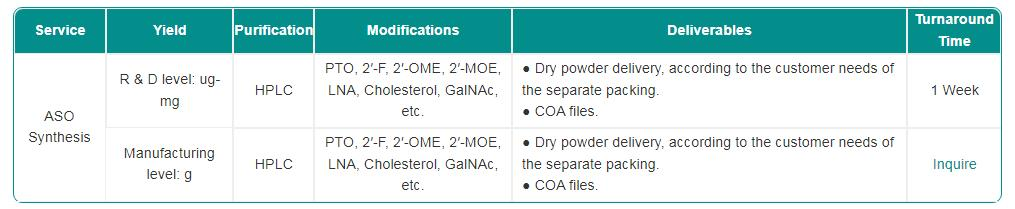
At Synbio Technologies, we understand the importance of producing high-quality antisense oligonucleotides (ASOs) for a variety of applications, such as gene expression analysis and gene targeting. The synthesis of antisense oligos involves intricate processes that ensure optimal purity and functionality, which are critical for the success of research and therapeutic interventions. In this article, we will explore the role of two advanced techniques—mass spectrometry and HPLC—in measuring the purity of ASOs and ensuring that Synbio Technologies consistently delivers products that meet the highest standards.
The Importance of ASO Purity
Purity plays a vital role in the performance of antisense oligonucleotides. When synthesizing sequencing antisense oligos, it’s crucial to ensure that the oligos are free from impurities, as even trace amounts of contaminants can affect the outcome of an experiment. At Synbio Technologies, we utilize a combination of techniques to achieve antisense oligo synthesis with purity levels greater than 90%. This ensures that our clients receive products that are reliable, reproducible, and suitable for even the most precise applications.
Role of Mass Spectrometry in ASO Purity
Mass spectrometry (MS) is an essential tool in our antisense oligo synthesis process, as it provides a powerful means of analyzing the molecular weight of the oligonucleotides. By using electrospray ionization mass spectrometry (ESI-MS), we can accurately determine the molecular mass of our sequencing antisense oligos and detect any deviations from the expected composition. This technique allows us to identify and quantify impurities, ensuring that only the correct sequences are present in the final product. The precision of mass spectrometry enhances our ability to deliver high-quality ASOs that are critical for downstream applications.
HPLC for Accurate Purification of ASOs
High-Performance Liquid Chromatography (HPLC) is another key technology we use at Synbio Technologies for purifying antisense oligonucleotides. HPLC allows us to separate and purify sequencing antisense oligos based on their chemical properties, such as charge, size, and hydrophobicity. This ensures that we remove any residual impurities, leaving behind only the purest form of oligos for your experiments. By combining HPLC purification with mass spectrometry, we ensure that our products are of the highest purity, supporting the accuracy and reliability of your research.
Conclusion
At Synbio Technologies, we take pride in our commitment to delivering sequencing antisense oligos with unmatched purity. By employing sophisticated techniques like HPLC and mass spectrometry, we are able to provide our clients with antisense oligonucleotides that meet rigorous standards of quality and reliability. Whether you are involved in gene targeting, aptamer synthesis, or gene expression analysis, our antisense oligo synthesis process ensures that you receive products that will help you achieve your scientific goals with confidence.