
 DNA Synthesis
 Vector Selection
 Molecular Biology
 Oligo Synthesis
 RNA Synthesis
 Variant Libraries
 Genome KO Library
 Oligo Pools
 Virus Packaging
 Gene Editing
 Protein Expression
 Antibody Services
 Peptide Services
 DNA Data Storage
 Standard Oligo
 Standard Genome KO Libraries
 Standard Genome Editing Plasmid
 ProXpress
 Protein Products
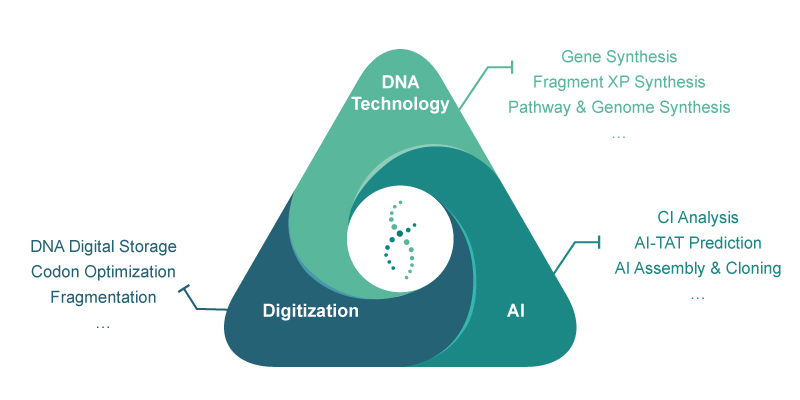
Long gene synthesis is becoming important for teams that need more than a short DNA fragment. In IVD assay development, drug discovery, vaccine research, gene therapy, and biopharmaceutical projects, longer DNA constructs help scientists design and test complex biological systems with better control. With Synbio Technologies, researchers can move from digital sequence design to accurate synthetic DNA more efficiently.
What Is Long Gene Synthesis?
Long gene synthesis refers to the de novo construction of large DNA sequences through the synthesis and assembly of smaller DNA fragments. It usually works by synthesizing shorter oligonucleotides or DNA blocks and assembling them into a larger target construct.
Unlike traditional molecular cloning, de novo gene synthesis does not require a physical DNA template. Researchers can design a sequence digitally, optimize it for the host system, and build it de novo.
This makes long gene synthesis useful when the sequence is rare, modified, codon-optimized, unstable, or fully synthetic. A long construct may include promoters, coding regions, tags, reporters, regulatory elements, or multi-gene modules.
For many research teams, DNA synthesis has evolved from producing individual genes to enabling the design of increasingly sophisticated genetic systems. It has become a practical design-build tool for modern synthetic biology.
Why Does Long Gene Synthesis Matter?
Long gene synthesis matters because many advanced projects now require larger and more complex DNA designs.
A short fragment may be enough for a simple expression test. However, IVD developers, drug screening teams, vaccine researchers, and biopharmaceutical companies often need longer constructs with multiple functional elements.
|
Research Area |
How It Helps |
|---|---|
|
IVD and diagnostic assay development |
Creates synthetic templates, positive controls, target regions, and assay validation materials |
|
Drug discovery and screening |
Builds reporter systems, pathway elements, variant panels, and screening constructs |
|
Gene therapy and vaccine research |
Supports antigen design, vector engineering, and expression cassettes |
|
Academic research |
Enables functional genomics, pathway studies, and synthetic biology experiments |
|
Biopharmaceutical development |
Helps build expression constructs, antibody variable regions, and engineered protein designs |
In these workflows, both speed and sequence accuracy matter. An unsuccessful construct can delay assay validation, functional screening, or downstream biological studies.
What Makes Long Gene Synthesis Difficult?
Long gene synthesis becomes harder as sequence length and complexity increase.
Short fragments are easier to synthesize, amplify, sequence, and clone. Longer constructs create more chances for sequence errors, unstable regions, assembly failure, or host-related problems.
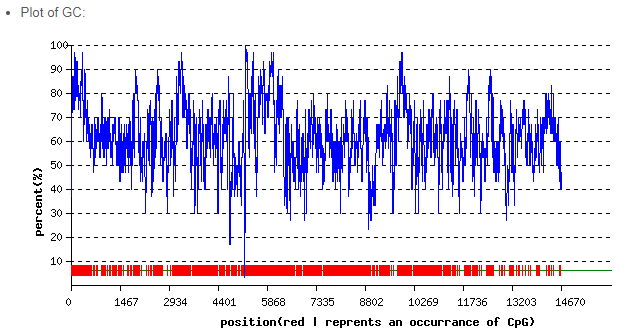
Common challenges include high GC content, low GC content, repetitive regions, long homopolymers, strong hairpin structures, inverted repeats, toxic gene products, and unstable regulatory elements.
This is where complex gene synthesis becomes important. A difficult sequence is not only a long sequence. It may contain structural features that make DNA hard to build or maintain.
For example, repeats may cause misalignment during assembly. Hairpin structures may reduce amplification efficiency. Extreme GC content can reduce PCR efficiency and complicate DNA sequencing. In some cases, the sequence must be redesigned without changing the final protein sequence.
How Does the Long Gene Synthesis Workflow Work?
A successful long gene synthesis project starts with sequence review.
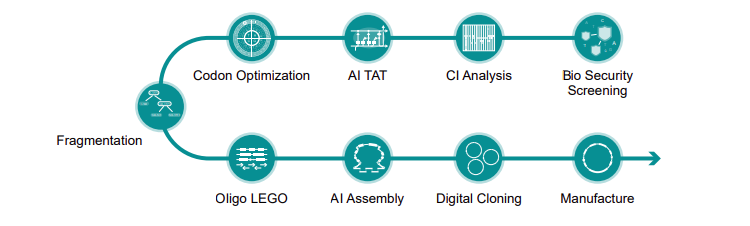
The workflow usually includes five steps:
1. Sequence design and project review
The target sequence is checked for length, function, reading frame, restriction sites, regulatory elements, and downstream use.
2. Complexity analysis
The sequence is screened for GC imbalance, repeats, hairpins, unstable regions, and other difficult motifs.
3. Codon optimization or sequence adjustment
For protein expression, the coding sequence may be optimized for the target host while preserving the amino acid sequence.
4. Fragment synthesis and assembly
Short DNA fragments are synthesized individually and assembled into progressively larger constructs using hierarchical assembly strategies when needed.
5. Sequence verification and delivery
The final construct is verified and delivered based on project needs, such as cloned plasmids, pathway constructs, or long DNA fragments.
We use this design-focused approach to help researchers reduce synthesis risks before the project reaches the bench.

How Synbio Technologies Supports Long Gene Synthesis
Synbio Technologies provides customized gene synthesis and long DNA assembly solutions for standard and complex research needs.
According to its service information, we support DNA synthesis lengths up to 200 kb. This capacity is important for projects that go beyond ordinary single-gene constructs.
We have synthesized more than 10 billion base pairs and offer solutions for high or low GC content, repetitive sequences, hairpin structures, and other difficult DNA designs. For long gene synthesis, this experience matters because long constructs often fail due to hidden sequence risks.
For complex gene synthesis, we use AI-enabled tools and a Complexity Index system to analyze difficult sequence features. This helps guide synthesis and assembly strategies before production begins.
We also provide support such as free codon optimization, vector storage, vector design, and de novo vector build options. For teams with tight timelines, these services can reduce separate vendor handoffs.
Why is complex gene synthesis Important for Long DNA Projects?
Complex gene synthesis makes long DNA projects more predictable.
Complex gene synthesis helps identify risky regions early, such as repetitive motifs, high-GC stretches, low-GC stretches, hairpin-forming regions, inverted repeats, unstable elements, and expression-toxic coding regions.
Once these risks are found, the sequence can be redesigned, split into better assembly modules, optimized for the expression host, or moved into a more suitable vector system.
For drug screening, this can reduce delays in reporter construct generation. For vaccine research, it can improve antigen expression design. For IVD assay development, it can support more reliable synthetic controls and templates.
What Should Researchers Prepare Before Ordering Long Gene Synthesis?
Researchers can improve project success by preparing clear sequence and application information.
Before ordering long gene synthesis, it is helpful to define the full DNA or amino acid sequence, target host, vector format, cloning strategy, required restriction sites, promoter, tag, linker, reporter, and any sequence regions that cannot be changed.
For DNA synthesis projects involving protein expression, codon optimization should match the host system. For diagnostic assay development, sequence identity and control design may be more important than expression. For gene therapy and vaccine research, vector compatibility and expression cassette design require careful review.
A clear project brief helps Synbio Technologies recommend a suitable synthesis, assembly, and verification strategy.
When Should You Choose Long Gene Synthesis Instead of Traditional Cloning?
Choose long gene synthesis when your target construct is too complex, too modified, or too time-consuming to build through conventional cloning.
Traditional cloning can work when the template is available, the insert is short, and the sequence is stable. However, it may become inefficient when multiple fragments, redesigned coding regions, or large expression cassettes are involved.
Long gene synthesis is often a better option when you need a de novo sequence, codon-optimized expression construct, synthetic control, multi-gene pathway, antigen design, antibody-related construct, or sequence without a reliable natural template.
One of the key advantages of de novo gene synthesis is complete sequence control. Researchers can define the exact sequence from the beginning instead of relying on available templates.
How Can Long Gene Synthesis Support Future Research?
Long gene synthesis is helping research teams move from single-gene studies to larger biological system design.
In vitro diagnostic (IVD) assay development, synthetic DNA can support assay controls and validation. In drug discovery, it can support functional screening and pathway engineering. In gene therapy and vaccine research, it can help test optimized expression cassettes and antigen designs.
In biopharmaceutical development, long gene synthesis can support antibody engineering, recombinant protein development, and cell-based research systems.
As projects become more complex, researchers need partners that can handle both sequence length and sequence difficulty. We support this need through long-fragment capability, complex gene synthesis expertise, AI-enabled analysis, and integrated DNA synthesis services.
Conclusion
Long gene synthesis helps researchers build larger and more precise DNA constructs for modern biological research. With Synbio Technologies, teams can combine DNA synthesis, design support, and complex gene synthesis expertise to move from sequence concept to verified DNA more efficiently.