
 DNA Synthesis
 Vector Selection
 Molecular Biology
 Oligo Synthesis
 RNA Synthesis
 Variant Libraries
 Genome KO Library
 Oligo Pools
 Virus Packaging
 Gene Editing
 Protein Expression
 Antibody Services
 Peptide Services
 DNA Data Storage
 Standard Oligo
 Standard Genome KO Libraries
 Standard Genome Editing Plasmid
 ProXpress
 Protein Products
With our knowledge in RNA biosynthesis and synthetic RNA synthesis, we at Synbio Technologies are dedicated to furthering the science of molecular biology. We know that RNA synthesis is an essential process for comprehending gene expression and its consequences in diverse biological systems because we are leaders in the creation of cutting-edge technology. In this article, we will explore the three key steps in RNA synthesis: initiation, elongation, and termination.
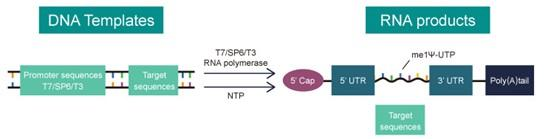
Step 1: Initiation – The Starting Point of Transcription
The process of RNA synthesis begins with initiation, which marks the beginning of transcription. During this phase, the enzyme RNA polymerase binds to a specific region of a gene known as the promoter. This interaction signals the DNA to unwind, allowing access to the information contained within the gene.
Understanding the intricacies of initiation is essential for those involved in artificial RNA synthesis. By manipulating the conditions under which RNA polymerase binds to the promoter, researchers can control the timing and rate of RNA synthesis. This capability is invaluable for applications in synthetic biology and genetic engineering, enabling the design of custom RNA molecules for therapeutic and research purposes.
Step 2: Elongation – Extending the RNA Strand
Following initiation, the transcription process moves into the elongation phase. During this step, RNA polymerase synthesizes a complementary RNA strand by adding new nucleotides to the growing RNA molecule. As RNA polymerase "walks" along one strand of DNA, it unwinds the double helix and elongates the RNA strand, creating the primary transcript.
The elongation phase is vital in the biosynthesis of RNA, as the accuracy and speed of nucleotide addition can significantly affect the quality of the synthesized RNA. Our expertise in artificial RNA synthesis allows us to optimize these conditions, ensuring that researchers receive high-quality RNA for their studies and experiments.
Step 3: Termination – Completing the Transcription Process
The final step in RNA synthesis is termination. This phase occurs when RNA polymerase encounters a stop sequence in the gene, signaling the end of transcription. At this point, the newly synthesized mRNA strand detaches from the DNA template, completing the synthesis process.
Termination is a critical aspect of the biosynthesis of RNA, as it ensures that the correct RNA transcript is produced. Any errors during this phase can lead to incomplete or faulty RNA, which could compromise subsequent applications in research or therapy. At Synbio Technologies, we are dedicated to providing reliable support in artificial RNA synthesis to ensure that all critical steps, including termination, are executed flawlessly.
Conclusion
Understanding the three steps in RNA synthesis: initiation, elongation, and termination, is fundamental for researchers and professionals working in the fields of molecular biology and biotechnology. At Synbio Technologies, we leverage our extensive knowledge and advanced capabilities in the biosynthesis of RNA and artificial RNA synthesis to support innovation across various applications. As your trusted partner in RNA synthesis, we strive to deliver high-quality solutions that empower your research and development goals.