
 DNA Synthesis
 Vector Selection
 Molecular Biology
 Oligo Synthesis
 RNA Synthesis
 Variant Libraries
 Genome KO Library
 Oligo Pools
 Virus Packaging
 Gene Editing
 Protein Expression
 Antibody Services
 Peptide Services
 DNA Data Storage
 Standard Oligo
 Standard Genome KO Libraries
 Standard Genome Editing Plasmid
 ProXpress
 Protein Products
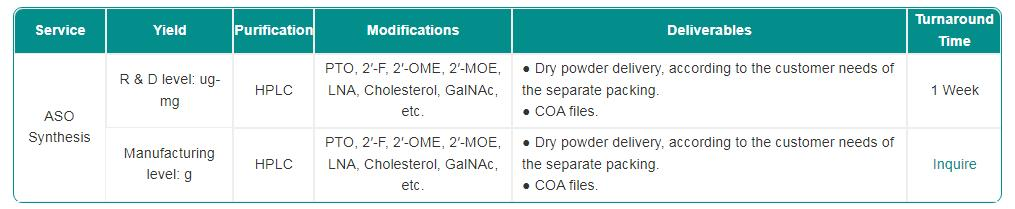
As Synbio Technologies, we recognize that accurate analytical methods form the foundation of reliable antisense research. For projects involving ASO Synthesis, sequencing accuracy is closely tied to the integrity and performance of every oligonucleotide we produce. When we incorporate Sequencing antisense oligos into our workflow, we gain a clear understanding of structural accuracy and purification efficiency. This approach allows our team to refine verification steps and support scientists who rely on dependable Antisense oligo synthesis for mechanism studies, exploratory screening, and long-term therapeutic development.
Why Accurate Sequencing Matters in ASO Evaluation
Accurate sequencing holds significant value in quality control because antisense molecules are highly sensitive to even small structural variations. Throughout our ASO Synthesis operations, we often see how slight sequence mismatches can influence hybridization properties or alter the way oligos interact with target RNA. By applying Sequencing antisense oligos methods at multiple points in the evaluation process, we confirm that each molecule follows the intended design principles. These assessments help us maintain the consistency researchers expect from professional Antisense oligo synthesis, and they also reduce the likelihood of unexpected performance shifts during downstream experiments. Through detailed inspection and sequence validation, we offer users greater predictability when they assess binding behavior, specificity, or stability in their assays.
How Sequencing Strengthens Our Workflow
Within our internal workflow, sequencing acts as a critical quality indicator that helps us trace each batch created through ASO Synthesis. When we apply Sequencing antisense oligos to monitor the connection between design files and actual synthesis outputs, our team can recognize early deviations and adjust purification or processing steps. This continuous alignment ensures that our Antisense oligo synthesis remains stable across projects of different scales. For researchers exploring antisense technology, consistent sequence verification becomes especially helpful when designing dose–response studies, validating off-target evaluations, or confirming reproducibility under different assay conditions. When we introduce our antisense oligonucleotide product capabilities, we highlight sequencing not as an isolated technique but as a structural support that enhances every stage of the development pipeline.
Conclusion: Sequencing Ensures Confidence in ASO Quality Control
In conclusion, accurate sequencing plays an essential role in reinforcing reliability throughout our ASO Synthesis operations. By integrating Sequencing antisense oligos within design review, batch tracking, and final validation, we strengthen the structural integrity of each product generated through Antisense oligo synthesis. This connection between sequencing and evaluation allows us to provide researchers with materials that uphold predictable performance during gene-regulation studies, molecular investigations, and therapeutic exploration. As Synbio Technologies, we remain dedicated to supporting scientific work that benefits from dependable oligo structure, consistent quality, and clear analytical verification.