
 DNA Synthesis
 Vector Selection
 Molecular Biology
 Oligo Synthesis
 RNA Synthesis
 Variant Libraries
 Genome KO Library
 Oligo Pools
 Virus Packaging
 Gene Editing
 Protein Expression
 Antibody Services
 Peptide Services
 DNA Data Storage
 Standard Oligo
 Standard Genome KO Libraries
 Standard Genome Editing Plasmid
 ProXpress
 Protein Products
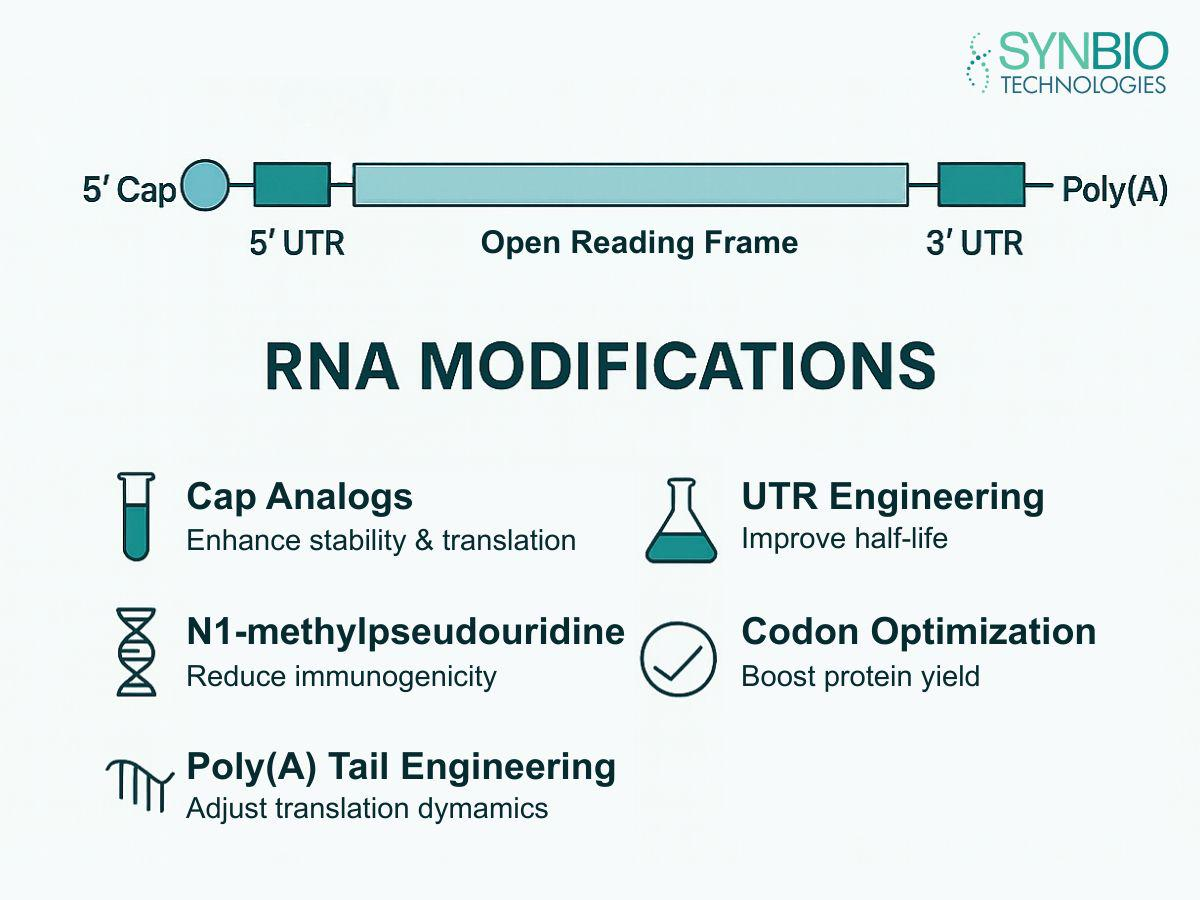
At Synbio Technologies, we have seen how the synthesis of RNA from a DNA template has become an essential method for teams who want dependable tools for experimental design. As more researchers explore the role of RNA Synthesis in early discovery, our company continues supporting projects that rely on clear workflows and accurate preparation. By integrating the mRNA synthesis process into broader research programs, we help users evaluate molecular functions step by step and understand how each sequence choice influences downstream behavior. This approach allows us to connect scientific principles with practical applications rather than treating RNA Synthesis as a single isolated task.
Improving Experimental Clarity Through Template-Driven Workflows
When we prepare RNA from a DNA template, our goal is to provide researchers with consistent materials that improve data interpretation. Many teams come to us because the RNA Synthesis workflow allows them to test hypotheses without continually rebuilding basic components. This structured approach gives laboratories a clearer view of how transcription efficiency, template design, or reaction setup affect their results. As the mRNA synthesis process becomes more widely used in therapeutic exploration and functional screening, we focus on offering methods that smoothly integrate into diverse scientific programs. For our users, this means gaining reliable RNA constructs that support experimentation rather than complicating it. By aligning our processes with well-established molecular biology principles, we allow RNA Synthesis to fit naturally into existing R&D pipelines.
Supporting Application-Focused Development Across Research Fields
Different research areas—from diagnostics to molecular pathway analysis—depend on accurate RNA generation. We apply the mRNA synthesis process to help teams study gene regulation, evaluate new targets, and develop tools for broader industrial applications. Our experience shows that template-based transcription reduces unnecessary variables, giving researchers a cleaner starting point. This is particularly important for laboratories evaluating sequence stability or structural properties. With users increasingly interested in refined RNA Synthesis, we emphasize careful planning and transparent guidance throughout each step. As described in our internal overview of RNA-related strategies, we highlight reaction setup, template quality, and practical considerations, helping teams understand how these factors influence outcomes. By incorporating the RNA Synthesis workflow into their projects, researchers can maintain a smoother progression from concept to experiment.
Conclusion: How RNA-Based Workflows Strengthen Research Development
Streamlined RNA preparation improves clarity, reduces variability, and supports more effective experimental design. By using RNA Synthesis within a template-guided system, research teams gain a dependable path for connecting scientific questions with practical investigation. The mRNA synthesis process supports this progression by offering stable inputs and predictable performance across multiple applications. By integrating these methods into R&D environments, we help teams move forward with improved confidence, structured evaluation, and a deeper understanding of their work. At Synbio Technologies, we remain committed to supporting research communities as they apply RNA Synthesis to new scientific goals.