
 DNA Synthesis
 Vector Selection
 Molecular Biology
 Oligo Synthesis
 RNA Synthesis
 Variant Libraries
 Genome KO Library
 Oligo Pools
 Virus Packaging
 Gene Editing
 Protein Expression
 Antibody Services
 Peptide Services
 DNA Data Storage
 Standard Oligo
 Standard Genome KO Libraries
 Standard Genome Editing Plasmid
 ProXpress
 Protein Products
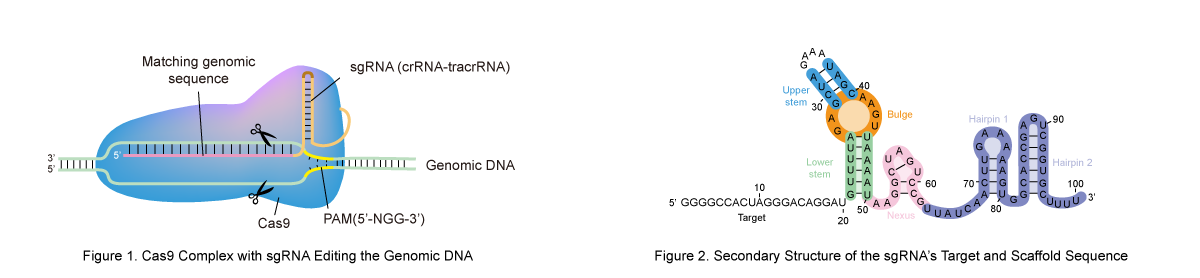
At Synbio Technologies, we focus on providing precise genetic tools to support advanced research and therapeutic applications. One key area of our expertise is sgRNA Synthesis, which is essential for guiding CRISPR-based systems with high accuracy. We understand that maintaining stability of these molecules is critical, especially for in vivo applications where degradation can impact experimental outcomes. Through careful optimization and chemical modifications, our Modified sgRNA products are designed to retain functional integrity under physiological conditions, offering researchers consistent and reliable performance for a wide range of studies. By combining scientific insights with practical experience, we ensure that our solutions are not only effective but also adaptable to different experimental setups.
Understanding Stability Challenges
Natural sgRNA molecules are prone to rapid degradation by nucleases within biological systems. In our experience, this presents a significant challenge for in vivo experiments, potentially reducing the efficiency of genome editing. To address this, we utilize advanced Chemical synthesis sgRNA strategies that incorporate modifications at specific positions of the RNA backbone. These modifications help protect the molecules from enzymatic degradation, improving their half-life and activity inside cells. By carefully selecting the type and position of modifications, we are able to produce Modified sgRNA that reliably maintains its functionality. This approach allows scientists to focus on experimental design rather than worrying about molecular instability, which is especially valuable in long-term or complex studies.
Our Approach to sgRNA Synthesis
We apply a systematic and high-quality approach to sgRNA Synthesis that balances chemical stability with biological activity. Every batch of Chemical synthesis sgRNA undergoes stringent quality control to ensure sequence accuracy and consistent modification levels. Our team also considers factors such as delivery method, target cell type, and experimental conditions to optimize Modified sgRNA for specific applications. By integrating these considerations into our synthesis workflow, we help researchers overcome common challenges associated with in vivo genome editing. Additionally, we continuously update our methods based on emerging scientific findings, ensuring that our products meet evolving research needs and maintain reproducibility across different experimental systems.
Conclusion: Reliable Tools for In Vivo Research
In conclusion, we believe that properly designed Modified sgRNA significantly enhances stability for in vivo applications, allowing researchers to obtain reproducible and effective results. At Synbio Technologies, our sgRNA Synthesis services combine chemical innovation, quality assurance, and careful design to produce Chemical synthesis sgRNA tailored for challenging biological environments. By improving molecular stability, we support a broad spectrum of experiments, from fundamental research to therapeutic studies. Our solutions provide dependable tools that help advance scientific discovery and development, giving laboratories the confidence to pursue precise and reliable genome editing experiments with consistent outcomes.