
 DNA Synthesis
 Vector Selection
 Molecular Biology
 Oligo Synthesis
 RNA Synthesis
 Variant Libraries
 Genome KO Library
 Oligo Pools
 Virus Packaging
 Gene Editing
 Protein Expression
 Antibody Services
 Peptide Services
 DNA Data Storage
 Standard Oligo
 Standard Genome KO Libraries
 Standard Genome Editing Plasmid
 ProXpress
 Protein Products
Hybridoma sequencing recovers VH/VL sequence data from antibody-producing hybridoma cell lines. For IVD, drug discovery, vaccine research, gene therapy diagnostics, and biopharmaceutical R&D, this protects valuable antibody assets and supports recombinant antibody production. Synbio Technologies connects hybridoma sequencing with Custom Gene Synthesis and Gene Synthesis Service support, helping teams move from cell line to sequence-defined antibody development.

What Is Hybridoma Sequencing?
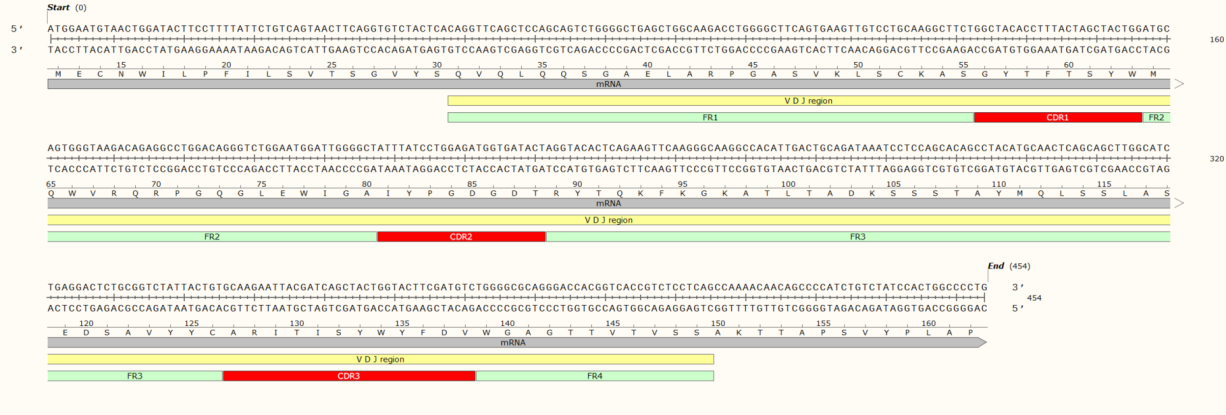
Hybridoma sequencing identifies the antibody genes expressed by a hybridoma cell line. Most projects focus on the heavy chain variable region, or VH, and the light chain variable region, or VL. These regions include the CDRs that play a central role in antigen recognition and binding specificity.
Although hybridoma cell lines remain a cornerstone of monoclonal antibody production, they are vulnerable to genetic drift, contamination, and loss of productivity over time. Cells may lose productivity, become contaminated, drift over time, or fail after recovery from frozen storage. Once the antibody sequence is known, the antibody can be preserved as digital sequence data and rebuilt as a recombinant antibody when needed.
This is why hybridoma sequencing is useful for both research and industrial teams. It links classic monoclonal antibody production with modern recombinant antibody workflows.
Why Hybridoma Sequencing Matters for Antibody Development?
Hybridoma sequencing gives researchers a more stable foundation for antibody use and development. Instead of depending only on cell culture performance, teams can work from confirmed sequence data.
Key benefits include:
-
Long-term antibody security if a cell line is lost or damaged.
-
Recombinant antibody expression in controlled systems such as HEK or CHO cells.
-
Better lot-to-lot consistency for ELISA, flow cytometry, Western blot, and IVD assays.
-
A clear starting point for humanization, affinity maturation, isotype switching, Fc engineering, Fab design, or scFv conversion.
-
Stronger project documentation for IP, collaboration, and downstream development.
For R&D managers, the practical value is risk reduction. A sequence-confirmed antibody is easier to reproduce, transfer, modify, and scale than a cell line alone.
Hybridoma Sequencing Workflow: From Cell Line to Antibody Sequence
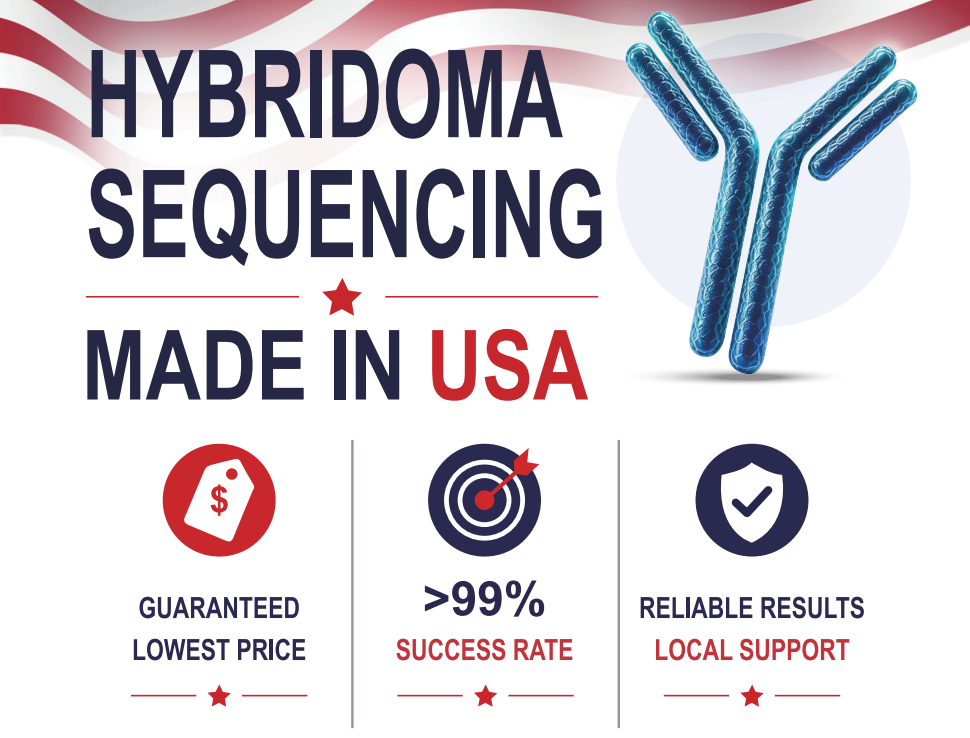
A typical workflow starts with hybridoma cells, total RNA, or another accepted sample type. The exact input depends on the project and the provider’s submission requirements.
A common workflow includes:
1. RNA extraction from hybridoma cells.
2. Reverse transcription to create cDNA.
3. PCR, RACE-based amplification, or other primer strategies to recover heavy and light chain sequences.
4. Sanger sequencing, NGS, or full-length sequencing.
5. Bioinformatics analysis to identify productive VH and VL candidates.
6. CDR annotation, chain pairing review, isotype confirmation, and report delivery.
7. Optional gene synthesis, vector construction, and recombinant antibody expression.
The final report should not only provide raw sequence data. It should give researchers usable antibody sequence information that can support cloning, Custom Gene Synthesis, expression, and later engineering work.
Sanger or NGS: Which Method Should Researchers Choose?
Sanger sequencing is often a good fit for standard monoclonal hybridomas with one expected productive heavy chain and one productive light chain. It is direct, economical, and useful when the clone is clean and stable.
NGS is better when the sample is more complex. It can help when Sanger results are ambiguous, when a mixed population may exist, or when transcript frequency ranking is needed. NGS read depth can also help detect minor variants or nonproductive transcripts.
Synbio Technologies provides several hybridoma antibody sequencing options:
|
Method |
Best Fit |
Timeline |
Key Deliverables |
|---|---|---|---|
|
Sanger |
Standard monoclonal hybridomas with a single productive heavy and light chain |
As fast as 5 business days |
VH/VL DNA and amino acid sequences, CDR annotation, optional expression plasmid |
|
NGS |
Mixed populations, ambiguous Sanger results, or samples needing transcript frequency ranking |
About 2 weeks |
Sequence frequency report, VH/VL sequences, CDR annotation, candidate chain ranking |
|
Full-length |
Projects needing complete antibody coding sequences |
Project-dependent |
Full heavy and light chain sequences, isotype confirmation, cloning-ready files |
For many clients, the choice depends on the project goal. A routine clone verification project may use Sanger. A complex antibody discovery or cell population project may benefit from NGS. A recombinant production or format engineering project may need full-length sequence recovery.
What Information Should a Sequencing Report Provide?
A useful hybridoma sequencing report should support confident downstream decisions. Researchers should expect clear, organized information such as:
-
VH and VL nucleotide sequences.
-
Translated amino acid sequences.
-
CDR annotation.
-
Heavy and light chain candidate pairing.
-
Isotype or subclass information when available.
-
Sequence confidence data, such as chromatograms or NGS coverage metrics.
-
Notes on nonproductive chains, pseudogenes, or unusual transcripts.
-
Files suitable for cloning, Gene Synthesis Service planning, and expression vector design.
This level of detail matters in IVD, drug screening, gene therapy diagnostics, and vaccine research because antibody identity must remain traceable across experiments, teams, and production lots.
How Does Hybridoma Sequencing Connect to Custom Gene Synthesis?
Hybridoma sequencing tells researchers what the antibody sequence is. Custom Gene Synthesis turns that sequence into a usable DNA construct.
After VH and VL sequences are confirmed, the antibody genes can be synthesized with optimized codons, cloned into expression vectors, and prepared for recombinant antibody production. This step is especially important when teams want to move from hybridoma-derived antibody production to a more controlled recombinant format.
Synbio Technologies offers DNA synthesis and antibody gene synthesis services that fit this workflow. Its DNA synthesis service supports 100% accurate target sequence delivery, free codon optimization, free vector storage, andde novo vector build. Synbio Technologies supports DNA synthesis projects ranging from short genes to large constructs of up to 200 kb.
For antibody projects, this means a team can move from hybridoma cells to sequencing, then to Custom Gene Synthesis, vector construction, antibody expression, purification, and optional engineering. A connected Gene Synthesis Service can reduce handoff gaps and make the project easier to manage.
Applications of Hybridoma Sequencing
IVD and diagnostic assay development
IVD teams need stable antibody performance across many assay lots. Sequence-defined antibodies can support long-term reagent consistency and reduce dependence on variable cell culture behavior.
Drug discovery and drug screening
Drug discovery teams use antibodies for target validation, binding studies, screening assays, and candidate characterization. Hybridoma sequencing helps confirm antibody identity and supports conversion into recombinant formats that are easier to modify and scale.
Gene therapy and vaccine research
Gene therapy and vaccine research teams often need antibodies for potency assays, target detection, immunogenicity studies, and analytical workflows. Sequencing protects useful antibody clones and gives researchers more flexibility for future engineering.
Academic labs may rely on a hybridoma-derived antibody for years. Sequencing helps preserve the antibody and makes it easier to share a defined reagent with collaborators.
Biopharmaceutical teams can use sequence information as a foundation for developability assessment, humanization, affinity maturation, and recombinant expression. Custom Gene Synthesis then supports faster construct design and testing.
Why Work with Synbio Technologies?
Synbio Technologies is a synthetic biology company offering services across gene synthesis, antibody services, protein expression, oligo synthesis, gene editing, and related molecular biology workflows. For hybridoma sequencing, the company supports recovery of VH/VL or full-length antibody sequences from hybridoma cell lines and clonal B cells.
The service covers multiple species, including mouse, rat, rabbit, alpaca,humanand more. Supported antibody isotypes include IgG, IgM, IgA, IgE, and additional subtypes. This is useful for research and industrial clients working across different antibody sources and project types.
The main advantage is workflow continuity. Synbio Technologies can help identify the antibody sequence and then support downstream Gene Synthesis Service needs. For clients who need Custom Gene Synthesis, codon optimization, vector construction, expression support, or recombinant antibody production, that continuity can save time and reduce technical uncertainty.
What Should Researchers Prepare Before Submission?
Before starting a hybridoma sequencing project, prepare the information that helps the technical team choose the right method.
Useful details include:
-
Hybridoma species and antigen information.
-
Known antibody isotype.
-
Cell line status and storage condition.
-
Required output: VH/VL regions or full-length antibody sequences.
-
Final application, such as ELISA, IVD assay, flow cytometry, neutralization assay, drug screening, or therapeutic discovery.
-
Whether recombinant expression, humanization, or other antibody engineering is planned.
-
Known challenges, such as mixed clones, low expression, weak growth, or unstable culture behavior.
If the final goal is recombinant antibody production, discuss the expression format early. Vector design, codon optimization, tag selection, and purification strategy may all depend on the intended antibody format.
Frequently Asked Questions
How much material is required for hybridoma sequencing?
Most providers accept viable hybridoma cells, total RNA, or extracted nucleic acids. Sample requirements vary depending on the sequencing method.
Can hybridoma sequencing recover both heavy and light chain sequences?
Yes. Most projects aim to identify paired VH and VL sequences required for recombinant antibody expression.
What is the difference between hybridoma sequencing and antibody sequencing?
Hybridoma sequencing specifically focuses on recovering antibody genes from hybridoma cell lines, while antibody sequencing may also refer to sequencing antibodies derived from B cells, plasma cells, or protein-based approaches.
Can hybridoma sequencing support antibody humanization?
Yes. Sequence information provides the foundation for humanization, affinity maturation, Fc engineering, and other antibody optimization strategies.
Conclusion
Hybridoma sequencing protects antibody assets, confirms molecular identity, and enables recombinant antibody development. With hybridoma sequencing, Custom Gene Synthesis, and Gene Synthesis Service support, Synbio Technologies helps research and industrial teams build more traceable, flexible antibody workflows.