
 DNA Synthesis
 Vector Selection
 Molecular Biology
 Oligo Synthesis
 RNA Synthesis
 Variant Libraries
 Genome KO Library
 Oligo Pools
 Virus Packaging
 Gene Editing
 Protein Expression
 Antibody Services
 Peptide Services
 DNA Data Storage
 Standard Oligo
 Standard Genome KO Libraries
 Standard Genome Editing Plasmid
 ProXpress
 Protein Products
Gene synthesis and cloning have become essential tools for advancing industrial biotechnology. With the increasing demand for novel proteins, enzymes, and biological products, companies need efficient, reliable, and scalable methods to create genes for production. At Synbio Technologies, we utilize cutting-edge AI-powered gene synthesis platforms to optimize gene design and ensure high accuracy and fast turnaround time (TAT). This article will explore best practices for scaling up gene synthesis in the biotechnology industry.
Optimizing Gene Design for Large-Scale Production
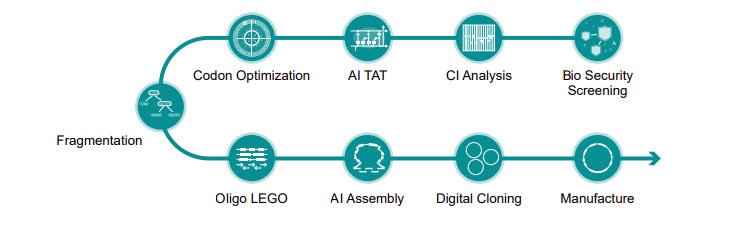
When scaling up gene synthesis for industrial applications, the design process is crucial. Ensuring that the gene is optimized for expression in the desired host organism can significantly impact the yield and functionality of the final product. Synbio Technologies' proprietary AI-driven platforms, such as NG Password Optimization and Complexity Index (CI), help streamline this process by analyzing the gene's sequence for optimal codon usage and minimizing sequences that could cause issues during transcription and translation.
By using AI to guide gene synthesis, we can reduce the complexity of the sequence and ensure it aligns with industrial production systems, such as bacterial, yeast, or mammalian cell cultures. This level of precision enhances the overall efficiency of the process, providing a smooth transition from laboratory-scale synthesis to industrial production.
Ensuring Accuracy and Cost-Effectiveness
Whole gene synthesis for industrial biotechnology applications requires not only accuracy but also cost-effectiveness. Synbio Technologies offers competitive pricing by utilizing automated systems that reduce labor costs and expedite the synthesis process. This allows us to pass on savings to our clients while maintaining a high standard of precision in the final product.
Our platform guarantees 100% accuracy in the DNA sequences we synthesize, ensuring that every gene is as intended. This is particularly important in biotechnology, where small errors in gene synthesis can lead to production failures or the creation of faulty products. Our AI-based tools, such as AI-TAT, further reduce the turnaround time without compromising quality.
Addressing Complex Challenges in Gene Synthesis
Gene synthesis for industrial-scale applications often involves overcoming complex challenges such as high GC content, repetitive sequences, and the formation of secondary structures like hairpins. These issues can cause problems during the synthesis, cloning, or expression stages of product development.
At Synbio Technologies, we specialize in tackling these challenges head-on. Our AI-powered platform is designed to detect and resolve issues related to these complex sequences, ensuring that genes are synthesized correctly, even under challenging conditions. With millions of codons optimized and over 10 billion bases synthesized, we are equipped to handle the most complex genetic challenges that arise in industrial biotechnology.
Conclusion
Gene synthesis and cloning are critical components of scaling industrial biotechnology processes. At Synbio Technologies, we employ AI-powered gene synthesis platforms that help ensure accuracy, speed, and cost-efficiency in producing the necessary genetic materials. Our expertise in handling complex gene sequences, combined with free services such as codon optimization, vector design, and storage, allows us to offer reliable solutions for biotechnology companies at any stage of their research and development. By optimizing gene design, reducing errors, and tackling complex challenges, we enable the scaling of biotechnology processes to meet the demands of the market.