
 DNA Synthesis
 Vector Selection
 Molecular Biology
 Oligo Synthesis
 RNA Synthesis
 Variant Libraries
 Genome KO Library
 Oligo Pools
 Virus Packaging
 Gene Editing
 Protein Expression
 Antibody Services
 Peptide Services
 DNA Data Storage
 Standard Oligo
 Standard Genome KO Libraries
 Standard Genome Editing Plasmid
 ProXpress
 Protein Products
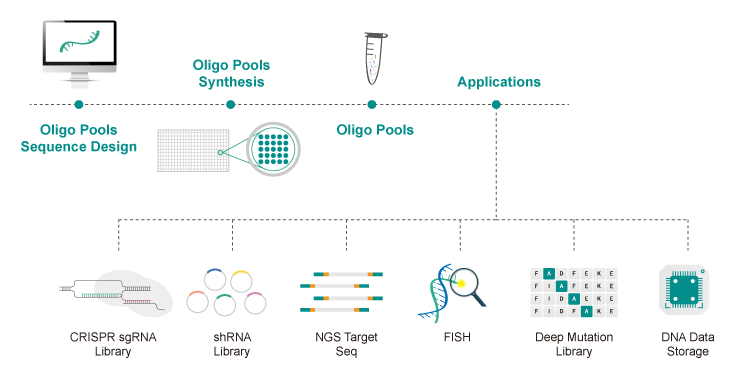
At Synbio Technologies, we understand the growing importance of oligo pools in various fields of research, including genomics, proteomics, and synthetic biology. Oligo pools are mixed solutions containing a diverse array of oligonucleotide sequences that can be synthesized simultaneously. This innovative approach not only streamlines the synthesis process but also enhances the efficiency of experiments. In this article, we will delve into the concept of oligo pools, the methods used for oligo pool synthesis, and how our services can meet your research needs.
What Are Oligo Pools?
Oligo pools consist of a large number of oligonucleotide sequences that are synthesized together in a single reaction. These sequences can vary in length and composition, allowing researchers to create complex mixtures tailored to specific applications. Oligo pools are particularly useful for high-throughput applications, enabling scientists to conduct multiple experiments simultaneously without the need for individual synthesis of each oligonucleotide.
Key Advantages of Oligo Pools
Precision: The precision of oligo pools offers several advantages, including enhanced accuracy in targeting specific genetic sequences, improved reproducibility in experiments, and reduced off-target effects. This high fidelity ensures consistent results in applications like gene editing, diagnostics, and synthetic biology, ultimately leading to more reliable and effective research outcomes.
Cost-Effectiveness: By synthesizing multiple oligonucleotides in a single reaction, researchers can lower the overall costs associated with oligonucleotide production. This makes oligo pools an attractive option for both academic and commercial projects.
Versatility: Oligo pools can be customized to fit a wide range of applications, from gene synthesis and functional studies to CRISPR gene editing and RNA interference. This versatility allows researchers to explore various avenues of inquiry within a single experimental framework.
Oligo Pool Synthesis Methods
At Synbio Technologies, we employ several advanced synthesis methods for creating oligo pools. Each method has its unique advantages, and we select the most suitable approach based on the specific requirements of your project.
1. Microarray Synthesis
Microarray technology is one of the most common methods used for oligo pool synthesis. In this approach, oligonucleotides are synthesized directly onto microarray chips using a series of chemical reactions. The synthesis occurs in a highly parallel manner, allowing for the production of thousands of oligonucleotides simultaneously.
2. Electrochemical Methods
Electrochemical synthesis is another innovative technique for oligo pool synthesis. This method utilizes electrochemical reactions to facilitate the assembly of oligonucleotides on a solid surface. Electrochemical methods can enhance the efficiency and accuracy of oligonucleotide production, making them suitable for high-throughput applications.
3. Inkjet Technology
Inkjet technology offers a flexible and scalable approach to oligo pool synthesis. By dispensing small volumes of oligonucleotide precursors onto a solid substrate, researchers can create complex oligo mixtures with precise control over sequence composition. This method is particularly advantageous for applications requiring custom-designed oligo pools.
Conclusion
In conclusion, oligo pools represent a powerful tool in modern molecular biology, and at Synbio Technologies, we are dedicated to providing high-quality oligo pool synthesis services that empower researchers in their scientific endeavors. With our expertise, innovative synthesis methods, and commitment to quality, we are well-equipped to support your oligo pool projects. Let’s work together to unlock the potential of oligo pools and advance the frontiers of research!