
 DNA Synthesis
 Vector Selection
 Molecular Biology
 Oligo Synthesis
 RNA Synthesis
 Variant Libraries
 Genome KO Library
 Oligo Pools
 Virus Packaging
 Gene Editing
 Protein Expression
 Antibody Services
 Peptide Services
 DNA Data Storage
 Standard Oligo
 Standard Genome KO Libraries
 Standard Genome Editing Plasmid
 ProXpress
 Protein Products
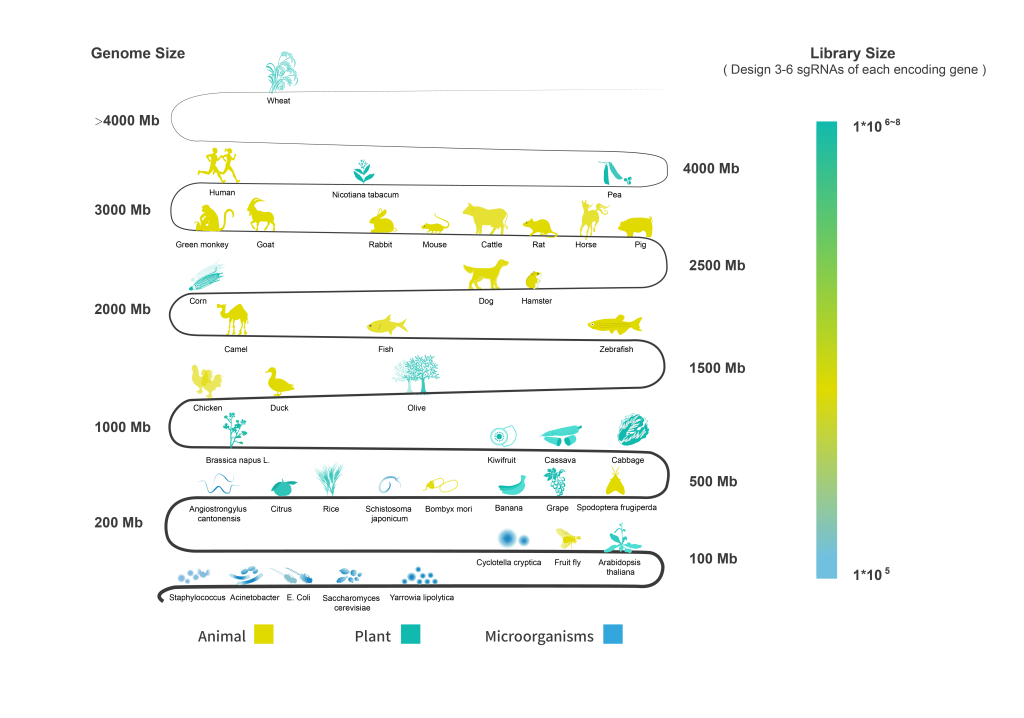
At Synbio Technologies, we are committed to advancing genetic research through innovative solutions, and one of our standout offerings is our sgRNA design tool. Single-guide RNA (sgRNA) plays a crucial role in the CRISPR-Cas9 gene-editing system, directing the Cas9 enzyme to specific DNA targets for precise cuts. With the ability to design sgRNA for various applications, including gene knockout, base editing, and epigenetic modifications, our advanced tool empowers researchers to harness the full potential of CRISPR technology. In this article, we will explore the importance of sgRNA design, the features of our design tool, and how it can enhance your CRISPR research.
Understanding sgRNA in CRISPR Technology
sgRNA is a synthetic RNA sequence composed of two primary components: the scaffold sequence and the targeting sequence. The scaffold sequence is necessary for binding to the Cas9 enzyme, while the targeting sequence is complementary to the specific DNA region intended for editing. This dual functionality allows sgRNA to accurately guide Cas9 to its target, facilitating the desired genomic modifications.
Features of Our sgRNA Design Tool
At Synbio Technologies, our sgRNA design tool is equipped with several advanced features that enhance the sgRNA design process:
User-Friendly Interface: Our tool offers an intuitive interface that allows researchers to input target sequences easily and receive sgRNA suggestions rapidly. This ease of use streamlines the design process, enabling scientists to focus on their experimental objectives.
Off-Target Prediction: One of the most critical aspects of sgRNA design is minimizing off-target effects. Our design tool incorporates algorithms that predict potential off-target sites, helping researchers select sgRNAs with high specificity for their intended targets.
Key Factors for sgRNA Design in Mammalian Cell Studies
When designing single-guide RNAs (sgRNAs) for mammalian cell studies, several critical factors must be considered. Firstly, maintaining a GC content between 40% and 80% is essential for ensuring stable binding between the sgRNA and the target DNA, promoting effective gene editing. Additionally, it is crucial to remove any polyA sites from the sgRNA sequence, as these can disrupt viral packaging if viral vectors are used for delivery. By addressing these factors, researchers can enhance the efficiency and reliability of their CRISPR-based gene editing experiments, ultimately leading to more successful outcomes in their studies.
Conclusion
In conclusion, the sgRNA design tool from Synbio Technologies is a powerful resource for researchers utilizing CRISPR-Cas9 technology. By providing an intuitive interface, comprehensive targeting options, and off-target predictions, our tool enhances the sgRNA design process, ensuring efficient and effective gene editing. Whether you are conducting gene knockouts, base editing, or epigenetic modifications, our sgRNA design tool will support your research endeavors and help you achieve your scientific objectives.