
 DNA Synthesis
 Vector Selection
 Molecular Biology
 Oligo Synthesis
 RNA Synthesis
 Variant Libraries
 Genome KO Library
 Oligo Pools
 Virus Packaging
 Gene Editing
 Protein Expression
 Antibody Services
 Peptide Services
 DNA Data Storage
 Standard Oligo
 Standard Genome KO Libraries
 Standard Genome Editing Plasmid
 ProXpress
 Protein Products
Gene synthesis is a fundamental step in molecular biology. Whether the goal is gene overexpression, genome engineering, or synthetic biology research, obtaining an accurate target sequence is often the starting point for downstream experiments.
However, synthesizing long or structurally complex DNA sequences can be challenging with conventional workflows. Repetitive regions, extreme GC content, and complex secondary structures can increase assembly errors, extend timelines, and require multiple rounds of optimization.
To address these challenges, we developed an integrated gene synthesis workflow combining Synthetic Module Design (SMD), simultaneous digestion and ligation assembly, and homologous recombination. The streamlined strategy can reduce the turnaround time for long and complex genes to as few as 7 days, while maintaining high sequence accuracy.
Why Is Conventional Gene Synthesis Difficult to Accelerate?
A conventional gene synthesis and cloning workflow typically involves multiple sequential steps:
Primer design → PCR amplification → Restriction digestion → Gel purification → Ligation → Transformation → Colony screening → Sequencing validation
Each step requires separate handling, and the overall workflow is highly dependent on the success of the preceding step.
Two bottlenecks are particularly common.
First, gel purification after restriction digestion can be time-consuming and may result in DNA loss, reducing the amount of material available for subsequent assembly.
Second, conventional restriction enzyme-based cloning requires compatible restriction sites to be introduced into both the vector and insert. This can limit cloning flexibility and may require additional sequence engineering.
The challenges become more pronounced when working with difficult DNA templates, including sequences with:
* High or highly variable GC content
* Long repetitive regions
* Dense short repeats
* Strong secondary structures
* Long palindromic sequences
Such templates can increase the risk of nonspecific amplification, mispriming, and incorrect assembly, often requiring repeated optimization.
An Optimized Gene Synthesis Workflow
Our workflow integrates six key steps to simplify assembly and reduce processing time.
Step 1: Synthetic Module Design (SMD)
Conventional PCR primers are typically around 20–30 bp long. In our workflow, synthetic modules can reach 140–170 bp, allowing each module to cover a substantially larger portion of the target sequence.
A proprietary sequence design platform is used to analyze the target sequence and automatically generate optimized module designs. By reducing the number of fragments required for assembly, SMD helps minimize fragment-to-fragment mismatch and simplifies downstream assembly.
Step 2: PCR Amplification
The synthetic modules are amplified by PCR to generate target DNA fragments with compatible overhangs for downstream assembly.
Step 3: Simultaneous Digestion and Ligation Assembly
PCR products are directly introduced into a single reaction system where digestion and ligation take place simultaneously.
This eliminates the need for intermediate purification between the two steps, reducing DNA loss and simplifying the workflow.
Step 4: Amplification of the Assembled Product
The assembly product is used as the template for PCR amplification to obtain the full-length assembled sequence.
Step 5: Homologous Recombination into the Vector
The assembled DNA is introduced into a linearized vector through homologous recombination.
Unlike conventional restriction enzyme cloning, this approach does not require specific restriction sites in the insert and vector, providing greater flexibility in vector selection and insertion-site design.
Step 6: Transformation, Screening, and Sequence Validation
The recombinant construct is transformed into competent cells, followed by colony screening and sequencing to confirm the final sequence.
Key Advantages of the Optimized Strategy
1. Streamlined Workflow, Faster Turnaround
One-pot digestion and ligation eliminates intermediate purification and reduces manual steps. Combined with homologous recombination, validated constructs can be delivered in as few as 7 days.
2. Optimized Design for Challenging Sequences
Longer synthetic modules reduce fragment numbers. Our proprietary design platform optimizes module boundaries and helps address repetitive regions and secondary structures, improving assembly efficiency and accuracy.
3. Flexible, Seamless Cloning
Homologous recombination is restriction-site independent, enabling flexible vector and insertion-site selection while minimizing unwanted bases at junctions.
4. Scalable Strategy for Large Genes
Large genes can be divided into smaller modules for synthesis and final assembly. Each fragment is easier to validate, and failed segments can be independently redesigned or resynthesized, reducing troubleshooting time and cost.
5. Built for Complex DNA Sequences
Suitable for high/low-GC regions, long repeats, dense short repeats, palindromic sequences, and highly variable GC content. Two real-world cases were completed in 7 days with 100% sequence accuracy.
Case Studies
Case 1: 6.2 kb Highly Complex Sequence Completed in 7 Days
The first target was a 6.2 kb DNA sequence containing multiple challenging features:
* More than 100 long repetitive units (>20 nt)
* Strong local GC-content variation, ranging from below 15% to nearly 80%
* Long palindromic regions
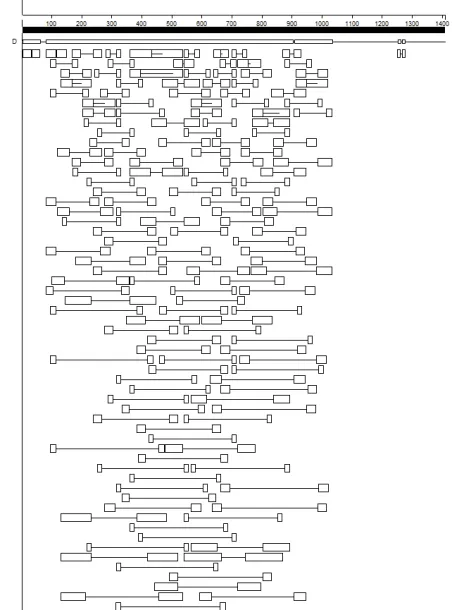
These characteristics create substantial risks of primer misannealing and incorrect fragment assembly.
Using the optimized workflow, the construct was successfully completed in 7 days, with 100% sequence accuracy confirmed by sequencing.
Case 2: 5.9 kb Sequence with High-Density Short Repeats
The second target was approximately 5.9 kb in length and contained a high density of short repetitive sequences.
Key sequence characteristics included:
* 9 bp repeats covering more than one-third of the sequence
* Significant local variation in GC content
* High potential for nonspecific amplification and incorrect pairing
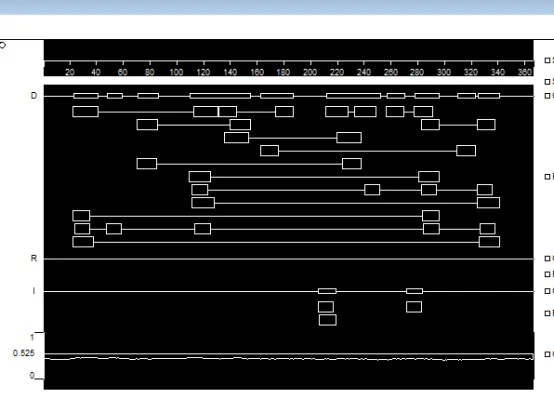
Despite these challenges, the target was successfully synthesized and validated within 7 days, with 100% sequence accuracy confirmed by sequencing.
The two cases presented fundamentally different sequence-related challenges. Both were successfully completed within 7 days, demonstrating the broad applicability of the optimized workflow to different classes of complex DNA sequences.
Conclusion
By integrating Synthetic Module Design, simultaneous digestion and ligation assembly, and homologous recombination, this optimized workflow simplifies the conventional gene synthesis process while reducing the overall turnaround time.
The approach offers several key benefits:
-
Fast turnaround: Gene synthesis and validation in as few as 7 days
-
Streamlined assembly: Fewer purification and handling steps.
-
High sequence flexibility: Compatible with a broad range of vectors and insertion sites.
-
Seamless cloning: Minimizes unwanted sequence additions.
-
Large-gene support: Fragmented strategies enable efficient assembly of larger constructs.
-
Complex-sequence compatibility: Designed to address repetitive, GC-extreme, and structurally challenging sequences.
For researchers working with complex genes or projects with tight timelines, this workflow provides a practical and efficient approach to obtaining accurate DNA constructs faster.
Complex sequence. Shorter timeline. Reliable results.