
 DNA Synthesis
 Vector Selection
 Molecular Biology
 Oligo Synthesis
 RNA Synthesis
 Variant Libraries
 Genome KO Library
 Oligo Pools
 Virus Packaging
 Gene Editing
 Protein Expression
 Antibody Services
 Peptide Services
 DNA Data Storage
 Standard Oligo
 Standard Genome KO Libraries
 Standard Genome Editing Plasmid
 ProXpress
 Protein Products
As gene therapy, cell engineering, and nucleic acid therapeutics continue to evolve, DNA topology has become an increasingly important factor influencing biological performance. Among the latest innovations, circular single-stranded DNA (CssDNA),also known as a single-stranded plasmid,is gaining significant attention due to its enhanced stability, low immunogenicity, and promising performance as a non-viral genetic payload.
Unlike conventional linear DNA or double-stranded DNA (dsDNA), CssDNA is a covalently closed single-stranded DNA molecule with no free 5' or 3' ends. This unique topology provides distinct biochemical and biological advantages, making CssDNA an attractive platform for applications ranging from genome engineering to DNA vaccines.
In this article, we discuss the key characteristics of CssDNA, present a representative synthesis and characterization case study, and explore its rapidly expanding applications.
CssDNA vs. Linear DNA: Why Topology Matters
The fundamental distinction between CssDNA and linear single-stranded DNA (lssDNA) lies in their molecular architecture.
CssDNA forms a continuous closed loop through a phosphodiester bond connecting its 5' and 3' termini, whereas linear DNA retains free ends. Although this structural difference appears simple, it dramatically affects the molecule's biological behavior.
• Enhanced Resistance to Nucleases
Exonucleases degrade DNA by initiating cleavage from exposed DNA ends. Because CssDNA lacks free termini, it naturally resists exonuclease digestion and exhibits a substantially longer intracellular half-life than linear DNA.
Both linear ssDNA and linear dsDNA are rapidly degraded after entering cells, limiting their persistence and reducing overall expression efficiency. The closed circular structure of CssDNA effectively overcomes this limitation, supporting more sustained intracellular activity.
• Reduced Innate Immune Activation
Conventional plasmid DNA often contains bacterial backbone sequences and unmethylated CpG motifs that activate pattern recognition receptors such as Toll-like receptor 9 (TLR9), triggering innate immune responses.
CssDNA contains neither bacterial backbone sequences nor double-stranded DNA structure, resulting in significantly reduced immunogenicity. This lower immune activation may minimize inflammation-associated adverse effects and improve tolerability, particularly in therapeutic applications requiring repeated administration.
• Lower Risk of Genomic Integration
CssDNA primarily remains episomal within cells rather than integrating into the host genome. Its circular single-stranded topology is less favorable for homologous recombination or random genomic insertion, theoretically reducing the risk of insertional mutagenesis and enhancing the safety profile of non-viral gene delivery.
Case Study: CssDNA Synthesis and Characterization
Although CssDNA offers compelling biological advantages, its production presents unique technical challenges.
Small circular ssDNA molecules (<20 nt) often exhibit poor cyclization efficiency due to conformational constraints, while larger constructs (>1 kb) are susceptible to intermolecular ligation and multimer formation. Optimizing reaction conditions to maximize intramolecular circularization while minimizing byproducts remains one of the key challenges in CssDNA manufacturing.
The following example demonstrates Synbio Technologies' workflow using a 50-nt CssDNA molecule.
• Circularization Strategy
A 50-nt linear single-stranded DNA substrate carrying a 5'-phosphate and 3'-hydroxyl group serves as the starting material.
Under ligase-catalyzed conditions, a phosphodiester bond forms between the 5'-phosphate and 3'-hydroxyl termini, generating a covalently closed circular ssDNA molecule.
Because the desired reaction is intramolecular ligation, careful optimization of DNA concentration and reaction conditions is essential to suppress intermolecular ligation and multimer formation.
• Mass Spectrometry Confirms Circularization
Mass spectrometry provides direct molecular evidence of successful circularization.
The measured molecular weight of the linear precursor matches its theoretical value. Following circularization, the product displays an approximate 18 Da reduction in molecular weight, consistent with the loss of one water molecule (18.015 Da) during phosphodiester bond formation.
This characteristic mass shift serves as a reliable indicator of successful CssDNA cyclization.
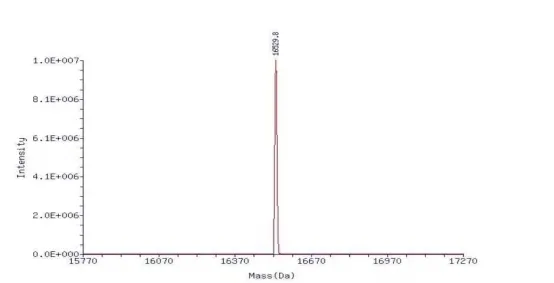
Mass spectrum of linear ssDNA precursor
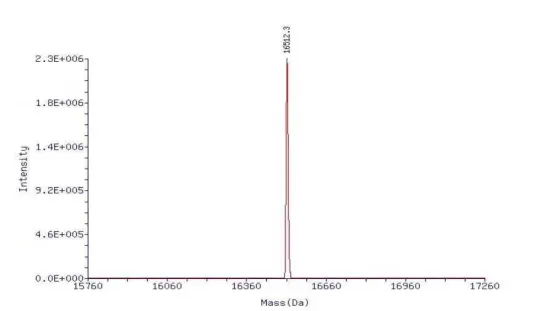
Mass spectrum of circular ssDNA product
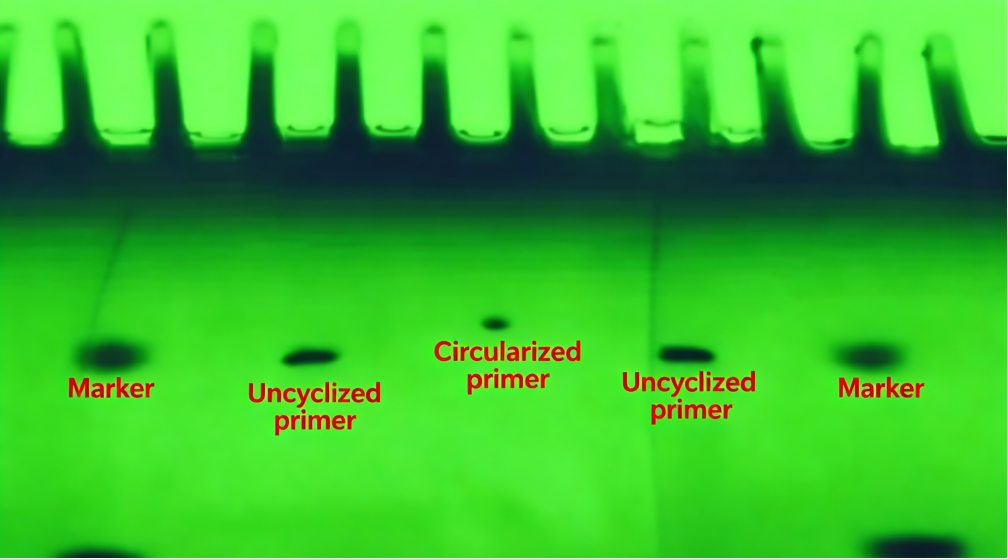
Gel Electrophoresis Analysis
The circularized product is further analyzed using denaturing PAGE or agarose gel electrophoresis.
The results demonstrate:
* A single dominant product band, indicating high product purity.
* Slower electrophoretic mobility compared with the linear precursor, consistent with the altered conformation of circular single-stranded DNA.
Together with mass spectrometry, electrophoresis provides complementary confirmation of successful CssDNA production.
Key Advantages of CssDNA
• Long-Term Gene Expression
The covalently closed structure protects CssDNA from exonuclease degradation, enabling prolonged intracellular persistence and sustained expression of therapeutic genes or vaccine antigens.
This characteristic is particularly valuable for applications requiring long-lasting protein production or durable immune stimulation.
• Low Immunogenicity
Compared with conventional plasmid DNA containing bacterial CpG motifs, CssDNA induces significantly lower inflammatory responses.
Reduced innate immune activation may improve in vivo tolerability and facilitate repeated dosing strategies.
• Improved Safety
Because CssDNA generally remains episomal, it minimizes the risk of genomic integration associated with viral vectors or certain double-stranded DNA donors, offering an attractive alternative for safer non-viral gene delivery.
• High Transfection Efficiency
Numerous studies have demonstrated that CssDNA can outperform both linear DNA and, in some contexts, double-stranded DNA in transfection efficiency.
Its compact topology may facilitate cellular uptake, nuclear transport, and stable complex formation with delivery vehicles, ultimately improving gene delivery performance.
Expanding Applications of CssDNA
As non-viral gene delivery technologies advance, CssDNA is rapidly emerging as a versatile research and therapeutic platform.
Gene Therapy
CssDNA has become a promising donor template for precision genome engineering.
One notable example1 is the GATALYST non-viral genome writing platform, developed to overcome the limitations of AAV vectors, dsDNA donors, and large-scale lssDNA production.
This technology enables efficient production of CssDNA donors up to approximately 20 kb and has achieved up to 70% HDR-mediated knock-in efficiency in induced pluripotent stem cells (iPSCs). High editing efficiency has also been demonstrated in therapeutically relevant cell types, including CAR-T cells and NK cells.
Cancer Research
Recent studies have shown that CssDNA produces higher gene expression than conventional plasmids across multiple tumor cell lines.
Interestingly, expression is further enhanced under tumor-associated metabolic conditions, including glucose deprivation, glutamine deprivation, and hypoxia, suggesting exciting opportunities for future cancer therapeutics.
Additional Emerging Applications
Beyond gene therapy, CssDNA is being explored across numerous research areas, including:
* Programmable regulation of gene expression
* Cytokine delivery for cancer immunotherapy
* DNA vaccine development with prolonged antigen expression
* Multi-target anti-miRNA therapeutics
* Synthetic biology
* Nanotechnology
* Functional genomics
As synthesis technologies continue to improve, CssDNA is expected to become an increasingly important molecular tool across both basic research and translational medicine.
Synbio Technologies Custom CssDNA Synthesis Service
Building upon our optimized circularization workflow and rigorous quality control platform, Synbio Technologies provides high-quality custom CssDNA synthesis services to support both basic research and preclinical development.
• High Stability
The covalently closed circular structure provides exceptional resistance to exonuclease degradation, promoting prolonged intracellular persistence and sustained transgene expression.
• High Transfection Efficiency
Compared with linear DNA, CssDNA demonstrates superior transfection performance across multiple cell types, making it an excellent choice for gene therapy and DNA vaccine applications.
• Broad Research Applications
Our CssDNA products support a wide range of applications, including gene editing, cell engineering, viral vector development, synthetic biology, nanomedicine, and gene expression studies.
• Fully Customized Solutions
From sequence design and synthesis to purification and quality control, we offer comprehensive end-to-end customization with flexible sequence lengths, modifications, and purity specifications tailored to your research needs.
References
1. Xie K, Starzyk J, Majumdar I, Wang J, Rincones K, Tran T, Lee D, Niemi S, Famiglietti J, Suter B, Shan R, Wu H. Efficient non-viral immune cell engineering using circular single-stranded DNA-mediated genomic integration. Nat Biotechnol. 2025 Nov;43(11):1821-1832.
2. Shao D, Wang J, Zou K, Chen Y, Zhang P, Song J. The tumor microenvironment enhances the expression of cssDNA by modulating cell cycle signaling pathways via SKP2. Sci Rep. 2025 Nov 5;15(1):38760.