DNA Synthesis
 Vector Selection
 Molecular Biology
 Oligo Synthesis
 RNA Synthesis
 Variant Libraries
 Genome KO Library
 Oligo Pools
 Virus Packaging
 Gene Editing
 Protein Expression
 Antibody Services
 Peptide Services
 DNA Data Storage
 Standard Oligo
 Standard Genome KO Libraries
 Standard Genome Editing Plasmid
 ProXpress
 Protein Products

The difference between a program that hits its IND filing date and one that slips a quarter often comes down to a decision that happened months earlier: which oligo synthesis partner you chose. Synbio Technologies works alongside biotech R&D and procurement teams every day, and we see the same pattern repeat. Teams that evaluate synthesis partners on price per base alone end up switching vendors mid-program, absorbing weeks of requalification and validation work that never needed to happen.
This article lays out the specific questions your team should ask before committing to a manufacturing partner, organized around the two dimensions that matter most once your program leaves early discovery: turnaround time and the ability to scale.
How Does Oligo Synthesis Turnaround Time Vary by Order Type?
Turnaround time is not a single number. It is a composite of synthesis queue depth, sequence complexity, purification method, quality control steps, and shipping logistics. Two providers quoting 'five business days' may mean very different things once you factor in modifications, HPLC purification, and mass spectrometry verification.
Standard desalted oligos in the 15-to-60-base range can ship next day from some providers. But the moment you add a 5' fluorophore, a phosphorothioate backbone, or push past 90 bases, turnaround can extend to 7-11 business days depending on the purification tier required. For oligo pools, where tens of thousands of sequences are synthesized in a single parallel run, timelines stretch to three to five weeks depending on length and pool size.
The question to ask is not 'What is your standard turnaround?' but rather: 'Given this specific order (these sequences, these modifications, this purification, this scale), what is the expected delivery date, and what percentage of your orders in this category shipped on time last quarter?' A provider that can answer the second half of that question with real data has the operational visibility to back up the commitment.
What Quality Control Standards Should an Oligo Synthesis Partner Meet?
Speed without quality control is a liability. An oligo that arrives two days early but carries truncation products, incomplete modifications, or residual dye contamination can cost your team weeks of troubleshooting and failed assays.
The baseline expectation for any synthesis partner should include mass spectrometry (ESI-MS) verification and analytical HPLC for every oligo. As one industry evaluation noted, 'Everything that leaves our factory receives mass spec and uHPLC and this information is available on our certificate of analysis.' That level of per-oligo analytical documentation should be the minimum, not a premium add-on.
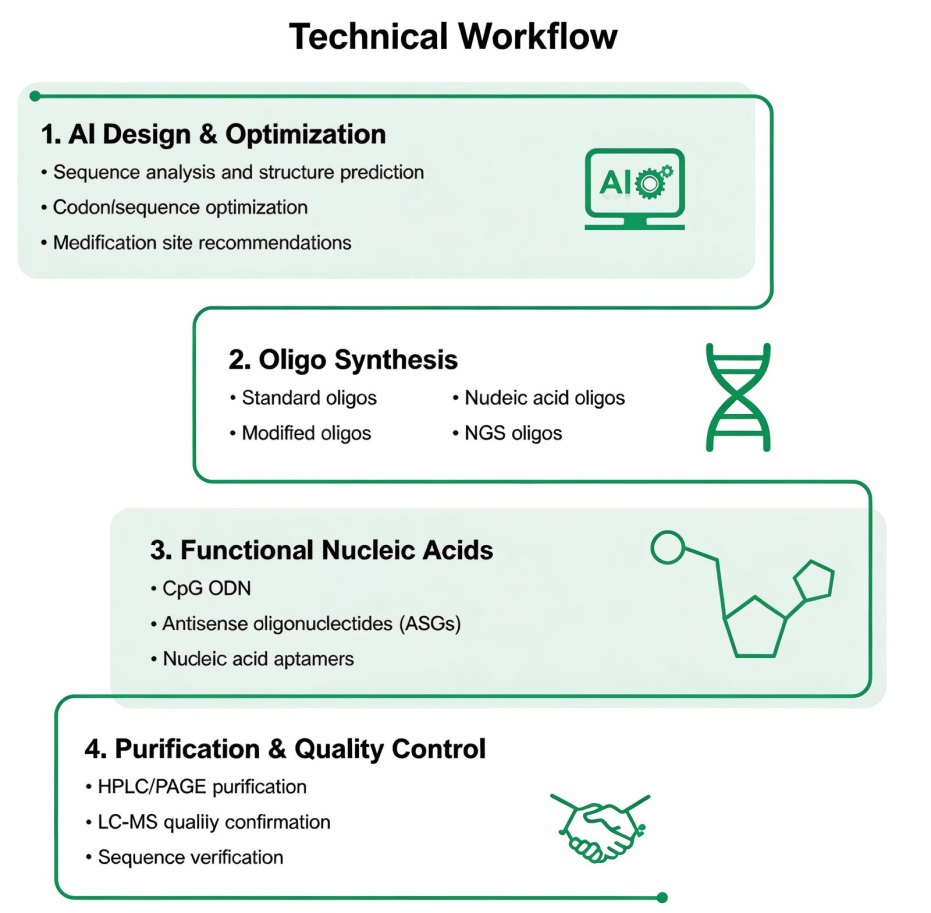
Beyond the certificate of analysis, ask about in-process quality controls. For diagnostic-grade oligos, ISO 13485 manufacturing involves controlled quality checks throughout production, supported by documentation and traceability systems that follow each oligo from synthesis through shipment. At Synbio Technologies, our ISO 9001 and ISO 13485 certified quality management systems ensure batch-to-batch consistency and full traceability across every order, from research-grade primers to diagnostic probes.
The questions that matter: What analytical methods appear on your standard certificate of analysis? What is your average mutation rate across delivered sequences? How do you document and trace deviations? If your team is developing an IVD assay or any product headed toward regulatory review, these answers become non-negotiable.
How Can You Evaluate Oligonucleotide Synthesis Scalability?
Scalability means something different at every stage of development. During early discovery, you may need 50 standard primers a week. By the time you are validating an assay panel for diagnostic submission, you may need thousands of modified probes at consistent quality, with lot-to-lot documentation that holds up under regulatory scrutiny.
The real evaluation centers on whether a provider can maintain quality, documentation standards, and turnaround commitments as your volume increases by an order of magnitude. As supplier evaluation frameworks have highlighted, 'Supplier choice is more than a procurement decision. It is a way to manage long-term risk from very early on.'
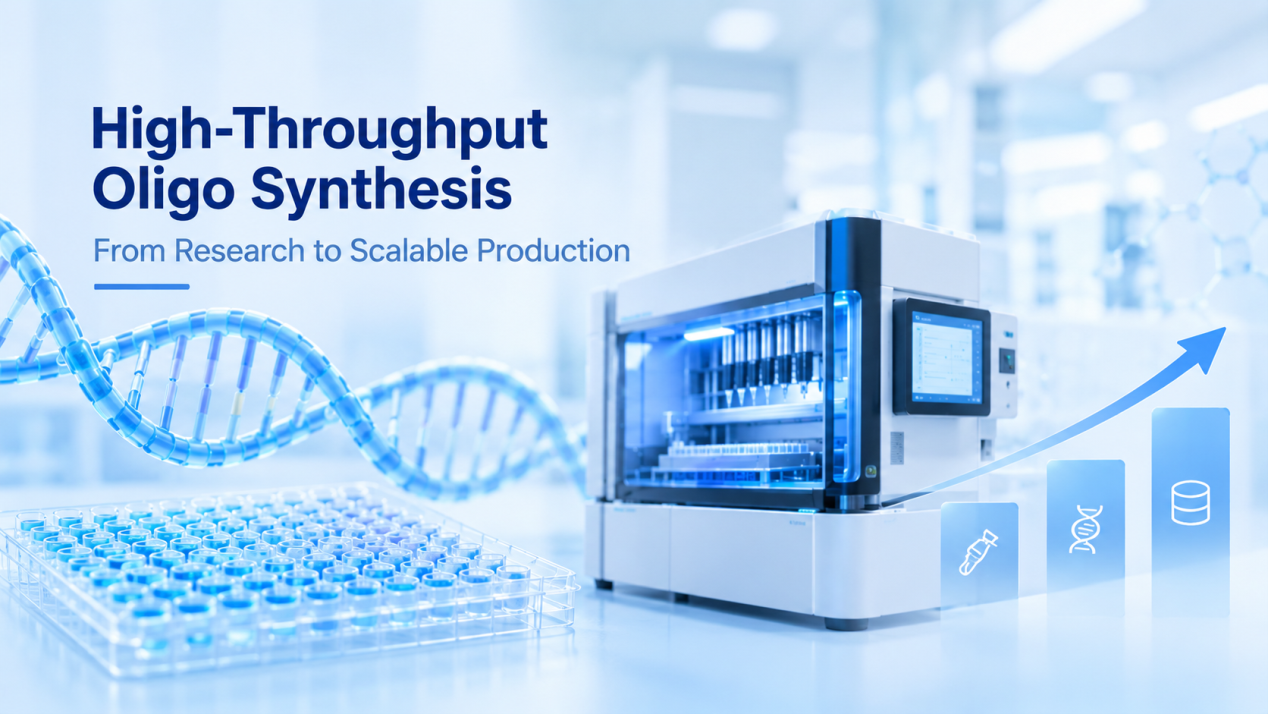
Ask specifically: What is your maximum synthesis capacity per month at the scale and modification tier I need? Have you supported a customer through the transition from research-use oligos to clinical-grade production? Can you provide references from programs that scaled with you from discovery through commercialization?
The broader manufacturing landscape adds urgency to this question. Solid-phase oligonucleotide synthesis (SPOS), the current industry standard, faces well-documented capacity constraints. SPOS batches typically yield less than 10 kilograms of final product. With the oligonucleotide therapeutics market projected to grow from $5.2 billion in 2020 to $26.1 billion by 2030, global demand could reach six to seven tons, more than all current manufacturing capacity. Providers investing in next-generation synthesis platforms, including liquid-phase and enzymatic approaches, will be better positioned to meet that demand curve.
Why Do Oligo Modification Capabilities Matter?
Oligo synthesis is not one product category. A provider that excels at standard desalted primers may lack the chemistry platforms to handle the modifications your program requires six months from now.
Map your current and anticipated modification needs against each provider's published capabilities. Consider fluorophore and quencher pairs for qPCR probes, phosphorothioate backbones for antisense work, LNA bases for enhanced binding affinity, biotin and amino modifications for capture and conjugation applications, and degenerate bases or mixed-base oligos for library construction.
At Synbio Technologies, our customoligo synthesis platform supports scales from nanomole to micromole with multiple purification tiers (desalting, cartridge, HPLC, PAGE) and an extensive catalog of 5' and 3' modifications, backbone chemistries, and internal labels. This breadth matters because switching providers mid-program for a new modification type introduces a validation burden that directly affects your timeline.
Ask the partner: Can you synthesize the full range of modifications my program will need over the next 18 months on a single platform? What is the turnaround impact when I add a modification that requires HPLC purification versus standard desalting? The goal is to find one partner who can grow with your chemistry requirements, not a portfolio of specialists you need to manage separately.
How Should You Evaluate Oligo Supply Chain Reliability?
Single-source dependency is one of the most underestimated risks in oligo procurement. If your sole supplier experiences a reagent shortage, equipment failure, or quality excursion, your program timeline absorbs the full impact.
Evaluating supply chain resilience means asking: Do you have multi-site manufacturing capabilities? What is your reagent sourcing strategy, and do you maintain safety stock for critical raw materials? What is your documented response protocol when a production run fails to meet specifications?
Qualifying a secondary supplier before you need one is significantly less disruptive than doing it under deadline pressure. The practical steps include validating that equivalent materials from a second source perform identically in your assays, establishing agreed-upon specifications and acceptance criteria with both suppliers, and running bridging studies that confirm lot-to-lot consistency across providers.
For programs headed toward regulated markets, ask whether your primary supplier can support you through technology transfer from small-scale R&D synthesis to large-scale bulk production. Providers with experience navigating that transition can help you anticipate documentation requirements, scale-up yield changes, and regulatory expectations that first-time commercial teams often discover too late.
What Makes an Oligo Synthesis Provider a Long-Term Partner?
The distinction between a vendor and a partner shows up when something goes wrong. A vendor that simply sends a replacement order handles the symptom, while a partner investigates the root cause, shares the data, and works with your team to prevent recurrence.
Before committing, ask: What does your technical support look like after the order is placed? Do you offer sequence review, manufacturability assessment, or assay optimization support? If I flag a quality issue, what is your investigation and response timeline?
At Synbio Technologies, we provide dedicated project management and a technical team that supports customers from sequence design through final delivery. Our approach reflects a core principle of our work: we are not positioned as a transactional supplier but as a partner invested in your research outcomes. That means we review sequences proactively, flag potential synthesis or purification challenges before production begins, and provide consistent points of contact who understand your program's history and requirements.
The best predictor of long-term partnership quality is how a provider handles the questions you ask before the first order. A partner that answers with specifics, data, and references is demonstrating the same rigor you should expect from every oligo they deliver.
Your next oligo synthesis decision will shape your program's pace for months or years to come. Before you compare quotes, compare capabilities, ask the hard questions, and choose a partner whose quality systems, scalability, and technical depth match where your science is going, not just where it is today.