
 DNA Synthesis
 Vector Selection
 Molecular Biology
 Oligo Synthesis
 RNA Synthesis
 Variant Libraries
 Genome KO Library
 Oligo Pools
 Virus Packaging
 Gene Editing
 Protein Expression
 Antibody Services
 Peptide Services
 DNA Data Storage
 Standard Oligo
 Standard Genome KO Libraries
 Standard Genome Editing Plasmid
 ProXpress
 Protein Products
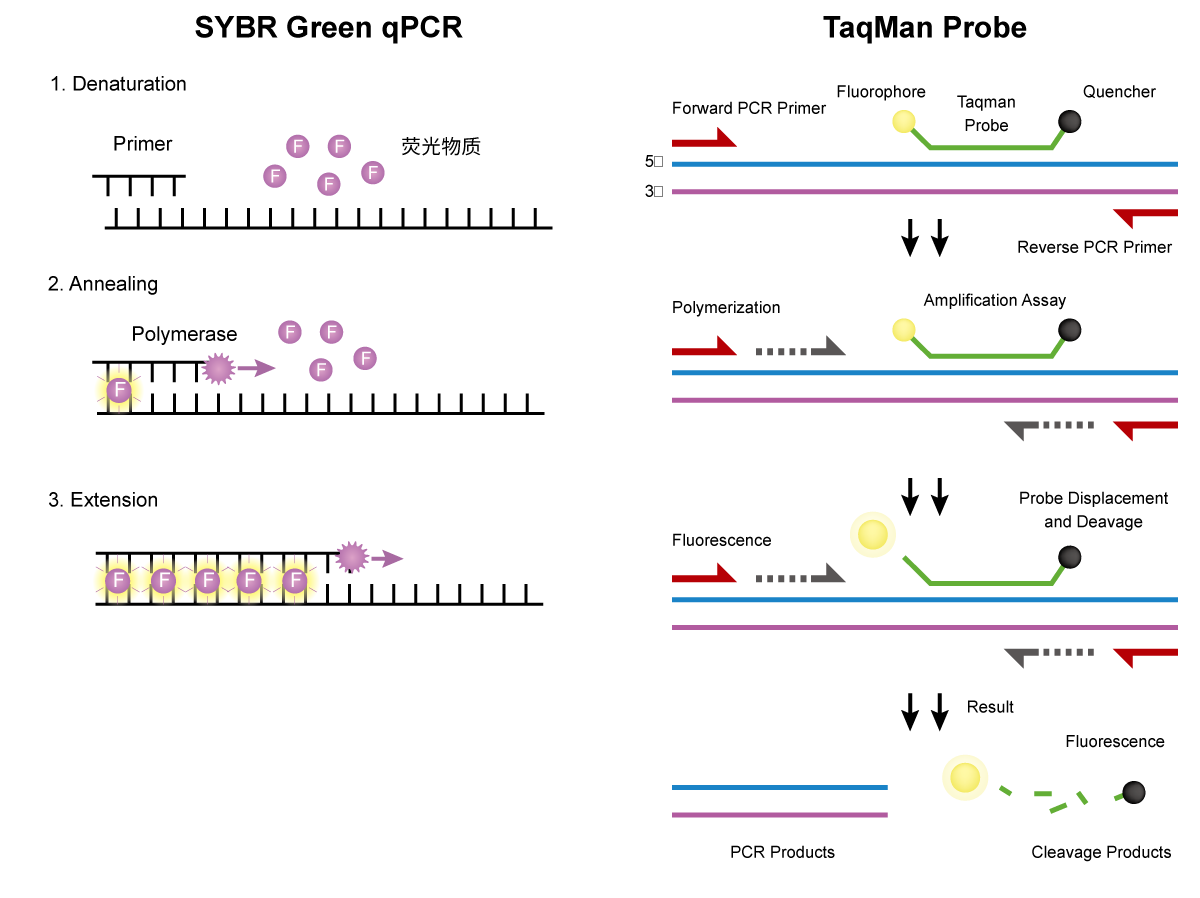
Synbio Technologies has long supported researchers seeking accurate thermal parameters for qPCR Probes, diagnostic oligonucleotide, and other Molecular Diagnostic tools. When we calculate oligonucleotide Tm and adjust annealing conditions, we focus on practical principles that help researchers achieve consistent amplification results. Our goal is to explain the essential steps while naturally introducing how our products integrate into temperature-dependent assays without interrupting the flow of scientific reasoning.
Understanding the Science Behind Tm Calculation
To calculate Tm accurately, we begin by examining the sequence length, GC content, and salt concentration. These parameters directly influence melting behavior, which is especially important when working with qPCR Probes. Our company often evaluates GC distribution to estimate how stable an oligo remains during a thermal cycle. Since every diagnostic oligonucleotide behaves differently depending on its composition, we rely on established thermodynamic models rather than assumptions. This scientific approach contributes to more consistent performance in Molecular Diagnostic workflows, where small variations in temperature can affect amplification curves and overall assay reliability.
Selecting Practical Annealing Conditions for Reliable Amplification
Once we determine Tm, we focus on establishing proper annealing conditions. In our laboratory, we usually recommend starting with an annealing temperature two to five degrees below the calculated Tm. This strategy allows qPCR Probes to bind with balanced specificity. When we evaluate the behavior of a diagnostic oligonucleotide, we often run gradient PCR to identify the temperature window that minimizes nonspecific binding. This type of optimization is essential for reducing background signals in Molecular Diagnostic experiments. During these assessments, we sometimes reference our internally validated probe designs, ensuring the discussion naturally aligns with the topic without turning into direct sales content.
Integrating Probe Design With Real Experimental Conditions
In practical workflows, Tm calculations are only the beginning. We routinely compare predicted temperatures with experimental data to ensure alignment. This is particularly relevant when we produce qPCR Probes tailored for multiplex reactions, where each target may require slightly different conditions. Our team reviews how a diagnostic oligonucleotide responds to salt concentration, enzyme choice, and buffer composition to ensure stable amplification. These steps are crucial for Molecular Diagnostic platforms used in research labs, clinical screening environments, and applied testing fields. When appropriate, we reference our probe and oligo manufacturing solutions, such as those used for customizable diagnostic applications, in a smooth and contextual way rather than highlighting them abruptly.
Conclusion: Combining Theory and Practice for Accurate Assays
In conclusion, Synbio Technologies integrates Tm calculation principles with practical optimization strategies to support researchers using qPCR Probes, diagnostic oligonucleotide, and other Molecular Diagnostic tools. By pairing thermodynamic theory with hands-on evaluation, we help laboratories achieve stable annealing conditions and better overall assay performance. Our continued commitment to refining probe design and manufacturing ensures that the concepts described here translate effectively into real experiments. Through this combined approach, we strengthen the reliability of temperature-dependent molecular workflows while contributing to smoother, more consistent analytical outcomes.