
 DNA Synthesis
 Vector Selection
 Molecular Biology
 Oligo Synthesis
 RNA Synthesis
 Variant Libraries
 Genome KO Library
 Oligo Pools
 Virus Packaging
 Gene Editing
 Protein Expression
 Antibody Services
 Peptide Services
 DNA Data Storage
 Standard Oligo
 Standard Genome KO Libraries
 Standard Genome Editing Plasmid
 ProXpress
 Protein Products
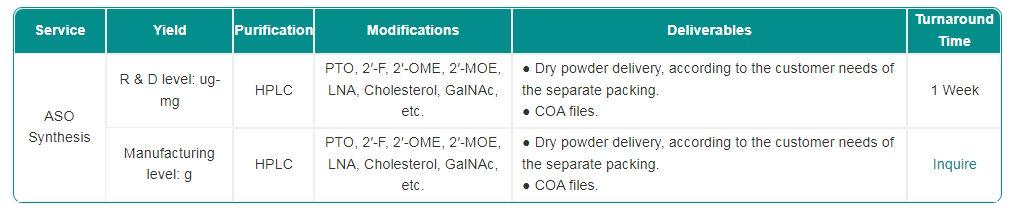
At Synbio Technologies, we support early-stage research by providing reliable tools for nucleic acid analysis. Sequencing antisense oligos is a critical step in evaluating design accuracy, and many teams rely on ASO Synthesis and Antisense oligo technology to guide their experiments. During early exploration, we find that consistent verification helps researchers identify variations that may influence function, stability, or binding efficiency. These practices shape the foundation for downstream optimization, allowing teams to address questions before committing resources to more complex studies involving ASO Synthesis workflows.
Establishing Reliable Verification Workflows
In early R&D, establishing a dependable sequencing workflow is essential. When we assist scientists, we emphasize the need for high-quality input material derived from precise ASO Synthesis steps. Sequencing outcomes depend on clean samples, well-controlled reaction conditions, and appropriate analytical methods. As users evaluate their designs, Antisense oligo technology provides insights into sequence integrity, helping researchers determine whether the intended modifications are accurately incorporated. These procedures are especially important when users explore novel structures or chemical variations that influence hybridization behavior. By applying methodical checks throughout ASO Synthesis, teams can maintain clarity during the design–evaluation cycle.
Understanding Structural Considerations in Antisense Oligos
Antisense oligos often include sequence motifs or chemical features that require specialized evaluation. When we support customers, we encourage them to consider the regional stability of bases, backbone properties, and potential secondary structures that may interfere with sequencing or hybridization. These elements are closely tied to Antisense oligo technology, which allows researchers to study how specific modifications behave in early experiments. Sequencing data helps clarify which portions of an oligo perform as intended and which regions may require adjustment. As R&D teams refine their designs, applying systematic checks across multiple ASO Synthesis iterations provides a clearer view of how design choices influence functional outcomes.
Applying Sequencing Insights to Improve Early-Stage Research
Once sequencing data is obtained, the next step is integrating those results into follow-up development. We often see researchers use validated sequences to adjust assay conditions, redesign motifs, or explore alternative chemical features. This process demonstrates how Antisense oligo technology functions as a bridge between conceptual design and experimental testing. Our company offers synthesis and analytical support that helps teams evaluate sequence quality, modification accuracy, and early performance indicators. These capabilities align naturally with the needs of groups working through multiple ASO Synthesis cycles, enabling them to compare sequence variants and determine which direction to pursue as projects progress.
Conclusion: Using Consistent Sequencing Practices to Strengthen Early Antisense Research
Sequencing antisense oligos plays a meaningful role in early-stage R&D by confirming design accuracy and informing project decisions. When researchers pair sequencing workflows with dependable ASO Synthesis and analytical methods supported by Antisense oligo technology, they gain clearer insights into structural performance and potential improvements. At Synbio Technologies, we help users integrate these practices into their development process so they can advance from conceptual evaluation to more refined experimental stages with greater confidence.