
 DNA Synthesis
 Vector Selection
 Molecular Biology
 Oligo Synthesis
 RNA Synthesis
 Variant Libraries
 Genome KO Library
 Oligo Pools
 Virus Packaging
 Gene Editing
 Protein Expression
 Antibody Services
 Peptide Services
 DNA Data Storage
 Standard Oligo
 Standard Genome KO Libraries
 Standard Genome Editing Plasmid
 ProXpress
 Protein Products
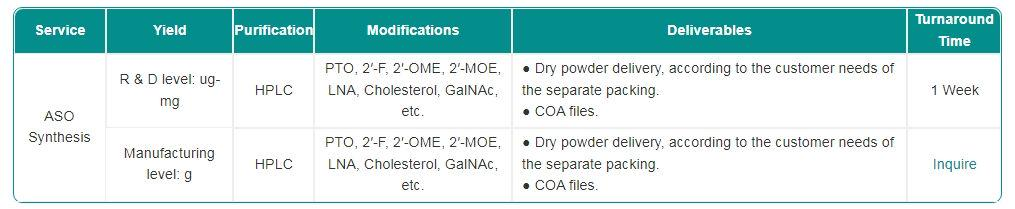
At Synbio Technologies, we treat ASO Synthesis as a central pillar of our work because purity directly influences how oligonucleotide therapeutics behave during research and development. When impurity levels are not well controlled, the resulting sequences may interact unpredictably with cellular components. This creates challenges for therapeutic evaluation, especially in early studies where material consistency affects the interpretation of biological responses. As teams expand projects that depend on Antisense oligo manufacturing, we recognize the increasing need for material that meets defined quality expectations. For our company, maintaining purity is not only about meeting specifications but also about supporting researchers who rely on dependable materials throughout experimental cycles involving ASO Synthesis.
Purity Requirements That Shape Therapeutic Exploration
In oligonucleotide programs, purity determines how accurately a sequence can bind to its intended target. When we prepare materials for ASO Synthesis, incomplete sequences, truncated fragments, or unintended modifications can influence hybridization behavior and reduce the clarity of experimental outcomes. This is especially relevant for groups engaged in Antisense oligo manufacturing, where design precision must align with manufacturing consistency. Our experience shows that even small deviations may influence dose–response trends or create noise in downstream analytical work. To help mitigate these issues, we support researchers with structured production controls and quality evaluations that accompany each batch of ASO Synthesis, offering a foundation for reliable decision-making in therapeutic development.
How Controlled Manufacturing Supports Consistency
Reliable oligonucleotide material prepares research teams for more predictable experimental cycles. In our Antisense oligo manufacturing processes, we emphasize traceability, standardized synthesis steps, and purification workflows that promote consistent outcomes. These elements are particularly important when customers transition from discovery to larger exploratory studies. To help support that transition, we provide information about our workflow design and synthesis options through our antisense oligonucleotide resources, where users can review how purification strategies, sequence design, and production considerations shape the final quality of ASO Synthesis materials. By focusing on manufacturing stability, we aim to reinforce the reproducibility that scientists need to evaluate therapeutic potential without introducing unnecessary variables from the production process.
Conclusion: Why Purity Matters for Oligonucleotide Therapeutics
Purity remains essential because it influences sequence behavior, experimental reliability, and the broader evaluation of therapeutic potential. Through our continued development of ASO Synthesis, we work to offer researchers dependable materials that help clarify biological outcomes. As more teams adopt Antisense oligo manufacturing approaches in early therapeutic programs, consistent quality becomes a shared priority across the field. We support these efforts by improving there producibility of oligonucleotide evaluation.We also provide resources to help users understand the factors behind successful ASO synthesis. At Synbio Technologies, purity is central to how we approach each project and support our partners’ scientific progress.