
 DNA Synthesis
 Vector Selection
 Molecular Biology
 Oligo Synthesis
 RNA Synthesis
 Variant Libraries
 Genome KO Library
 Oligo Pools
 Virus Packaging
 Gene Editing
 Protein Expression
 Antibody Services
 Peptide Services
 DNA Data Storage
 Standard Oligo
 Standard Genome KO Libraries
 Standard Genome Editing Plasmid
 ProXpress
 Protein Products
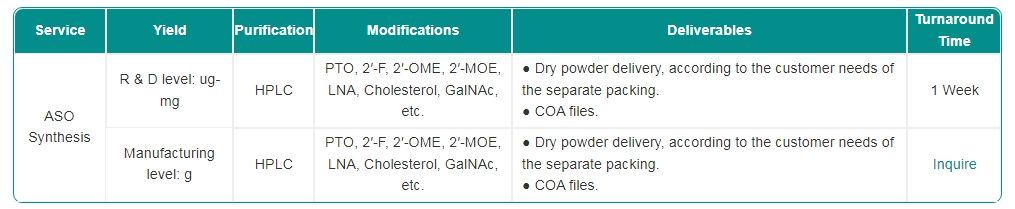
At Synbio Technologies, we continue exploring how chemical modifications influence the performance of antisense drug candidates, especially when teams apply ASO Synthesis in early research. Modifications have long been used to stabilize oligonucleotides and support their interaction with targeted sequences, and we provide these capabilities to help researchers evaluate how structural adjustments affect bioavailability. By understanding why certain changes improve stability or cellular uptake, we can better support programs that rely on advanced oligo engineering.
Understanding How Modifications Influence Stability
The way chemical features are arranged plays a central role in how antisense oligos behave inside biological environments. When we work with teams on Antisense oligo design, we often focus on backbone features, sugar modifications, and terminal groups that help protect sequences from rapid degradation. Through systematic evaluation supported by ASO Synthesis, we observe how each design element contributes to extended circulation time. These discussions allow research groups to refine their models before moving into animal studies, ensuring that each modification aligns with the intended biological pathway. Our ASO development service presents multiple customization points, giving users structured options that remain relevant to drug candidate optimization.
Supporting Delivery and Cellular Uptake
Bioavailability also depends on whether an oligo reaches its intended location and interacts effectively with its target. During development, we analyze how different chemistries or ligand additions influence uptake across various cell types. By incorporating ASO Synthesis into these studies, our teams generate consistent materials that reflect the intended structural variations. When users explore delivery strategies, our experience producing antisense materials enables smoother iteration, as each version maintains predictable quality. Researchers use Antisense oligo design cycles to improve tissue distribution. These steps also help identify structures that support efficient endosomal release. Our solutions draw from established workflows, helping researchers evaluate ideas without unnecessary complexity.
Practical Integration of ASO Services Into Research Pipelines
To assist research teams, we provide detailed support and scalable production options across different stages of antisense development. When organizations explore sequence refinements, they often combine design modeling with targeted ASO Synthesis, ensuring alignment between conceptual plans and experimental output. Our company offers backbone variants, length options, and modification choices that match the expectations of therapeutic discovery programs. As groups continue to examine Antisense oligo design, our structured process helps maintain consistency between batches, reducing the time required to validate new constructs. These capabilities connect directly with bioavailability research, allowing users to move efficiently from hypothesis to data generation while preserving flexibility in design.
Conclusion: How Modification Supports Bioavailability Improvements
Chemical modification enhances bioavailability by improving stability, encouraging effective cellular uptake, and supporting predictable behavior during in-vivo testing. Through our work with ASO Synthesis, we help teams investigate these variables and select structures aligned with their development goals. When researchers refine pathways through Antisense oligo design, we provide reliable materials that support each stage of evaluation. By integrating targeted ASO Synthesis into their workflows, users gain a clearer understanding of how individual structural elements contribute to therapeutic performance. At Synbio Technologies, we remain committed to supporting these efforts with dependable processes and informed technical guidance.