
 DNA Synthesis
 Vector Selection
 Molecular Biology
 Oligo Synthesis
 RNA Synthesis
 Variant Libraries
 Genome KO Library
 Oligo Pools
 Virus Packaging
 Gene Editing
 Protein Expression
 Antibody Services
 Peptide Services
 DNA Data Storage
 Standard Oligo
 Standard Genome KO Libraries
 Standard Genome Editing Plasmid
 ProXpress
 Protein Products
At Synbio Technologies, we often receive questions about how Artificial DNA synthesis differs from conventional cloning methods. While traditional cloning relies on biological hosts to replicate DNA, DNA Synthesis allows us to build precise sequences directly in the laboratory. By designing sequences digitally, we can bypass the limitations of natural templates and achieve more flexibility for complex constructs. Through our Gene Synthesis Service, researchers gain access to reliable, ready-to-use DNA fragments that can accelerate experimental timelines.
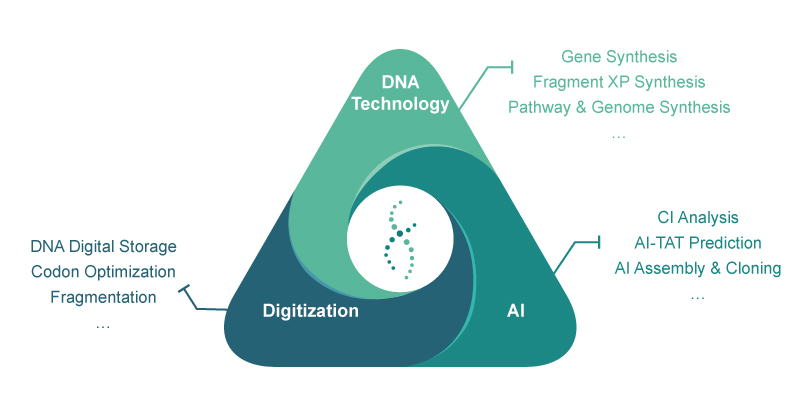
Streamlining Research with Artificial DNA Synthesis
We have found that Artificial DNA synthesis dramatically simplifies experimental design. Unlike traditional cloning, which can involve multiple rounds of transformation, selection, and verification, our approach enables the creation of tailored DNA sequences in a single workflow. This method reduces time spent troubleshooting and allows scientists to focus on testing hypotheses. By offering our Gene Synthesis Service, we provide custom DNA fragments with high fidelity, supporting diverse applications from protein engineering to synthetic biology projects. The accuracy of DNA Synthesis ensures that constructs behave predictably, improving reproducibility across experiments.
Flexibility and Customization Advantages
Another key advantage we observe with DNA Synthesis is its flexibility. Traditional cloning often requires compatible restriction sites and depends on the availability of source material. In contrast, Artificial DNA synthesis removes these constraints, enabling us to introduce modifications, codon optimization, or entirely novel sequences. Our Gene Synthesis Service supports these customizations while maintaining stringent quality standards. We ensure that every sequence we deliver meets the specific requirements of researchers, whether they are developing novel enzymes, studying regulatory elements, or constructing synthetic pathways.
Conclusion: Choosing the Right Approach
In conclusion, we believe that understanding the differences between traditional cloning and Artificial DNA synthesis is essential for efficient molecular biology research. DNA Synthesis offers speed, precision, and flexibility that traditional cloning cannot easily achieve, while our Gene Synthesis Service provides a reliable, ready-to-use solution for complex sequences. By leveraging Synbio Technologies’ expertise, we help researchers advance their projects with confidence and accuracy. Ultimately, selecting the appropriate method depends on experimental goals, but integrating artificial synthesis into workflows often accelerates progress and expands possibilities.