How is AI Changing Protein Research?
AI is reshaping protein research at several stages, from predicting protein structures and functions to designing novel proteins from scratch, unlocking the molecular mysteries of life.
Protein structure prediction: AI predicts 3D protein structures via multiple sequence comparison information. Representative models include AlphaFold and RoseTTAFold.
Protein function prediction: AI can also help infer what a protein may do by analyzing sequence information, structural characteristics, protein interactions, and existing functional annotations. DeepGO and DeepGO-SE are advanced models for protein function prediction.
Protein optimization and de novo design: Existing proteins can be optimized for properties such as stability, affinity, and catalytic activity, while AI can create entirely new sequences or structures for specific objectives. Tools include ProteinMPNN, RFdiffusion, ProGen, and AlphaProteo.
AI is providing researchers with new ways to explore protein sequences and identify promising proteins before experimental testing.
AI Design Still Requires Wet Lab Validation
1
Expression Challenges
A sequence that performs well computationally may show low expression or poor solubility in the selected host.
2
Misfolding and Aggregation
Complex protein structures can misfold or form aggregates during expression, reducing the amount of functional protein for analysis.
3
Structural Stability
Predicted structural stability does not replace experimental evaluation of the purified protein under relevant conditions.
4
Functional Validation
For binders, enzymes, antibodies, and other functional proteins, activity needs to be demonstrated through lab validation.
From AI Design to Functional Protein
How can AI-driven protein design be turned into functional proteins? It involves six steps:
Step 1
Protein Design
Identify the functional site responsible for the biochemical activity of the protein, and design an amino acid sequence capable of folding into a stable structure that supports the intended function.
Step 2
Computational Validation and Optimization
Computationally evaluate the designed protein for structural stability, functional-site positioning, and predicted molecular interactions. Designs may then undergo further optimization to improve stability, functionality, and expression.
Step 3
Gene Synthesis
Convert the optimized protein sequence into its corresponding DNA sequence and synthesize the target gene for downstream expression.
Step 4
Protein Expression
Clone the synthesized gene into a suitable expression host (bacteria, yeast, insect, and mammalian cells) and culture the cells under appropriate conditions to produce the target protein.
Step 5
Purification and Characterization
Purify the expressed protein using biochemical methods such as chromatography and electrophoresis, then characterize its structure, stability, and functional properties using appropriate analytical techniques.
Step 6
Functional Testing
Evaluate whether the protein performs as designed using assays such as enzymatic activity measurements, binding experiments, or cell-based assays.
Synbio Technologies’ DNA - RNA - Protein Solution
Validating and transforming AI proteins involves a complex wet-lab verification process. Synbio Technologies provides researchers with a one-stop solution. You only need to provide the protein sequence, and we handle all the details.
DNA Level
-
Custom DNA Oligos
-
Diagnostic Probes & Oligos
-
Gene Synthesis
-
ssDNA synthesis
-
Antibody Gene Synthesis
-
Variant Libraries
-
Standard Genome KO Libraries
-
sgRNA Customized Design, etc.
RNA Level
-
Custom RNA Oligos
-
RNA Modification
-
siRNA /miRNA Synthesis
-
Long RNA Synthesis
-
sgRNA Synthesis
-
In Vitro Transcription
Protein Level
-
Codon Optimization
-
Protein Expression
-
Hybridoma Antibody Sequencing
-
Immune Repertoire Sequencing
-
Recombinant Ab Production
-
Monoclonal Antibody Preparation
-
Polyclonal Antibody Preparation, etc.
Platforms Supporting AI Protein Projects
Syno GS Platform
Provides AI-enhanced DNA synthesis, ensuring 100% accurate genes for your research.
Syno R Platform.
Specializes in RNA oligo synthesis, offering various modifications and delivery options.
Syno Ab Platform.
Utilizes AlphaFold to optimize antibody design and interactions, streamlining antibody discovery.
Syno Protein Platform
Offers 4 protein expression systems (bacterial, yeast, insect, and mammalian) with optimized codons for efficient, high-purity protein production.
AI Protein Applications
AI protein design is expanding across drug, antibody, enzyme, and synthetic biology.
-
Drug Discovery: Accelerate target identification, binding-site analysis, and protein-based drug design.
-
Antibody Discovery: Support antigen-antibody modeling and antibody development.
-
Enzyme and Protein Engineering: Develop proteins and enzymes with tailored functional properties.
-
Synthetic Biology: Apply protein design to agriculture, food, and industrial biotechnology.
Why Work with Synbio Technologies?

Integrated Workflow
Connect DNA synthesis, RNA technologies, protein expression, and antibody services within a coordinated project workflow.
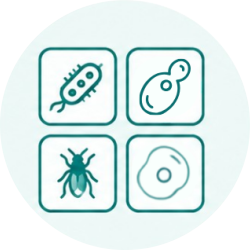
Multiple Expression Systems
Access bacterial, yeast, insect, and mammalian expression systems, allowing expression to be matched to different protein characteristics and research requirements.
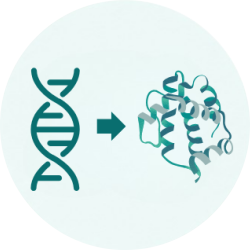
Sequence-to-Function Support
Start with a designed protein sequence and finish with codon optimization, gene synthesis, expression, purification, characterization, and functional validation.

Customized Project Design
Projects can be tailored according to protein type, research objectives, and delivery requirements, suitable for different scales of protein production.
Get in Touch with Us

 DNA Synthesis
 Vector Selection
 Molecular Biology
 Oligo Synthesis
 RNA Synthesis
 Variant Libraries
 Genome KO Library
 Oligo Pools
 Virus Packaging
 Gene Editing
 Protein Expression
 Antibody Services
 Peptide Services
 DNA Data Storage
 Standard Oligo
 Standard Genome KO Libraries
 Standard Genome Editing Plasmid
 ProXpress
 Protein Products