
 DNA Synthesis
 Vector Selection
 Molecular Biology
 Oligo Synthesis
 RNA Synthesis
 Variant Libraries
 Genome KO Library
 Oligo Pools
 Virus Packaging
 Gene Editing
 Protein Expression
 Antibody Services
 Peptide Services
 DNA Data Storage
 Standard Oligo
 Standard Genome KO Libraries
 Standard Genome Editing Plasmid
 ProXpress
 Protein Products
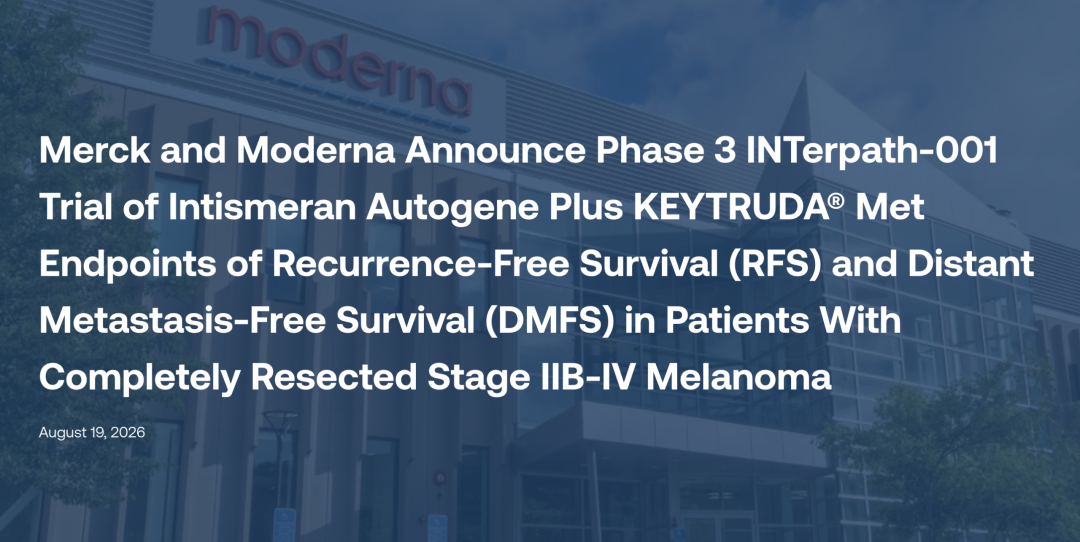
On August 19, 2026, Merck and Moderna announced that the Phase 3 INTerpath-001 trial had met its primary endpoint. The study evaluated intismeran autogene—formerly known as V940 or mRNA-4157 in earlier clinical development—in combination with Merck’s KEYTRUDA® (pembrolizumab) in patients with completely resected stage IIB–IV melanoma.
The results showed that the combination therapy significantly improved both the primary endpoint, recurrence-free survival (RFS), and the key secondary endpoint, distant metastasis-free survival (DMFS), compared with KEYTRUDA alone. It is important to note that overall survival (OS), another key secondary endpoint, remains under follow-up and the data have not yet been reported. OS will be an important factor to watch as the therapy moves toward potential regulatory approval and commercialization.
Moderna’s stock surged 177% in a single trading session, while headlines around the world described the results as a validation of AI-designed personalized vaccines and a historic breakthrough for mRNA-based cancer therapy.
The headlines are not an overstatement. This is the first large randomized Phase 3 trial to demonstrate a clear clinical benefit from a personalized cancer vaccine designed and manufactured specifically for each patient.
AI-driven target selection has moved beyond being a supporting research tool and become a critical component of the clinical workflow. Without algorithms capable of identifying the most immunogenic neoantigens from hundreds or thousands of tumor mutations, this therapeutic approach would not be feasible.
But while the spotlight has focused heavily on the “design” side of the story, another half of the equation deserves equal attention—and may be just as important to the ability of this therapy to reach Phase 3.
From Mutation to Injection: The Complete Therapeutic Workflow
To understand how intismeran autogene works, it is important to look at the entire value chain.
After a melanoma patient undergoes tumor biopsy, tissue samples enter a sequencing and AI-based prediction workflow. Moderna’s algorithms process large volumes of mutation data and identify up to 34 neoantigen targets with the greatest potential for immunogenicity from hundreds or even thousands of candidates—a computational task far beyond practical manual analysis.
The selected targets are then used to design a patient-specific mRNA sequence encoding the chosen neoantigens. The resulting mRNA is subsequently formulated with lipid nanoparticles (LNPs) to create an injectable vaccine.
AI also plays another critical role behind the scenes: orchestration.
Because every vaccine is unique, every step—from sequencing and sequence design to manufacturing, quality release, and logistics—must be accurately matched to an individual patient. Any delay can reduce the available treatment window.
Moderna’s Maestro digital system helps coordinate clinical data, manufacturing progress, and logistics in real time, ensuring that each personalized vaccine is delivered to the right patient at the right time.
In this breakthrough, AI serves both as a“designer” and a“dispatcher.” It accelerates the transition from sequencing data to therapeutic decisions and connects information across the workflow, creating more operational flexibility.
But AI’s contribution largely ends with the sequence and information flow.
Turning an mRNA sequence into a sterile, stable, traceable injectable product is fundamentally a challenge in molecular manufacturing, chemistry, process engineering, and quality control. In vitro transcription, capping, purification, LNP encapsulation, fill-finish, and release testing all require highly controlled manufacturing systems.
For a personalized therapy to reach Phase 3, two capabilities are equally essential: AI-driven design and reliable molecular manufacturing.
The former may receive most of the media attention, but the latter is what makes it possible to consistently deliver individualized products to hundreds or thousands of patients within clinically relevant timelines.
The Manufacturing Challenge of Personalized Therapies
If regulators ultimately accept the INTerpath-001 results, personalized neoantigen therapy will move beyond being an experimental concept and become a therapeutic modality supported by substantial clinical evidence.
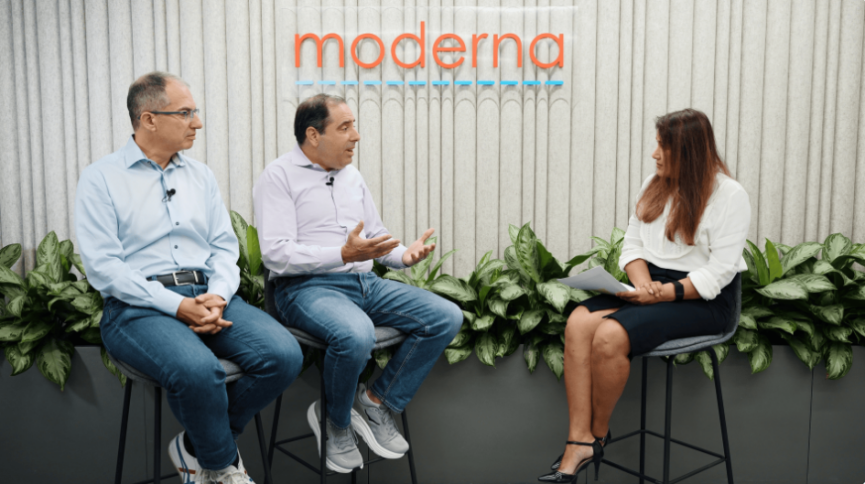
As Moderna’s Chief Development Officer David Berman has emphasized, the program represents more than an individual milestone—it points toward a potential new class of medicines and a new approach to cancer treatment.
Merck and Moderna have already initiated nine Phase 2/3 studies involving this platform across melanoma, non-small cell lung cancer, bladder cancer, and renal cell carcinoma, while earlier-stage studies are also underway in pancreatic cancer, gastric cancer, and additional non-small cell lung cancer indications.
For the industry, these developments send a clear signal: the underlying science is gaining clinical validation, and the manufacturing infrastructure required to operate personalized therapies at meaningful scale is becoming increasingly realistic.
Yet personalized medicine presents a fundamental challenge to the traditional pharmaceutical manufacturing model.
Conventional drug manufacturing is built around the principle of “one product, one production line, continuous manufacturing at scale.” Processes, equipment, and quality standards are standardized, while larger production volumes generally reduce the cost per dose.
Personalized therapies reverse this model:One patient, one product.
The batch size effectively becomes one, while the number of distinct products increases with the number of patients.
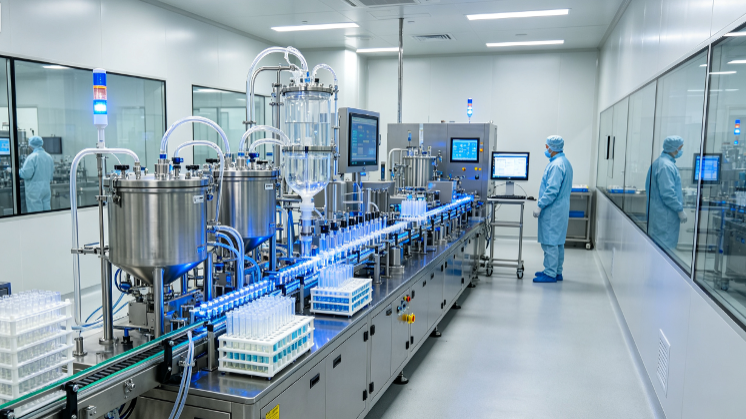
Traditional scale-up strategies are therefore insufficient. Instead, personalized manufacturing requires the ability to run large numbers of small, highly controlled batches in parallel.
This is precisely the manufacturing challenge demonstrated by the 1,137-patient INTerpath-001 trial.
Moderna commissioned a dedicated facility in Marlborough in 2025 for intismeran autogene manufacturing, incorporating automation, robotics, and digital systems to connect patient sequencing data, sequence design, and mRNA production.
But significant engineering challenges remain.
-
How can transcription efficiency and RNA integrity be maintained as sequences continuously change?
-
How can impurities such as dsRNA be effectively controlled?
-
How can different sequences meet consistent release specifications within a unified quality framework?
These are manufacturing questions—not algorithmic ones.
And one constraint stands above the rest: turnaround time.
From tumor biopsy to an injectable dose, the entire workflow—including sequencing, neoantigen prediction, mRNA synthesis, formulation, fill-finish, and quality release—must be completed within weeks rather than months.
This is particularly important in the adjuvant setting, where treatment may need to begin soon after surgery. Every additional day can affect the available window for clinical decision-making and treatment.
A successful manufacturing platform therefore needs to do more than simply make the product.
It must make it:
-
Fast enough for clinical use
-
Consistently enough to meet quality requirements
-
Flexibly enough to accommodate patient-specific sequences
-
Reliably enough to generate regulatory-grade traceability for every batch
Synbio Technologies: Beyond Synthesis to Digital-to-Molecule Transformation
As the industry focuses on AI-driven molecular design, another capability is quietly becoming foundational to personalized medicine: the ability to turn digital sequence information into physical molecules.
This is far more than conventional DNA or RNA synthesis.
It requires a manufacturing platform capable of accepting diverse sequence inputs and producing biomolecules with consistent quality, predictable turnaround times, and controlled costs.
And in personalized medicine, speed is one of the most important measures of platform performance.
Synbio Technologies’ RNA manufacturing platform covers four major RNA molecule categories relevant to RNA therapeutics and research, with each category addressing distinct technical and manufacturing challenges.Built around this foundation is an integrated technology chain spanning gene synthesis, plasmid preparation, mRNA synthesis, and LNP formulation. Whether RNA molecules are being developed for gene editing, functional genomics, nucleic acid vaccines, or RNA therapeutics, Synbio Technologies can support the workflow from sequence to LNP-formulated product.
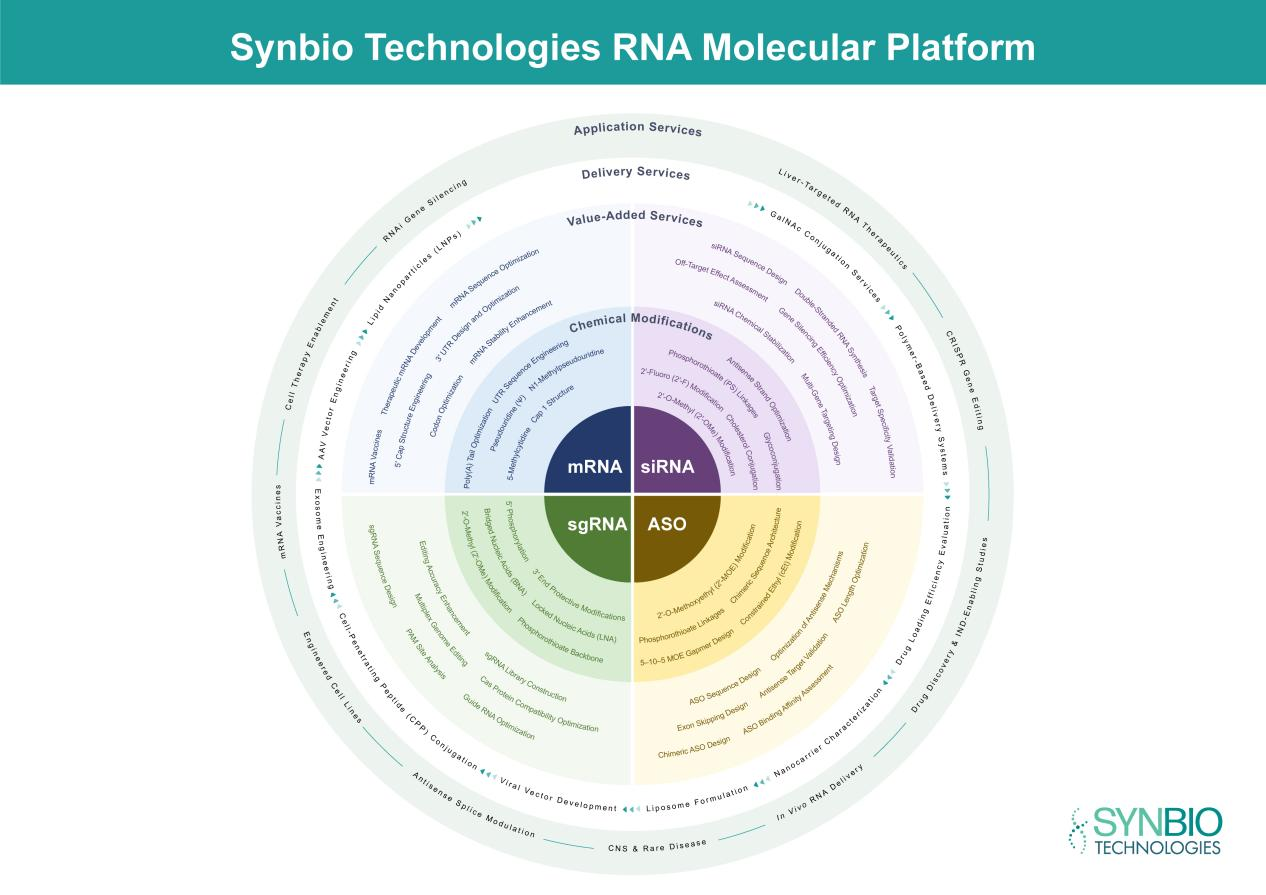
The goal is not to serve as a supplier for a single step, but to provide the manufacturing capabilities needed across the broader molecular transformation workflow.
Speed was designed into the platform from the beginning.
Codon optimization is supported by the NG™ Codon algorithm, while the Syno® synthesis platform helps ensure sequence accuracy from template construction through transcription. Chemical modification strategies can improve RNA stability and translation efficiency, while multiple purification approaches, including HPLC, help achieve stringent purity and quality requirements.
Combined with standardized experimental procedures and experienced technical teams, these capabilities enable customized solutions for different RNA sequences and applications.
In other words, speed is not simply achieved by accelerating individual laboratory steps or adding overtime. It is built into the architecture of the manufacturing platform itself.
By supporting the transition from sequence to formulated product within a matter of weeks, such a platform can create additional operational flexibility for personalized therapeutic development.
From Platform to System: Turning AI Designs into Real Molecules
A platform covering multiple RNA types and the full manufacturing workflow is only the starting point.
Synbio Technologies is not simply a DNA/RNA synthesis provider. Our goal is to serve as a molecular manufacturing partner that helps translate AI-generated designs into real biological products. While the industry continues to debate algorithmic accuracy, manufacturing platforms must solve a different problem: how to rapidly adapt production processes to new sequences without compromising consistency.
That means building process adaptability into every stage—from template construction and in vitro transcription to purification strategies and LNP formulation—while maintaining consistent production architecture and quality standards.
Personalized cancer vaccines may only be the beginning.
The same manufacturing challenge will emerge across the next generation of personalized therapies:
-
Personalized gene-editing medicines
-
Personalized protein replacement therapies
-
Personalized cell therapy products
-
Other patient-specific biologics
They all share the same fundamental manufacturing dilemma: Every batch may be different, but every batch must meet the same standard of quality—and it must be produced within a clinically meaningful timeframe.Solving this challenge requires both smarter AI-driven design and more reliable molecular manufacturing capabilities.
AI provides the sequence. Synbio Technologies helps turn that sequence into a real biological product.
You AI it. We build it. We make every design reliably realizable.