
 DNA Synthesis
 Vector Selection
 Molecular Biology
 Oligo Synthesis
 RNA Synthesis
 Variant Libraries
 Genome KO Library
 Oligo Pools
 Virus Packaging
 Gene Editing
 Protein Expression
 Antibody Services
 Peptide Services
 DNA Data Storage
 Standard Oligo
 Standard Genome KO Libraries
 Standard Genome Editing Plasmid
 ProXpress
 Protein Products
At Synbio Technologies, we are at the forefront of innovation in genome engineering, leveraging advanced genome editing tools such as the CRISPR-Cas9 system. This revolutionary technology allows scientists to make precise modifications to DNA, paving the way for significant advancements in genetics, medicine, and agriculture. In this article, we will delve into the mechanics of the CRISPR-Cas9 system, its applications in genome engineering, and how our services can support your research endeavors.
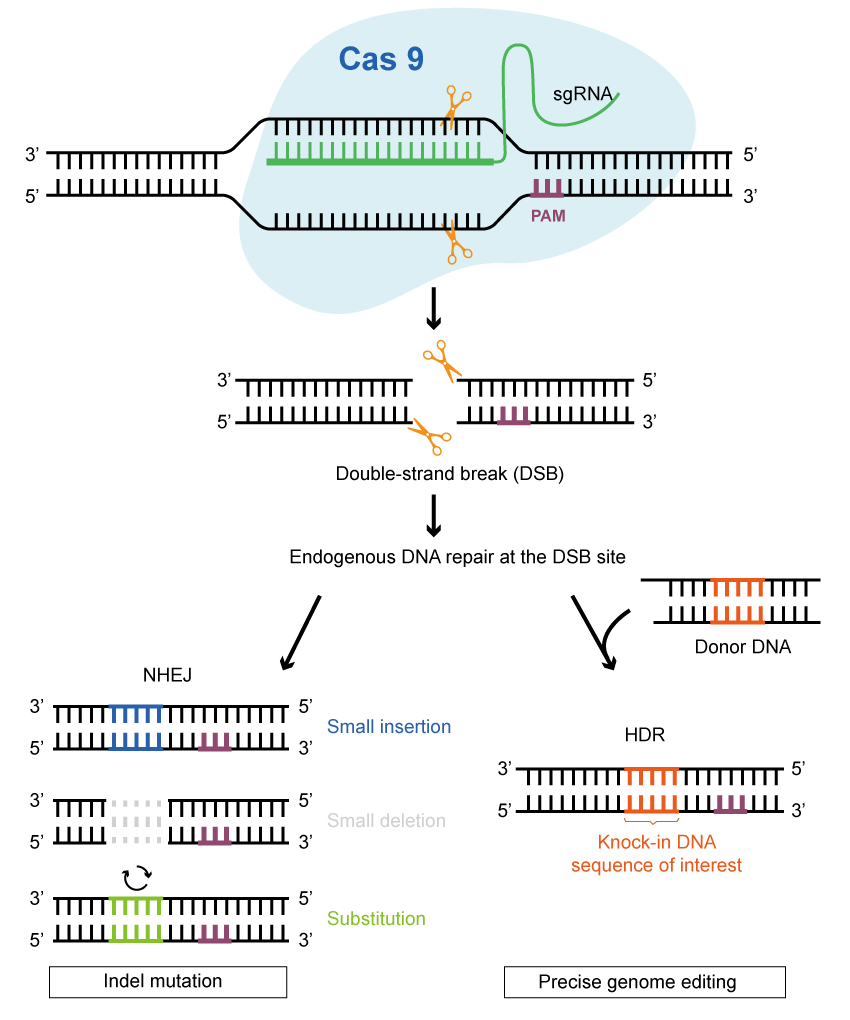
Understanding the CRISPR-Cas9 System
The CRISPR-Cas9 genome editing system is composed of two key components: the guide RNA (gRNA) and the Cas9 protein. Together, these elements enable targeted modifications to an organism's genome.
Components of CRISPR-Cas9
Guide RNA (gRNA): The gRNA is a crucial element that directs the Cas9 protein to the specific DNA sequence in the genome that needs to be modified. The gRNA is designed to be complementary to the target DNA sequence, ensuring that Cas9 makes precise cuts at the desired location.
Cas9 Protein: Cas9 is an endonuclease, meaning it has the ability to cut DNA. Once the gRNA binds to the target DNA, Cas9 introduces a double-strand break (DSB) at that specific site. This break is a critical step in the genome editing process, as it triggers the cell's repair mechanisms.
Mechanism of Action
The process begins with the introduction of the gRNA and Cas9 into the target cells. The gRNA binds to the complementary DNA sequence, guiding Cas9 to the precise location for editing. Upon binding, Cas9 creates a double-strand break in the DNA. This break can be repaired by the cell's natural repair mechanisms, either through non-homologous end joining (NHEJ) or homology-directed repair (HDR). Researchers can exploit these repair pathways to introduce specific genetic changes, such as insertions or deletions.
Applications of Genome Engineering with CRISPR-Cas9
The versatility of the CRISPR-Cas9 system has led to numerous applications in genome engineering:
1. Gene Knockout
One of the most common uses of CRISPR-Cas9 is to create gene knockouts. By introducing DSBs in specific genes, researchers can disable those genes, allowing them to study the effects of gene loss on cellular functions and organismal development.
2. Gene Editing for Therapeutic Purposes
CRISPR-Cas9 is being explored as a tool for gene therapy. By correcting mutations in genes responsible for genetic disorders, this technology holds the potential to treat conditions such as cystic fibrosis, sickle cell anemia, and certain forms of cancer.
3. Agricultural Improvements
In agriculture, CRISPR-Cas9 is utilized to enhance crop traits, such as pest resistance, drought tolerance, and nutritional value. By making precise modifications to plant genomes, scientists can develop crops that are more resilient and productive.
Conclusion
In conclusion, genome engineering through the CRISPR-Cas9 system is revolutionizing the field of biotechnology. At Synbio Technologies, we are dedicated to providing advanced genome editing tools and services that empower researchers to explore new possibilities in genetics, medicine, and agriculture. With our expertise, commitment to quality, and innovative solutions, we are well-equipped to support your genome engineering projects. Let’s work together to unlock the potential of genome editing and drive meaningful advancements in science!