DNA Synthesis
 Vector Selection
 Molecular Biology
 Oligo Synthesis
 RNA Synthesis
 Variant Libraries
 Genome KO Library
 Oligo Pools
 Virus Packaging
 Gene Editing
 Protein Expression
 Antibody Services
 Peptide Services
 DNA Data Storage
 Standard Oligo
 Standard Genome KO Libraries
 Standard Genome Editing Plasmid
 ProXpress
 Protein Products

Some DNA sequences are difficult not because they cannot be designed, but because they are exceptionally challenging to construct and deliver.
Before reaching Synbio Technologies, one customer’s order had been evaluated and declined by multiple providers. The issue was not sequence design feasibility, but the technical complexity of delivering the final construct.
The customer required a target gene to be inserted into a vector through single-enzyme digestion using BspEI. The vector already contained a forward-oriented sequence, while the target gene was its reverse complement. Once inserted, the two sequences would form an approximately 1,000 bp seamless hairpin structure within the vector.
On paper, this may look like a straightforward arrangement of forward and reverse-complementary sequences. In practice, however, it requires careful redesign of the assembly strategy, host selection, clone screening, and validation workflow.
Synbio Technologies ultimately took on the project and successfully delivered the construct.
In this case study, we examine why this type of complex DNA structure is challenging and how a tailored technical strategy can turn a theoretically feasible design into a reliably delivered construct.
Project Overview: BspEI Single-Restriction-Site Cloning and a ~1,000 bp Seamless Hairpin
The project involved four key requirements:
- The target gene had to be inserted using single-enzyme digestion with BspEI.
- The vector already contained a forward-oriented sequence.
- The target gene was the reverse complement of that existing sequence.
- Following insertion, the two sequences would form an approximately 1,000 bp seamless hairpin structure.
For most routine gene synthesis projects, homologous recombination is an efficient and flexible approach to DNA assembly. However, applying the standard workflow directly to this construct could introduce significant risks.
The extensive reverse-complementary regions may form intramolecular secondary structures, interfering with the annealing and alignment of homologous arms. This can increase the likelihood of incorrect assembly, deletions, orientation errors, and rearrangements.
Rather than forcing the construct through a conventional homologous recombination workflow, we adopted a restriction digestion and ligation strategy.
By generating defined DNA ends through restriction enzyme digestion, the target gene could be directionally inserted into a modified vector, avoiding reliance on homologous-arm annealing across the problematic hairpin region.
Key Technical Challenges: Making the Hairpin Structure Stable and Deliverable
Constructing a seamless hairpin of approximately 1,000 bp involves several interconnected challenges.
1. Homologous Recombination Can Lead to Misassembly
When long reverse-complementary sequences are present within the same construct, intramolecular base pairing can compete with the intended annealing of homologous arms.
This interference can compromise conventional homologous recombination, potentially resulting in mismatched assemblies, deletions, or structural rearrangements.
For this reason, a different assembly strategy was necessary.
2. Vector Modification Requires Careful Restriction-Site Planning
The existing vector needed to be adapted to accommodate the target sequence.
We first evaluated the restriction sites flanking the existing forward-oriented sequence to identify suitable single-cut sites. If an appropriate site was available, the existing sequence could be excised through restriction digestion.
Where necessary, a suitable unique restriction site was introduced into the vector backbone to provide an appropriate insertion junction for the reverse-complementary sequence.
The key considerations were:
- Availability and specificity of restriction sites.
- Control over insert orientation.
- Compatibility of the resulting DNA ends.
- Preservation of the intended final construct architecture.
3. Long Hairpin Structures Can Challenge Host Stability
Long hairpin structures may be unstable in conventional cloning hosts. Their unusual secondary structures can increase the risk of host-mediated recombination, deletion, or rearrangement.
To mitigate these risks, we selected specialized competent cells suitable for cloning hairpin-containing constructs, helping improve structural stability during transformation and clone propagation.
4. Colony PCR Results May Be Atypical
Secondary structures can also affect colony PCR performance, producing unexpected or inconclusive amplification results.
In this project, we did not rely solely on the presence or absence of a PCR band to determine whether a clone was negative.
Instead, selected individual colonies showing no detectable PCR band were submitted for downstream analysis as a blind-screening step.
For structurally complex constructs, colony PCR should be treated as an initial screening tool rather than definitive evidence of successful or unsuccessful cloning. Restriction analysis and sequencing are essential for final confirmation.
5. Restriction Digestion May Produce Weak or Ambiguous Bands
The final construct contained an approximately 1,000 bp hairpin structure. To verify its architecture, we identified two suitable unique restriction sites near the hairpin region.
The resulting restriction fragment pattern was used to assess whether both the forward and reverse-complementary sequences were present in the expected arrangement.
However, plasmid preparations from these structurally challenging clones may have relatively poor quality, resulting in weak or faint digestion bands. In this case, the expected target fragment was only barely visible on the gel.
Consequently, restriction digestion results could not be interpreted in isolation. The restriction-site design, expected fragment pattern, and subsequent sequencing results all had to be considered together.
This is also why a visually striking restriction gel image was not available for this particular case. The validation relied on the combined evidence rather than the appearance of a single gel.
6. Long-Read Sequencing Provides Critical Structural Confirmation
After identifying clones with the expected restriction digestion pattern, we performed third-generation long-read sequencing to verify the final construct.
The analysis focused on:
- Full-length sequence integrity.
- Presence and orientation of both complementary sequences.
- Accuracy of the insertion junctions.
- Integrity of the approximately 1,000 bp seamless hairpin structure.
Combining restriction analysis with long-read sequencing provided complementary evidence to confirm the final construct.
Our Construction Strategy: Replacing the Standard Workflow with a Tailored Approach
Rather than applying conventional homologous recombination, our laboratory developed a project-specific workflow based on five key stages.
Step 1. Vector Modification
We evaluated the restriction sites surrounding the existing forward-oriented sequence. Where necessary, the sequence was excised, and a unique restriction site was introduced into the vector backbone to prepare for directional insertion.
Step 2. Restriction Digestion and Ligation
The target gene was inserted through restriction digestion and ligation. This approach avoided dependence on homologous-arm annealing across the long hairpin-forming region, reducing the risk of misassembly.
Step 3. Transformation Using Specialized Competent Cells
We selected competent cells specifically suited to hairpin-containing constructs to help minimize structural instability and unwanted recombination during cloning.
Step 4. Colony Screening and Restriction Analysis
We adopted a flexible screening strategy rather than relying exclusively on conventional colony PCR results. Selected individual colonies, including those without detectable PCR bands, were advanced for further analysis.
Restriction digestion was then performed using appropriately selected unique sites near the hairpin region. Because the resulting bands could be weak or atypical, interpretation was based on the expected restriction pattern and overall construct design.
Step 5. Third-Generation Sequencing Confirmation
Clones with the expected restriction digestion results were subjected to third-generation sequencing. Full-length sequence integrity, insertion junctions, and the complete hairpin structure were examined to confirm the final construct.
Through this tailored workflow,Synbio Technologies successfully completed a project that had previously been declined by multiple providers.
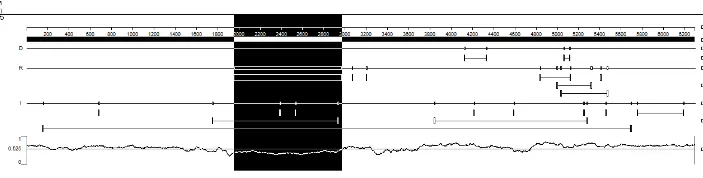
The black-highlighted region represents the final seamless hairpin structure in the completed construct.
Beyond Sequence Design: The Real Challenge Is Reliable Delivery
For routine gene synthesis projects, standardized workflows can address most construction requirements efficiently. However, challenging sequences involving long hairpins, palindromic regions, repetitive elements, high GC content, or potentially toxic sequences require a much more customized approach.
The approximately 1,000 bp seamless hairpin project demonstrates that successful DNA construction depends on much more than sequence design. It requires the ability to evaluate structural risks, select appropriate assembly methods, optimize host selection, and establish reliable validation strategies at every stage.
At Synbio Technologies, we leverage specialized cloning strains, advanced sequencing capabilities, and end-to-end quality control to support complex DNA construction projects.
Rather than forcing difficult sequences through standard workflows, we develop tailored solutions spanning vector modification, restriction-based assembly, host selection, clone screening, and sequencing verification.
Some sequences are harder to deliver than they are to design.
Software can predict a hairpin structure, but turning that design into a stable, sequence-verified DNA construct requires the right expertise, host strains, assembly strategies, and validation methods.
At Synbio Technologies, we focus not just on designing complex sequences, but on making them deliverable.