
 DNA Synthesis
 Vector Selection
 Molecular Biology
 Oligo Synthesis
 RNA Synthesis
 Variant Libraries
 Genome KO Library
 Oligo Pools
 Virus Packaging
 Gene Editing
 Protein Expression
 Antibody Services
 Peptide Services
 DNA Data Storage
 Standard Oligo
 Standard Genome KO Libraries
 Standard Genome Editing Plasmid
 ProXpress
 Protein Products
At Synbio Technologies, we are constantly exploring ways to enhance qPCR performance for researchers and diagnostic labs. One critical factor is the choice of fluorophore concentration, which directly influences the qPCR Probe Fluorescence Signal. Low-copy-number detection often requires careful balancing between sensitivity and signal stability. By understanding how fluorophores interact with quenchers, we can guide scientists in making informed choices. In our experience, evaluating both high and low concentration fluorophores under practical conditions helps address the common question: how can i improve qpcr precision?. Our solutions provide clear insights into fluorescence behavior, supporting reproducible results across experiments.
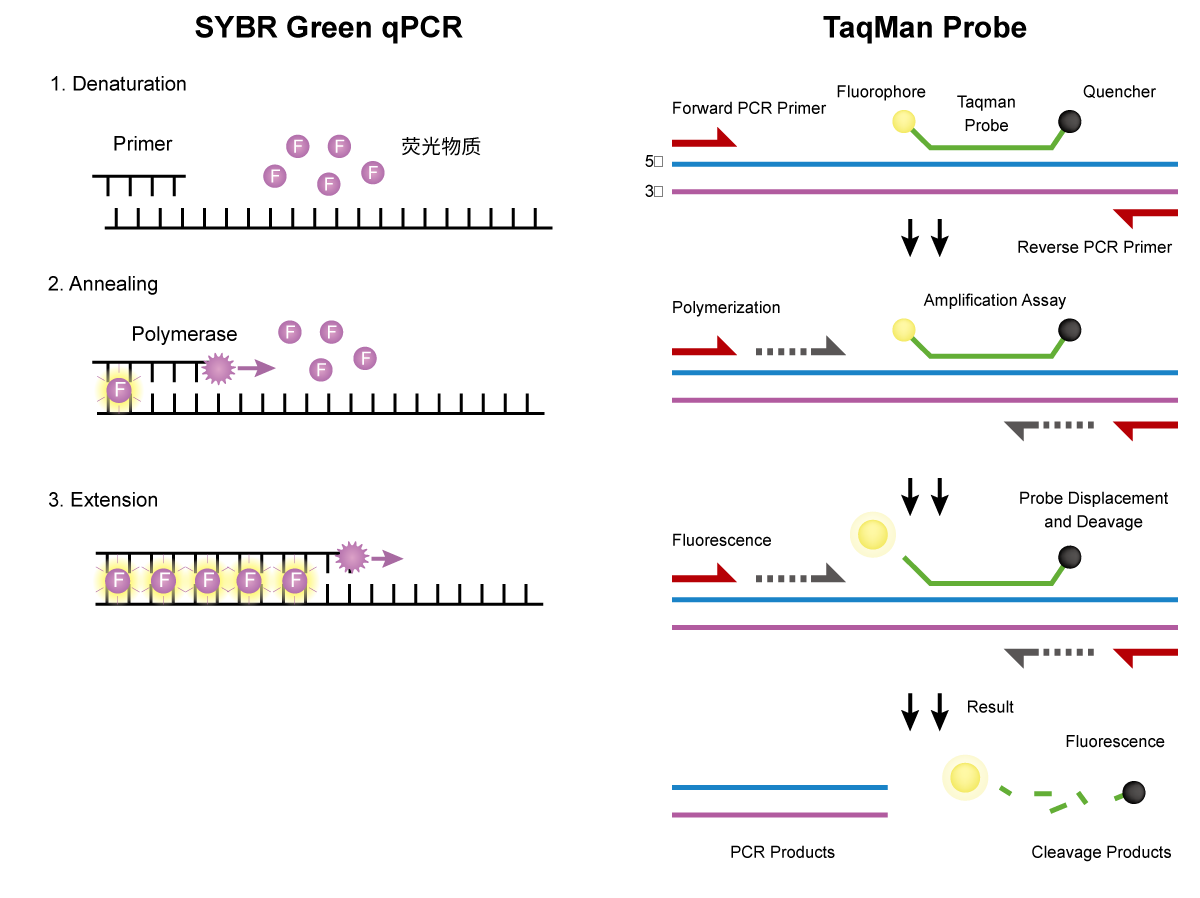
Understanding the Role of Fluorophore and Quencher
The performance of qPCR assays heavily depends on the proper pairing of Fluorophore and Quencher. High-concentration fluorophores can generate a strong fluorescence signal, but they may also increase background noise, especially when detecting low-copy-number targets. Conversely, low-concentration fluorophores reduce background interference but might produce weaker signals, making early detection more challenging. We emphasize that a well-optimized fluorophore-quencher combination is essential for achieving reliable amplification curves. At Synbio Technologies, we integrate these considerations into our qPCR Probe Fluorescence Signal assessment tools, allowing labs to tailor assay conditions for specific targets and improve overall data precision.
Optimizing Assay Conditions for Low-Copy Targets
When researchers ask, how can i improve qpcr precision?, we focus on factors beyond simple fluorophore concentration. Temperature cycling, probe design, and reaction mix composition all play important roles in defining signal consistency. By applying our platform, laboratories can systematically test different fluorophore concentrations and evaluate the resulting qPCR Probe Fluorescence Signal under controlled conditions. This approach enables precise adjustments that maximize sensitivity while minimizing variability. Additionally, our guidance on Fluorophore and Quencher selection helps prevent quenching artifacts, ensuring that even low-copy targets are detected accurately.
Practical Considerations and Recommendations
Balancing signal intensity and background noise is key for effective low-copy-number detection. We recommend that laboratories start with moderate fluorophore concentrations and iteratively adjust based on observed signal quality. Combining these practical steps with our optimized protocols can enhance reproducibility and data reliability. Our system integrates real-world insights into qPCR Probe Fluorescence Signal optimization, addressing common concerns such as how can i improve qpcr precision? and enabling researchers to achieve more consistent results across assays. Understanding the interaction between Fluorophore and Quencher is a critical component of this strategy.
Conclusion: Guiding Low-Copy Detection with Advanced Tools
In conclusion, selecting the right fluorophore concentration is not simply a matter of high versus low. At Synbio Technologies, we provide comprehensive support to help researchers evaluate the impact of qPCR Probe Fluorescence Signal on assay performance. By combining practical insights, optimized Fluorophore and Quencher pairing, and guidance on how can i improve qpcr precision?, we enable precise low-copy-number detection in diverse experimental settings. Our solutions are designed to improve reproducibility and support reliable results, demonstrating the value of informed decision-making in qPCR assay design.