
 DNA Synthesis
 Vector Selection
 Molecular Biology
 Oligo Synthesis
 RNA Synthesis
 Variant Libraries
 Genome KO Library
 Oligo Pools
 Virus Packaging
 Gene Editing
 Protein Expression
 Antibody Services
 Peptide Services
 DNA Data Storage
 Standard Oligo
 Standard Genome KO Libraries
 Standard Genome Editing Plasmid
 ProXpress
 Protein Products
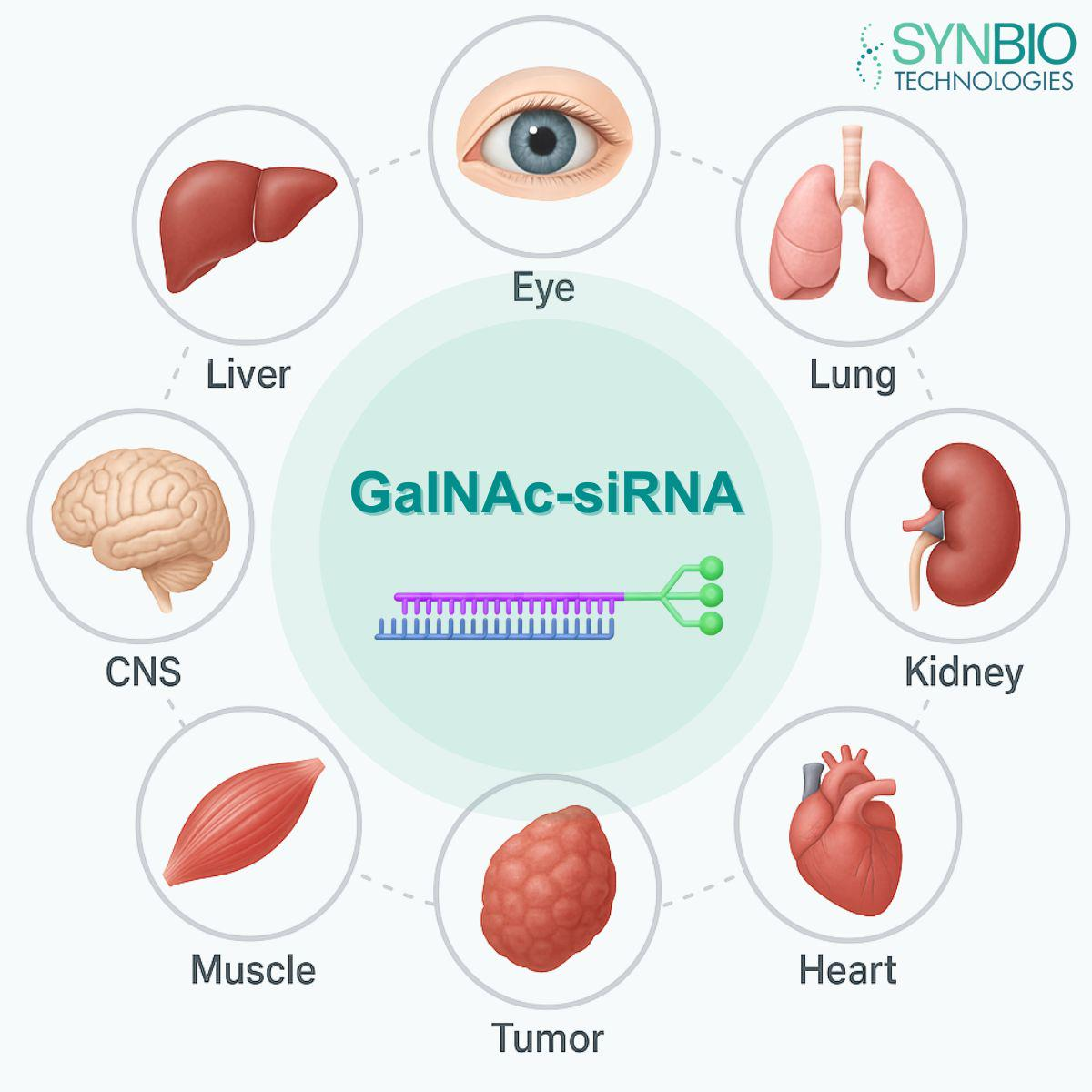
At Synbio Technologies, we dedicate our expertise to helping research teams and pharmaceutical developers navigate the growing field of siRNA Drugs. Designing effective siRNA molecules is not just about choosing a sequence—it requires understanding the biological context, stability, and efficient delivery methods. We integrate our experience in gene silencing and molecular design to guide clients in creating siRNA therapeutics that achieve reliable outcomes. By combining scientific insights with practical design workflows, our solutions help drug developers evaluate multiple targets, select optimal sequences, and plan experiments with higher confidence. For teams interested in liver-targeted therapies, we incorporate GalNAc Technology to ensure precise delivery, making development safer and more effective.
Optimizing Sequence Selection and Targeting Strategies
One of the most critical steps in developing siRNA therapeutics is selecting sequences that provide maximum efficacy while minimizing off-target effects. At our company, we utilize bioinformatic analysis and predictive modeling to evaluate potential siRNA candidates, ensuring proper accessibility and thermodynamic stability. We also consider chemical modifications and delivery strategies that can influence performance. Integrating GalNAc Technology allows us to enhance receptor-mediated uptake, specifically directing siRNA molecules to hepatocytes without affecting other cell types. By adopting these sequence optimization strategies early, we enable developers to reduce experimental cycles and improve the reliability of their siRNA Drugs projects.
Chemical Modifications and Delivery Optimization
Chemical modifications are essential to improve the stability, potency, and safety of siRNA therapeutics. In our workflow, we incorporate nucleotide modifications that resist nuclease degradation while preserving gene silencing efficiency. Coupled with delivery systems enhanced by GalNAc Technology, these modifications support targeted cellular uptake and reduce the risk of immune activation. We emphasize balancing stability and functional activity, ensuring that each siRNA molecule maintains its effectiveness throughout preclinical studies. Our approach helps research teams advance their siRNA Drugs toward clinical readiness while maintaining quality and reproducibility.
Streamlining Research and Development Efficiency
Efficiency is a major concern in developing siRNA therapeutics, particularly when multiple sequences and chemical variants must be tested. By providing an integrated design-build-test workflow, we help teams iterate faster, gather reliable data, and refine molecules more efficiently. Our platform supports the evaluation of numerous candidates in parallel, combining predictive modeling, chemical optimization, and delivery assessment. The inclusion of GalNAc Technology in these processes ensures that delivery challenges are addressed alongside sequence and modification choices, making development more streamlined and predictable. These capabilities give our clients confidence in moving their siRNA Drugs from concept to experimental validation.
Conclusion: Enhancing siRNA Development with Advanced Platforms
At Synbio Technologies, we understand that designing effective siRNA Drugs involves a combination of precise sequence selection, strategic chemical modification, and advanced delivery approaches. By leveraging siRNA therapeutics and GalNAc Technology within our integrated workflows, we help developers achieve safe, targeted, and reliable gene silencing outcomes. Our platform enables iterative testing, supports optimized delivery, and accelerates research programs. With these best practices, we empower our clients to develop RNA-based therapies efficiently and effectively, turning complex design challenges into actionable solutions.