
 DNA Synthesis
 Vector Selection
 Molecular Biology
 Oligo Synthesis
 RNA Synthesis
 Variant Libraries
 Genome KO Library
 Oligo Pools
 Virus Packaging
 Gene Editing
 Protein Expression
 Antibody Services
 Peptide Services
 DNA Data Storage
 Standard Oligo
 Standard Genome KO Libraries
 Standard Genome Editing Plasmid
 ProXpress
 Protein Products
Double-stranded RNA (dsRNA) has emerged as one of the most promising tools for RNA interference (RNAi)-based crop protection. As advances in RNA production technologies continue to reduce manufacturing costs while improving product quality, dsRNA is moving beyond laboratory research into practical agricultural applications.
Today, RNAi technology is being explored for sustainable pest and disease management, offering a highly specific alternative to conventional chemical pesticides. In this article, we review recent developments in agricultural dsRNA applications and share a real-world case demonstrating high-quality long dsRNA production for field research.
What Is Double-Stranded RNA?
Double-stranded RNA (dsRNA) consists of two complementary RNA strands held together through Watson-Crick base pairing (A-U and G-C). In eukaryotic organisms, dsRNA serves as the primary trigger of the RNA interference (RNAi) pathway, a natural gene-silencing mechanism that regulates gene expression and provides antiviral defense.
Since the discovery of RNAi, dsRNA has become an indispensable tool for:
-
Functional genomics
-
Crop protection
-
Disease research
-
Therapeutic development
-
Synthetic biology
Among these applications, agriculture has become one of the fastest-growing areas due to the potential of spray-induced gene silencing (SIGS).
The Discovery of RNAi
RNA interference was first described in 1998 by Andrew Fire and Craig Mello, who demonstrated that injecting dsRNA into Caenorhabditis elegans produced potent and sequence-specific gene silencing1. In contrast, sense RNA or antisense RNA alone generated only weak and inconsistent effects.
This landmark discovery established dsRNA as the key activator of RNAi.
Subsequent studies showed that RNAi is conserved across many eukaryotic organisms, including plants, fungi, insects, zebrafish, and mammals, where it plays important roles in antiviral defense, transposon suppression, and gene regulation.
The significance of RNAi was rapidly recognized:
2002: Named Science magazine's Breakthrough of the Year.2
2006: Andrew Fire and Craig Mello received the Nobel Prize in Physiology or Medicine.3
Long dsRNA vs. siRNA: Why Length Matters
Although both long dsRNA and small interfering RNA (siRNA) activate RNAi, they differ substantially in their mechanisms and applications.
• Long dsRNA (typically 100–1,000 bp or longer)
Processed into multiple siRNAs by Dicer
Generates stronger and longer-lasting RNAi responses
More cost-effective for large-scale production
Widely used in agriculture and insect control
• Synthetic siRNA (21–23 nt)
Directly incorporated into the RNA-induced silencing complex (RISC)
Highly suitable for mammalian cell studies and therapeutic research
Chemically synthesized with high sequence precision
Generally more expensive for large-scale agricultural applications
For spray-based crop protection, long dsRNA has become the preferred format because of its scalability, durability, and sustained biological activity.
Case Study: High-Quality Long dsRNA for Agricultural Spray Trials
Recently, Synbio Technologies produced customized long dsRNA targeting genes associated with agricultural diseases for spray application studies.
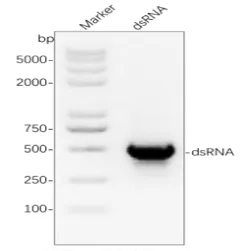
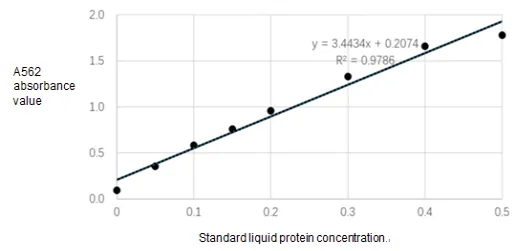
The synthesized products ranged from 100–1,000 bp and underwent comprehensive quality assessment, including:
• Agarose gel electrophoresis
• BCA assay for residual protein quantification
• Quality control results demonstrated:

Quality control analysis of this batch of long dsRNA demonstrated excellent product integrity, including a single, well-defined band on agarose gel electrophoresis, 91.1% main-band purity by densitometric analysis, and 99.66% nucleic acid purity. The synthesized dsRNA showed outstanding performance in downstream crop disease control studies targeting agricultural pathogens.
Synbio Technologies Long dsRNA Synthesis Service
Synbio Technologies' custom long dsRNA synthesis platform combines scalable manufacturing with a rigorous quality control system, supporting applications from early-stage research to industrial-scale production.
From target sequence design and plasmid construction (1–2 weeks) to production and delivery (1–2 weeks for quantities below 1 g), our standardized workflow enables rapid project turnaround.
Applications
Our long dsRNA synthesis platform supports a broad range of RNAi research, including:
• Agricultural pest control
• Plant disease resistance studies
• Functional genomics in insects
• RNAi delivery system development
• Nanoparticle and liposome formulation evaluation
• Crop protection research
Accelerating Agricultural RNAi Research
As RNAi technology continues to mature, long dsRNA is becoming an increasingly important platform for sustainable crop protection and functional genomics. High-quality, scalable dsRNA manufacturing is essential for translating laboratory discoveries into practical agricultural solutions.
Synbio Technologies is committed to delivering reliable, high-purity long dsRNA synthesis services that help researchers and industry partners accelerate RNAi innovation—from early-stage research to large-scale agricultural applications.
References
1. Fire A, Xu SQ, Montgomery MK, Kostas SA, Driver SE, Mello CC. Potent and specific genetic interference by double-stranded RNA in Caenorhabditis elegans. Nature. 1998;391:806-811.
2. Science. Breakthrough of the Year 2002: Small RNAs.
3. Abbott, A. Youthful duo snags a swift Nobel for RNA control of genes. Nature 443, 488 (2006).