
 DNA Synthesis
 Vector Selection
 Molecular Biology
 Oligo Synthesis
 RNA Synthesis
 Variant Libraries
 Genome KO Library
 Oligo Pools
 Virus Packaging
 Gene Editing
 Protein Expression
 Antibody Services
 Peptide Services
 DNA Data Storage
 Standard Oligo
 Standard Genome KO Libraries
 Standard Genome Editing Plasmid
 ProXpress
 Protein Products
The process to selectively suppress or “turn off” specific gene expressions is known as gene silencing. At the heart of this revolution is RNA interference (RNAi), a natural cellular process that regulates gene expression/protein synthesis by neutralizing targeted mRNA molecules. This mechanism primarily involves two types of small RNA molecules: small interfering RNA (siRNA) and microRNA (miRNA).
By harnessing this biological "off-switch," researchers can now intercept the progression of diseases at the genetic level, offering hope for conditions once deemed untreatable. This article explores the RNA interference mechanism and its role in clinical therapy. Read on to learn more.

How Does RNAi Work?
RNA interference functions by identifying and silencing specific messenger RNA (mRNA) sequences, thereby preventing the translation of those sequences into proteins.
The RNA Interference Pathway
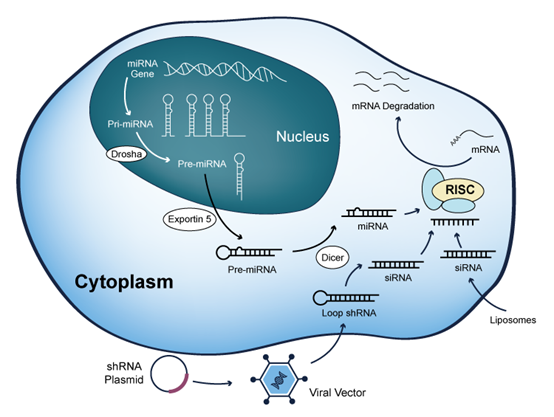
The RNA interference pathway is a multi-step catalytic process. It begins when long double-stranded RNA (dsRNA) or hairpin precursors are introduced into the cytoplasm.
-
Dicer Processing: The enzyme Dicer recognizes and cleaves long dsRNA into shorter fragments. These fragments, typically 21-25 nucleotides long, are known as siRNA and miRNA.
-
RISC Assembly: These short fragments are then loaded into a multi-protein complex called the RNA-induced silencing complex (RISC).
-
Strand Selection: Within the RISC, the double-stranded RNA is unwound. The "passenger" strand is degraded, while the "guide" strand remains bound to the Argonaute protein (AGO), the catalytic engine of the complex.
-
Target Recognition: Guided by the sequence of the siRNA, the RISC identifies the complementary mRNA target. If the base pairing is a perfect match, the Argonaute protein cleaves the mRNA, leading to its rapid degradation. On the other hand, the RISC-miRNA complex will lead to sequence-specific mRNA translation inhibition, effectively silencing the gene.
siRNA vs. miRNA: Differences
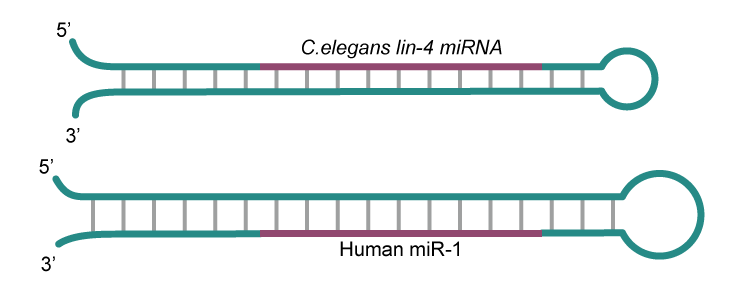
While both pathways are essential components of the RNA interference mechanism, they differ in their origin and specificity. siRNA is typically exogenous and targets specific mRNA with high precision. In contrast, miRNA is endogenous and often regulates multiple gene targets by binding with partial complementarity.
| Feature | siRNA | miRNA |
|---|---|---|
|
Origin |
Exogenous (Viral/Synthetic) |
Endogenous (Genomic DNA) |
|
Structure |
Double-stranded RNA |
Hairpin-loop precursors |
|
Complementarity |
Full complementarity to target |
Partial complementarity |
|
Action |
mRNA Cleavage/Degradation |
Translational repression |
|
Specificity |
Highly specific (Single target) |
Multiple targets (Regulatory) |

Structure of siRNA
RNAi in Disease Treatment
The clinical application of the RNA interference pathway has shifted from theoretical research to the development of therapeutics. By silencing disease-causing genes, RNA interference provides a versatile platform for treating diverse pathologies.
1. Genetic Diseases
Many inherited disorders are caused by abnormal gene expression. By designing siRNA to specifically target mutant transcripts, RNAi can reduce the production of toxic or harmful proteins.
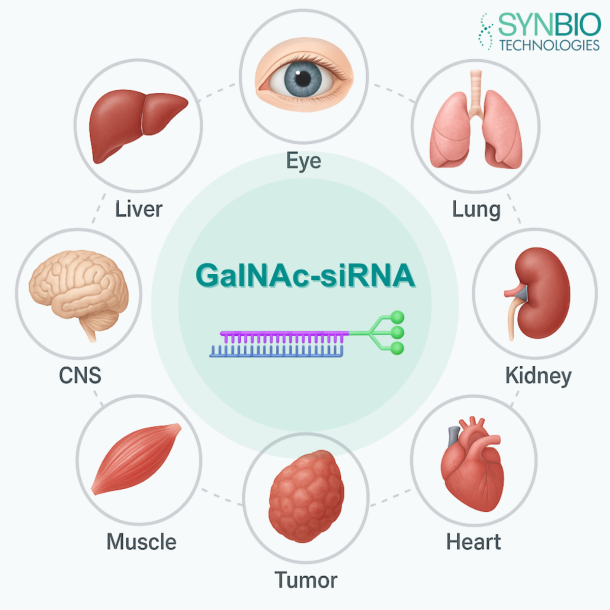
For example, RNAi approaches have shown promise in conditions like hereditary transthyretin amyloidosis. Medications use siRNA to target the liver, reducing the production of mutant TTR proteins that cause nerve and heart damage.
2. Metabolic Disorders
RNAi therapies have also been launched successfully for metabolic conditions. Drugs based on RNAi reduce levels of metabolic proteins contributing to disease, offering new treatment strategies for disorders like hypercholesterolemia and acute hepatic porphyria.
3. Viral Infections
Viruses rely on the host’s cellular machinery to replicate. By designing siRNA that targets essential viral sequences, researchers can inhibit the replication of Hepatitis B (HBV) and other RNA‑mediated diseases. The high specificity ensures that the virus is neutralized without damaging the host’s genetic material.
4. Cancer Therapy
Cancer often arises from overexpressed oncogenes or defective tumor suppressors. RNA interference is used to silence oncogenes, which are genes that promote uncontrolled cell growth.
By targeting mRNA involved in tumor proliferation, angiogenesis, and chemoresistance, RNAi-based drugs can sensitize tumors to traditional treatments or directly induce apoptosis in malignant cells.
5. Ophthalmology
The eye is an ideal target for RNAi due to local administration options and the eye’s immune‑privileged status, which minimizes systemic side effects.
Therapeutic focus often centers on Age-Related Macular Degeneration (AMD), where siRNA is used to suppress Vascular Endothelial Growth Factor (VEGF), preventing the overgrowth of leaky blood vessels that lead to vision loss.
Advantages of RNAi Therapeutics
Why are R&D managers and researchers increasingly turning to RNA interference?
-
High Specificity: The RNA interference pathway relies on Watson-Crick base pairing, allowing for the precise targeting of a single nucleotide variation. This minimizes off-target effects that are common in traditional pharmacological interventions.
-
High Potency: Because the RNA interference pathway acts at the mRNA level, relatively low doses of siRNA can elicit potent suppression of target gene expression. This efficiency makes RNAi conducive to therapeutic use, where minimizing dosage is important for safety.
-
Universal Applicability:Theoretically, RNA interference can target any gene in the human genome, including those previously labeled as "undruggable" because they lack accessible binding pockets for small molecule drugs.
-
Reversibility: Unlike CRISPR, which creates permanent changes to the DNA, RNAi acts at the mRNA level. This makes the treatment reversible and potentially safer for clinical applications where long-term genetic modification might carry unknown risks.
Synbio Technologies: Your Partner in RNAi Research
For researchers in gene therapy, IVD, and drug discovery, the success of any project depends on the quality of the synthesized gene molecules. Synbio Technologies provides professional siRNA/miRNA synthesis services tailored to meet the rigorous demands of industrial and academic research. We offer:
-
Customization: Multiple chemically modified siRNAs to enhance their stability and efficacy; Various miRNA products, including mimics, inhibitors, and controls, to meet different research needs.
-
Purity: Advanced HPLC and OPC purification methods.
-
Quality: Among the 3-4 siRNAs designed and delivered, at least one should effectively inhibit the expression of the target gene. The final inhibition efficiency will be at least 70% (with a transfection efficiency of at least 90%).
Whether you are investigating a novel RNA interference pathway for drug research or developing a diagnostic kit for a biopharma application, our technical team provides the expertise needed to accelerate your timeline.
Conclusion
The evolution of RNA interference from a biological curiosity to a cornerstone of modern medicine demonstrates the power of understanding “how does RNAi work?” By leveraging the RNA interference mechanism to silence pathogenic genes, the scientific community is entering a new era of precision medicine.
Contact Synbio Technologies now if you have any siRNA/miRNA Synthesis needs!