
 DNA Synthesis
 Vector Selection
 Molecular Biology
 Oligo Synthesis
 RNA Synthesis
 Variant Libraries
 Genome KO Library
 Oligo Pools
 Virus Packaging
 Gene Editing
 Protein Expression
 Antibody Services
 Peptide Services
 DNA Data Storage
 Standard Oligo
 Standard Genome KO Libraries
 Standard Genome Editing Plasmid
 ProXpress
 Protein Products
At Synbio Technologies, we work closely with researchers who want clear and practical insights into how gene synthesis supports modern innovation. As a Synthetic Biology Company, we recognize that gene synthesis has become a core tool in many scientific fields, and understanding its structure helps teams plan experiments more effectively. Today, gene synthesis plays a central role in synthetic biology research and contributes to areas connected to synbio therapeutic development, making it essential for groups looking to explore new biological functions.
What Gene Synthesis Means in Modern Research
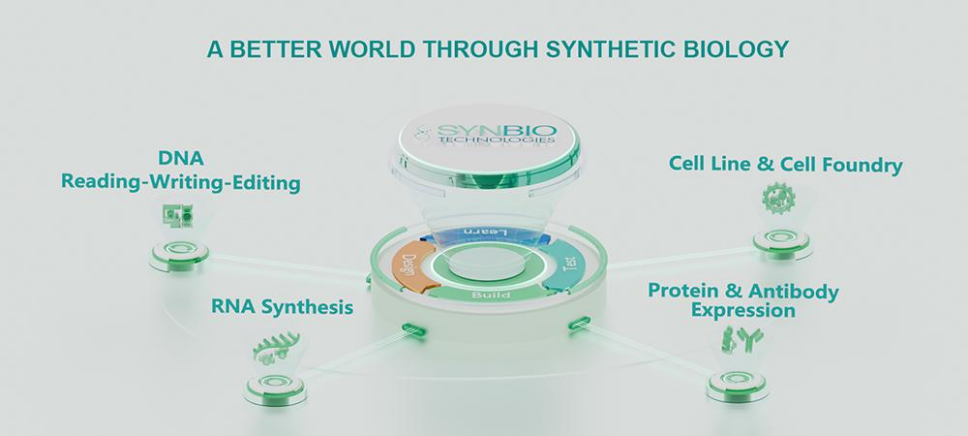
Gene synthesis refers to the chemical assembly of DNA sequences without relying on natural templates. As a Synthetic Biology Company, we view this process as a foundation for customized experimentation, allowing scientists to design sequences that match specific project goals. With the growth of synthetic biology, gene synthesis has become more accessible to research teams working on pathway exploration, protein studies, and molecular screening. Many applications, including early-stage synbio therapeutic concepts, begin with small DNA fragments that researchers refine through iterative testing. Our company supports these efforts with an integrated design-build-test-learn framework, enabling researchers to plan and adjust experimental sequences with clarity and consistency.
Key Types of Gene Synthesis and Their Practical Roles
The field includes several main types of synthesis, each supporting different scientific objectives. As a Synthetic Biology Company, we often help teams select between fragment synthesis, gene-length synthesis, and pathway-level assembly depending on their project stage. Fragment synthesis is common in basic synthetic biology research, where shorter sequences help test regulatory elements or structural features. Gene-length synthesis allows entire coding regions to be created for expression studies, structural evaluation, or screening models connected to synbio therapeutic exploration. Larger assemblies support pathway construction, metabolic optimization, and functional redesign of biological systems. Our experience with automated manufacturing, quality control, and scalable production ensures that each sequence is delivered with reliable performance, which is essential for teams moving from concept evaluation to more applied forms of research.
How Gene Synthesis Is Used Across Research and Industrial Fields
Gene synthesis supports a wide range of applications, from molecular biology to industrial biotechnology. As a Synthetic Biology Company, we integrate synthesis tools into broader project workflows, helping teams align sequence design with experimental needs. In synthetic biology, gene synthesis enables researchers to explore enzyme variants, redesign regulatory networks, and evaluate modular genetic components. These techniques also support synbio therapeutic initiatives by providing constructs for screening assays, delivery platform elements, and exploratory targets. Our system is structured to offer flexibility for academic groups, diagnostic developers, and biotechnology teams. Through our platform, researchers can coordinate design, construction, and testing in a streamlined way, supported by advanced manufacturing processes that maintain accuracy and consistency.
Conclusion: Why Gene Synthesis Matters for Research Progress
Gene synthesis continues to strengthen modern research by giving teams the ability to design and evaluate genetic elements with clarity and precision. As a Synthetic Biology Company, we support this work by offering resources that help users integrate synthesis into broader scientific goals. Whether the focus is synthetic biology fundamentals or early synbio therapeutic investigations, gene synthesis provides a dependable starting point for discovery. At Synbio Technologies, we remain committed to supporting this progress through our structured design-build-test-learn workflows and dependable manufacturing capabilities.